
Tanzanian coffee beans come in two kinds: bright, washed Arabica from the slopes of Kilimanjaro, Arusha and the Southern Highlands, and natural Robusta from Kagera near Lake Victoria. Tanzania is best known for its peaberry, but it also sells good AA and AB Arabica and growing volumes of Robusta. Buyers like it for its clean, citrusy, medium-bodied cup at a price usually below Kenya’s. We sell Tanzanian coffee beans green, as traceable single-origin Arabica lots including peaberry, plus African Robusta and East African Arabica for blends, packed in 60 kg jute bags and shipped worldwide.
If you are a roaster looking for an East African coffee that is a little softer and better value than Kenya, or a buyer who wants peaberry on the menu, this guide covers what to know before you buy: the regions, the varieties, how Tanzanian grades work, what peaberry actually is, how the coffee is sold, when it ships, what the 2026 market looks like, how to roast it and how to order from us. Figures are linked to their sources so you can check them.
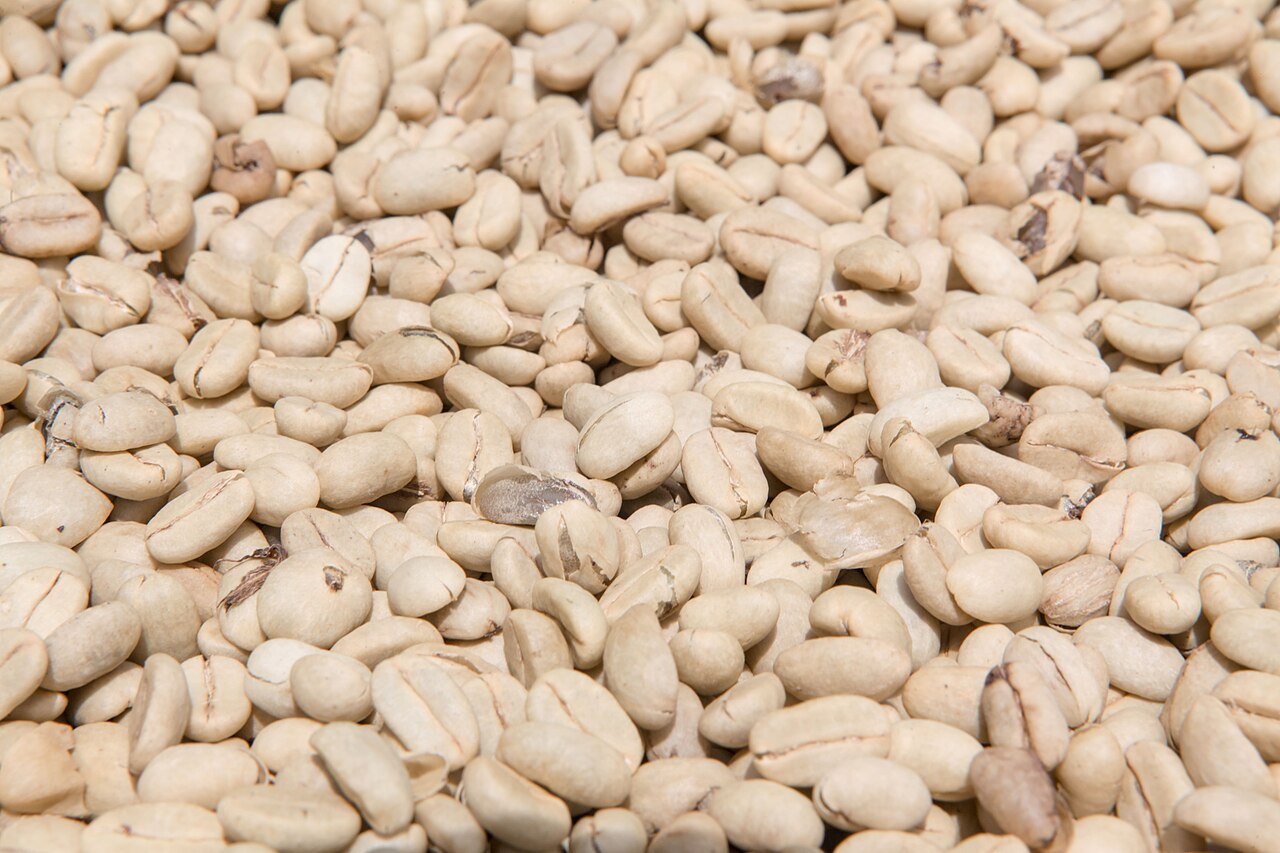
Sorted coffee drying on a farm in Tanzania. Photo: Harald Ulver, CC BY-SA 4.0, via Wikimedia Commons.
Table of Contents
Table of Contents
What are Tanzanian coffee beans?
Tanzanian coffee beans are coffee grown in Tanzania and exported as green (unroasted) beans. Tanzania is a mid-sized producer: a large US importer’s review puts it at about 0.8% of world coffee, roughly 15th by volume. A USDA report forecasts the 2026/27 crop at 1.6 million bags, about 96,000 tonnes, up 10.3%, the third straight year of growth.
Both species grow there. The USDA report describes output as nearly equal between Arabica and Robusta, while the importer review gives a split of roughly 60% Arabica and 40% Robusta. Either way, Robusta is growing fast, driven by new planting in Kagera and Kigoma.
Most Tanzanian coffee comes from small farms. The importer review counts about 450,000 smallholders producing about 90% of the coffee, with estates supplying the rest.
New to the species? Our guides to Arabica vs Robusta, Arabica coffee beans and the best Robusta coffee beans cover the basics.
Tanzanian coffee beans at a glance
- Species: Arabica and Robusta, in roughly similar volumes.
- Arabica regions: Kilimanjaro, Arusha, Mbeya, Songwe and Ruvuma (Mbinga).
- Robusta region: mainly Kagera, near Lake Victoria, plus Kigoma.
- Famous for: peaberry (PB).
- Grades: AA, A, B, PB and others, mostly by size.
- Main export port: Dar es Salaam.
- 2026/27 output: forecast at about 1.6 million bags.
A short history of Tanzanian coffee
Coffee in Tanzania goes back a long way, and it started with Robusta. The Haya people of the Kagera region are the only recorded group known to have used coffee beans traditionally: they boiled Robusta beans, steamed them with herbs and chewed them as a stimulant.
Arabica came with colonial rule. In 1911, German colonists required Arabica to be planted throughout the Bukoba region, and Arabica later spread around Kilimanjaro, Arusha and the southern highlands. Cooperatives grew up around Kilimanjaro, and the Moshi auction became the centre of the trade.
Tanzania also has a link to one of Africa’s most famous varieties. World Coffee Research records that SL28 was selected in Kenya from a population called Tanganyika Drought Resistant, with seed that came from Tanganyika, now Tanzania.
Why buyers choose Tanzanian coffee beans
- East African brightness at a fairer price. Tanzanian Arabica has the citrus and fruit people love in East African coffee, usually at a lower price than top Kenyan lots.
- Peaberry. Tanzania Peaberry is one of the best-known peaberry coffees in the world and sells well as a single origin.
- Two species from one origin. Washed Arabica for single origins, and natural Robusta from Kagera for blends.
- Growing supply. Production has risen three years running, helped by a government programme distributing tens of millions of seedlings.
- A good story. Kilimanjaro coffee is an easy name to put on a bag.
If you are building a single-origin range, our guide to single origin coffee beans explains how to plan it.
How Tanzanian coffee beans taste
Typical trade descriptions, which vary by region and lot:
- Washed Arabica (Kilimanjaro, Arusha): bright citrus and blackcurrant-like acidity, medium body, sweet and clean, sometimes with a floral or winey note. Generally a little softer than Kenya.
- Southern Highlands Arabica (Mbeya, Mbinga): often sweeter and rounder, with stone fruit, chocolate and a gentler acidity.
- Peaberry: many roasters find it a little brighter and more concentrated than flat beans from the same lot.
- Kagera Robusta: natural, heavy and chocolatey, with earthy and woody notes and low acidity. Mostly used in blends and instant coffee.
As always, cup samples before buying. Our guide to coffee cupping explains how to score them.
Where Tanzanian coffee beans are grown
The importer review groups Tanzania’s coffee into three zones:
Northern Highlands: Kilimanjaro and Arusha
The traditional heart of Tanzanian Arabica, on the slopes of Mount Kilimanjaro and Mount Meru. Home to the Moshi auction and more estate production. Often grown alongside bananas in a mixed farming system. Bright, classic East African washed coffees.
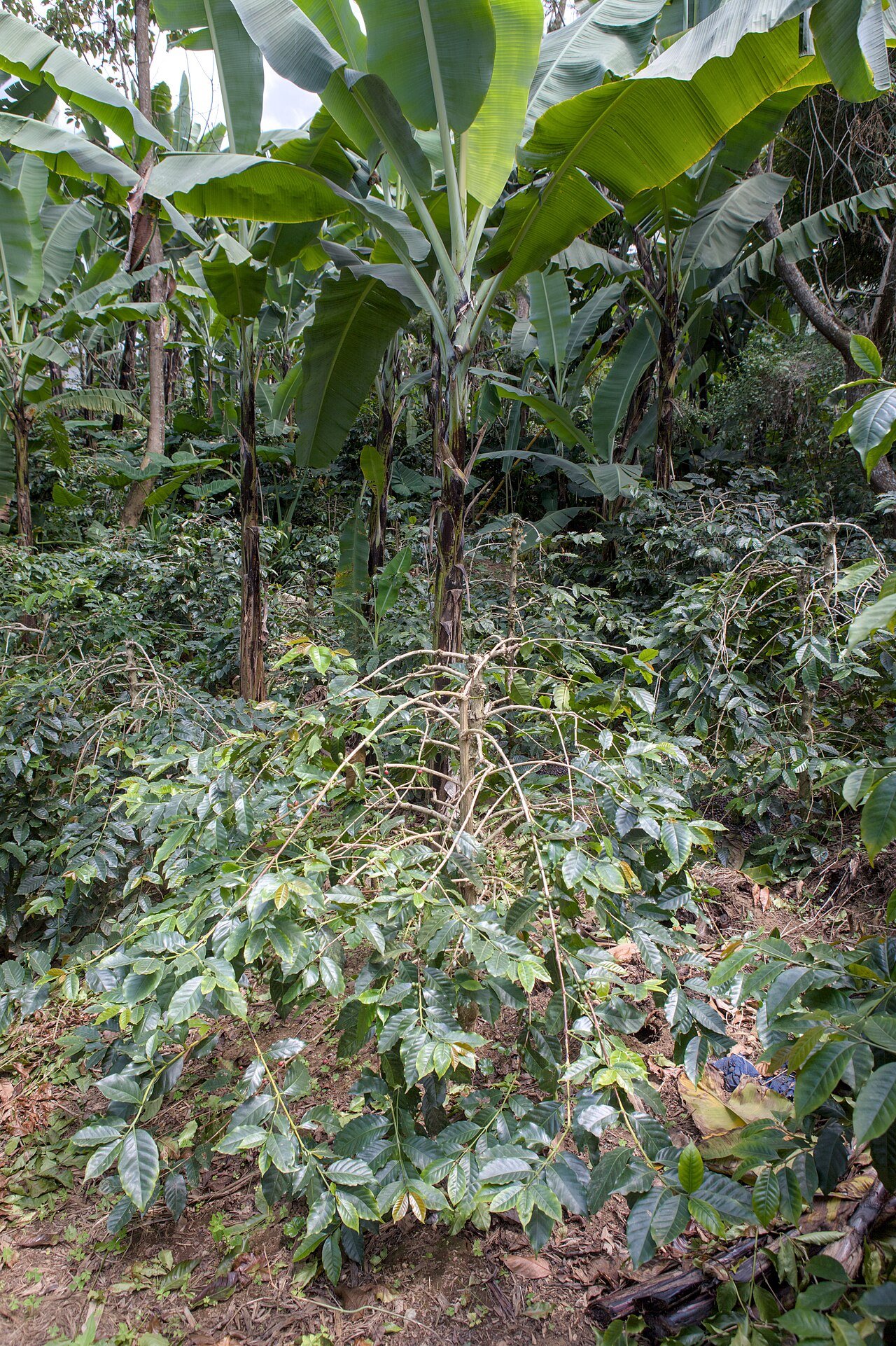
Coffee growing under a banana tree in Nkoaranga, near Arusha. Photo: Harald Ulver, CC BY-SA 4.0, via Wikimedia Commons.
Southern Highlands: Mbeya, Songwe and Ruvuma
Mostly smallholder and cooperative production, and the part of Tanzania that has grown most in recent years. Mbinga in Ruvuma and the Mbeya and Songwe areas produce sweet, rounded washed Arabica, much of it from cooperative washing stations.
West Lake Zone: Kagera and Kigoma
Near Lake Victoria and Lake Tanganyika. Kagera is Tanzania’s Robusta heartland, centred on the Kyerwa and Karagwe areas. The USDA report says Kagera alone produces 50,000 to 80,000 tonnes a year, and the region distributed 13 million seedlings last season. Kagera also grows some Arabica.
Tanzanian coffee varieties
According to the importer review, Tanzania’s Arabica includes:
- Bourbon types, which dominate many older plots, including N39, a selection from the national research institute (TaCRI).
- SL28 and SL34, the famous Kenyan varieties, also common in Tanzania.
- Kent, an older variety that is no longer considered rust resistant.
- K7, tolerant to leaf rust and coffee berry disease.
- Newer disease-resistant hybrids distributed through government seedling programmes.
Robusta in Kagera is mostly traditional local Robusta, increasingly replanted with improved clones through the seedling programmes.
Tanzanian peaberry explained
Peaberry is the thing many people know Tanzanian coffee for, so it is worth explaining properly.
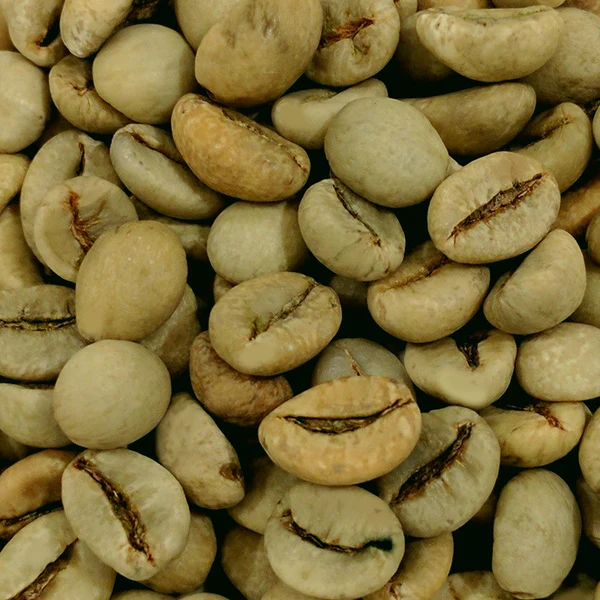
A coffee cherry normally holds two seeds, each with a flat side facing the other. Sometimes only one seed develops. It grows round instead of flat, and that single round bean is called a peaberry. The importer review notes that peaberry occurs in about 5% of coffee globally. It happens in every origin, but Tanzania has made a name for sorting it out and selling it separately.
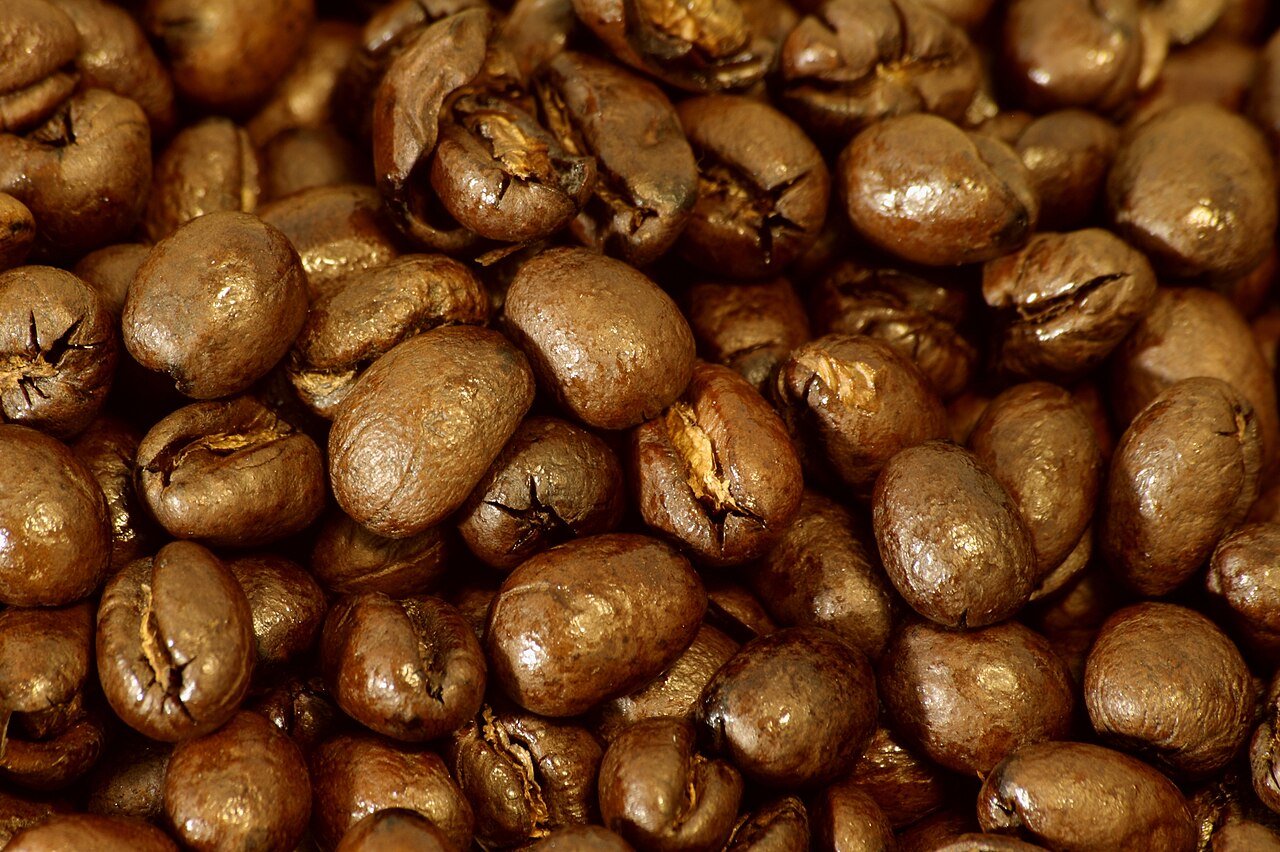
Peaberry coffee beans: single, rounded seeds. Photo: Ragesoss, CC BY-SA 3.0, via Wikimedia Commons.
Is peaberry better? Opinions differ. Many roasters find Tanzanian peaberry a little brighter and more concentrated, and the round shape rolls evenly in the roaster, which helps an even roast. Others think the difference is small and mostly about marketing. What is certain is that “Tanzania Peaberry” sells well, which is reason enough for many roasters to stock it. Our view: buy it on the cup, not the shape, but do not underestimate how well the name sells.
Tanzanian grades: AA, A, B, PB and more
Tanzania uses British-style grades based on bean size, shape and density. There are eleven grades, including AA, A, B and PB. The ones you will see most on export offers:
| Grade | What it means | Typical use |
|---|---|---|
| AA | The largest flat beans | Premium single origin |
| A | Large flat beans, slightly smaller than AA | Single origin, quality blends |
| AB | A mix of A and B sizes | Single origin, blends |
| B | Medium flat beans | Blends |
| PB | Peaberry, single round beans | Specialty single origin |
| C and lower | Smaller or lighter beans | Commercial blends |
Like Kenya, Tanzania grades mostly on size, and size is not the same as cup quality. A good A or AB lot can taste better than an average AA. Ask for the cup notes and defect count on the actual lot. Our guide to coffee bean grading explains screen sizes and defects.
How Tanzanian coffee beans are processed
- Washed Arabica. Most quality Arabica is fully washed, either at central cooperative washing stations or on estates. Ripe cherries are pulped, fermented, washed and dried on raised tables.
- Home-processed Arabica. Some smallholders still pulp and dry their own coffee at home before selling parchment. Quality can be more variable, which is one reason central washing stations have spread.
- Natural Robusta. Kagera Robusta is mostly dried as whole cherry, then hulled.
- Naturals and honeys. A small but growing number of Arabica naturals and honeys appear on specialty offers.
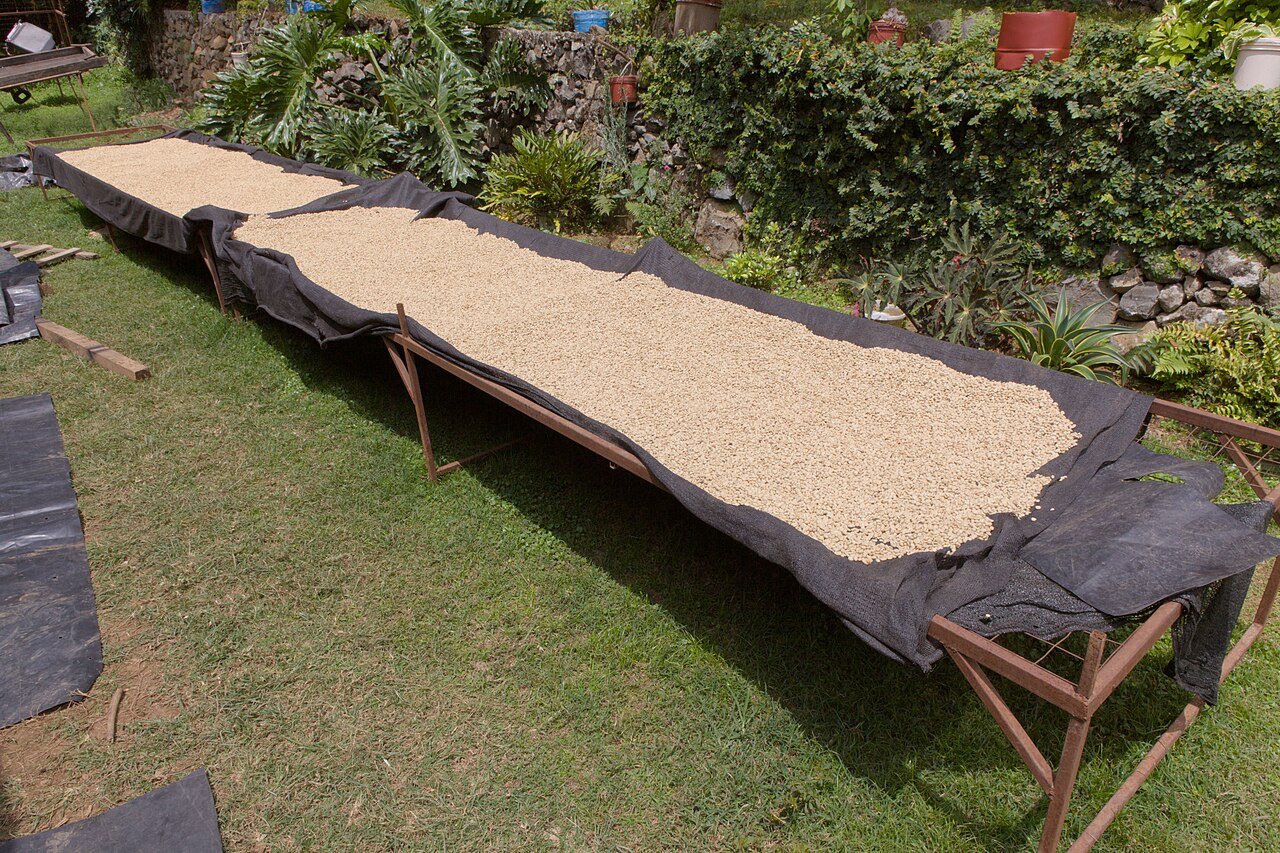
Coffee drying on a raised table in Tanzania. Photo: Harald Ulver, CC BY-SA 4.0, via Wikimedia Commons.
For more on how processing changes the cup, see our guide to coffee processing methods.
How Tanzanian coffee is sold
Tanzania’s coffee trade centres on the Moshi Coffee Exchange, which holds a weekly auction for a nine-month season. The Tanzania Coffee Board issues licences and permits. Alongside the auction, some coffee is sold directly by estates and cooperatives under government rules, which have changed several times over the years.
For an overseas buyer, the practical route is to buy through an exporter or importer who handles the auction or direct purchase, export licensing, milling and shipping. That is what we do. Our guides to choosing a green coffee supplier and working with a coffee exporter explain what to check.
Harvest and shipping calendar for Tanzanian coffee beans
Tanzania harvests earlier in the year than Kenya. According to the importer review:
- Southern regions: picking starts as early as May and can run to September.
- Northern regions: roughly June to August, with some areas near Ngorongoro finishing as late as November.
- Arrivals: the same importer sees US arrivals start in November and December and peak from January to March.
The review also describes the harvest as biennial: a bigger crop every other year. Lower-volume years can bring higher cup quality, because pickers can be more selective.
Practically, new-crop Tanzanian coffee beans tend to reach consuming markets around the turn of the year, which makes Tanzania a useful fresh East African option when Kenyan main-crop coffee is still months away. Our guide to the coffee harvest season shows how to plan across origins.
The Tanzanian coffee market in 2026
- Production up: forecast at 1.6 million bags in 2026/27, up 10.3%, the third year of growth in a row.
- Exports up: forecast at 1.41 million bags (about 86,400 tonnes), up 3%.
- More land: harvested area is forecast to grow by 5,000 hectares to 270,000 hectares.
- Seedlings: the Tanzania Coffee Board distributed 20 to 22 million improved seedlings this season and plans 30 million for 2026/27.
- Earnings more than doubled: export earnings rose from 331.5 billion shillings (US$126.8 million) in 2020 to 759.5 billion shillings (US$290.6 million) in 2024, per Tanzania’s National Bureau of Statistics as cited in the USDA-based report.
- Buyers: the importer review names Japan as the top destination, followed by the EU, with US demand rising.
What this means for you: Tanzanian supply is growing, especially Robusta, which should make it easier to source in volume. Good peaberry and AA lots from the north still sell early, so book them ahead. For how prices are set, read our guide to green coffee prices.
Who grows Tanzanian coffee beans
Tanzanian coffee is a smallholder crop. The importer review estimates that about 450,000 smallholder farmers produce roughly 90% of the coffee, with the rest coming from larger estates, many of them in the north around Arusha, Karatu and Ngorongoro. Most farmers grow coffee on a few hectares alongside bananas, maize, beans and other food crops.
This shapes what you buy in three ways.
Cooperatives and washing stations matter
Because each farm is small, most export lots are built from the coffee of many growers. The quality of the cooperative or washing station that collects and processes the cherries has a big effect on the cup. A well-run station with careful cherry selection and controlled drying can produce outstanding lots from smallholder coffee. When you find a station whose coffee you like, ask for it again the next season.
Estates give consistency
Estate coffee is usually easier to trace and more consistent from year to year, because one farm controls the whole process. It often costs more. Estates are a good fit for roasters who want to tell a single-farm story or who need the same profile every season.
Your purchase reaches farming families
Coffee is an important cash crop for many rural households in Tanzania. Paying fair prices for good quality, buying from the same groups over several seasons and asking how premiums reach farmers all help build a reliable supply. They also give you a stronger story to share with customers.
For buyers, the practical lesson is simple: ask who produced the coffee, how it was processed and where, and buy on the cup. A good supplier of Tanzanian coffee beans can tell you all three.
EUDR and traceability for Tanzanian coffee
If you sell coffee into the European Union, the EU Deforestation Regulation applies to larger operators and traders from 30 December 2026, and to very small businesses from 30 June 2027. You will need geolocation and due-diligence data showing the coffee was not grown on recently deforested land.
With hundreds of thousands of smallholders and rapid new planting, especially of Robusta in Kagera, traceability back to the plot takes real effort in Tanzania. Coffee from estates and well-organised cooperative washing stations is usually easier to trace. If you sell into the EU, ask any supplier of Tanzanian coffee beans, including us, what traceability data comes with each lot before you buy.
Roasting Tanzanian coffee beans
- Light to medium for washed Arabica. Keeps the citrus and fruit.
- Peaberry rolls well. The round beans move evenly in the drum, which helps an even roast. Some roasters find peaberry takes heat a little faster, so watch the end of the roast.
- Do not mix grades. AA, A and PB roast differently. Roast them separately.
- Medium to medium-dark for Robusta. Kagera Robusta needs enough development to round off bitterness.
- Rest light roasts for a few days before brewing.
Our full guide to roasting green coffee beans goes step by step.
Best uses for Tanzanian coffee beans
Single-origin filter
Washed Tanzanian Arabica and peaberry shine as pour-over and batch brew.
Bright espresso
A Tanzanian AA or PB makes a lively single-origin espresso, or 20% to 40% of a blend to add fruit. See coffee beans for espresso.
Blends and instant coffee
Kagera Robusta adds body and crema to espresso blends and is a useful soluble-coffee raw material. See coffee beans for instant coffee.
Cold brew
Tanzanian Arabica makes a fruity, refreshing cold brew. See coffee beans for cold brew.
Our Tanzanian coffee beans
We sell Tanzanian coffee beans through our African range: Tanzanian Arabica as traceable single-origin lots, including peaberry, plus African Robusta and East African Arabica for blends.
Tanzanian single-origin Arabica, including peaberry

Tanzania is one of the countries in our traceable Africa Arabica range, and the range includes PB (peaberry) grades. Tell us the grade (AA, A, AB or PB), region and volume you need, and we will send offers and samples of the Tanzanian lots we can supply that season.
Africa Arabica coffee beans, short spec:
- Species: Coffea arabica (green beans)
- Origins: Ethiopia, Kenya, Uganda, Tanzania, Rwanda, Burundi
- Sold as: single-origin, traceable lots
- Altitude: 1,300 to 2,200 m
- Process: washed, natural or honey
- Screen: 15 to 18, plus PB
- Moisture: max 12.5%
- Cup: floral, fruity, bright, clean
- Packing: 60 kg jute bags
East African Arabica for blends

If you want bright East African character in AA/AB sizes for a blend, without needing a named country, our East African Arabica is the practical choice.
African Arabica coffee beans, short spec:
- Species: Coffea arabica (green beans)
- Origin: East African highlands
- Altitude: 1,400 to 2,200 m
- Process: washed or natural
- Screen: 15 to 18 (AA / AB)
- Moisture: max 12.5%
- Cup: bright, fruity, floral, clean
- Packing: 60 kg jute bags
African Robusta for blends and instant coffee

Our African Robusta lots are sourced across East, West and Central Africa and matched to your spec. If you specifically want East African Robusta in the Kagera style, tell us when you ask for samples.
African Robusta coffee beans, short spec:
- Species: Coffea canephora (green beans)
- Origin: East, West and Central Africa
- Process: natural or washed
- Screen: 16/18 or 18/20
- Moisture: max 12%
- Defects: under 5%
- Caffeine: 2.2% to 2.7%
- Packing: 60 kg jute bags
Browse all our Arabica coffee beans and Robusta coffee beans, or see the full product list.
Tanzanian coffee beans vs other East African coffees
| Origin | Typical washed cup | Known for | Price position |
|---|---|---|---|
| Tanzania | Bright citrus, medium body, clean | Peaberry, Kilimanjaro | Moderate |
| Kenya | Juicy, blackcurrant, high acidity | AA, SL28/SL34 | Usually high |
| Ethiopia | Floral, citrus, tea-like; fruity naturals | Yirgacheffe, Guji | Wide range |
| Uganda | Sweet, balanced, chocolate | Bugisu, Robusta | Usually lower |
| Rwanda and Burundi | Red fruit, sweet, clean | Washing stations | Moderate to high |
All of these are available through our Africa Arabica range, so you can cup Tanzania next to the others before deciding. Our guides to Kenyan coffee beans, Ethiopian green coffee beans and Ugandan coffee beans go deeper on each.
Tanzania or Kenya?
This is the comparison most buyers make. Kenyan coffee is usually more intense, with higher acidity and a stronger blackcurrant character, and it generally costs more. Tanzanian coffee is often a little softer and rounder, with the same East African brightness, at a lower price. Many roasters stock both: Kenya as the headline single origin, Tanzania as an approachable East African coffee or peaberry special. Tanzania’s earlier harvest also means its new crop tends to arrive months before Kenya’s main crop.
Blending Tanzanian coffee beans with our other coffees



- Brazilian Robusta (Conilon): smooth, chocolate, nutty; screen 16/18 or 18/20.
- Indian Robusta: very clean, shade-grown; screen 17/18 or 18/20.
- Ugandan Robusta: cocoa, earthy, mild spice; screen 15 to 18.
- Vietnam Robusta: sweet, rich, mild acidity; screen 16/18.
- Indonesia Robusta: heavy body, chocolate, cedar; screen 16/18 or 18/20.
Starting blends to try:
- Bright espresso: 60% Brazilian Conilon or Arabica, 25% Tanzanian AA, 15% Indian Robusta.
- East African filter blend: 50% Tanzanian A, 50% Ugandan or Ethiopian washed Arabica.
- All-African espresso: 50% Tanzanian Arabica, 30% Ugandan Robusta, 20% Ethiopian natural.
What affects the price of Tanzanian coffee beans
No two Tanzanian offers cost the same, and it helps to know why. These are the main things that move the price of a lot:
- Species. Washed Arabica costs more than natural Robusta, usually by a wide margin.
- Grade. AA and PB carry a premium over A, AB and B. The premium for PB is partly about demand: the name sells, so roasters bid for it.
- Cup score. A specialty lot scoring well on the cupping table is priced on quality, not just on the futures market.
- Region and producer. A named estate or a well-known washing station costs more than a regional blend of cooperative coffee.
- Crop size. In a smaller year of the biennial cycle, good lots are scarcer and premiums can rise.
- The world market. Arabica and Robusta futures set the base for most commercial lots, and both have swung widely in recent years.
- Packing and freight. Hermetic liners, small lot sizes, inland transport from the west and ocean freight all add to the landed cost.
When you compare offers, compare the landed cost per kilo at your port, not just the price at origin. A slightly dearer lot in hermetic packing can work out cheaper if it holds its quality for longer and you waste less.
Tanzanian Arabica vs Tanzanian Robusta
Tanzania grows both species in roughly similar volumes, according to the USDA-based report. They suit very different jobs:
| Feature | Tanzanian Arabica | Tanzanian Robusta |
|---|---|---|
| Main regions | Kilimanjaro, Arusha, Mbeya, Songwe, Ruvuma | Kagera (Kyerwa, Karagwe) |
| Usual process | Washed | Natural |
| Cup | Bright, citrus, clean, medium body | Heavy, chocolate, earthy, low acidity |
| Best for | Single origin, filter, bright espresso | Espresso blends, instant coffee |
| Grades seen | AA, A, AB, B, PB | Screen-size grades |
For a wider look at the two species, read our guide to Arabica vs Robusta, or see our pick of the best Robusta coffee beans.
Selling Tanzanian coffee to your customers
Buying good green coffee is half the job. The other half is getting it to sell. A few things that work well with Tanzanian coffee beans:
Lead with the place
Kilimanjaro is one of the best-known mountains in the world. If your lot comes from the slopes of Kilimanjaro or Mount Meru, say so on the bag. For southern lots, name the region, such as Mbeya or Mbinga, and the washing station if you know it.
Explain peaberry in one line
Many customers have heard the word but do not know what it means. A line such as “a rare single round bean, sorted by hand” on the bag or menu does more than a long paragraph. Keep it honest: say it is rare, not that it is always better.
Describe the cup simply
“Bright, citrusy and sweet” tells a shopper more than a long list of tasting notes. Use your own cupping notes from the actual lot, not a generic description.
Pair it with a Kenyan or Ethiopian coffee
An East African flight of Tanzania, Kenya and Ethiopia lets customers taste the differences side by side, and it sells more than one bag at a time. All three are available through our Africa Arabica range.
Time your launch
Fresh Tanzanian coffee tends to arrive around the turn of the year, so a January or February launch of “new crop Tanzania” gives you a fresh story when many other origins are mid-season.
Which Tanzanian grade fits your business?
Specialty roasters and cafés
Peaberry for a headline single origin with an easy story, or AA from a named northern washing station or estate. Southern Highlands lots from Mbeya or Mbinga can be excellent value.
Wholesale roasters
A or AB lots give classic Tanzanian brightness at a sensible price, for restaurants, offices and a regular menu single origin.
Blend and espresso programmes
B grades, or our East African AA/AB, add East African fruit to a chocolatey base without the cost of top grades. Kagera-style Robusta adds body.
Instant coffee and RTD
Robusta, with controlled moisture and defects, is the practical choice.
What a Tanzanian share does to your blend cost
A worked example with round numbers. Suppose your base coffee costs US$6.00 per kilo green and a Tanzanian AA costs US$8.50. Our calculation:
| Blend | Green cost per kilo | Change vs base |
|---|---|---|
| 100% base | US$6.00 | baseline |
| 85% base / 15% Tanzanian AA | US$6.38 | about 6% more |
| 75% base / 25% Tanzanian AA | US$6.63 | about 10% more |
| 60% base / 40% Tanzanian AA | US$7.00 | about 17% more |
These prices are illustrations, not quotes. A 15% to 25% share of Tanzanian coffee beans can noticeably brighten a blend for a modest increase in cost, and lets you put “with Tanzanian AA” or “Kilimanjaro” on the bag.
How much to buy
Tanzanian coffee beans ship in 60 kg jute bags, with hermetic liners for specialty lots. Small roasters often buy a few bags of a peaberry or AA lot; larger roasters and importers buy by the container. To size an order, take the kilos of roasted Tanzanian coffee you use a month, divide by about 0.83 for roast loss, and multiply by the months you want to cover. A roaster using 100 kg of roasted Tanzanian coffee a month needs about 120 kg of green a month, or around 720 kg for six months, roughly 12 bags. Our guide to wholesale green coffee beans explains volume buying.
Shipping and storing Tanzanian coffee beans
Most Tanzanian coffee ships through Dar es Salaam. Coffee from the west, such as Kagera, travels long distances by road before reaching the port, so allow extra time. Expect a commercial invoice, bill of lading, phytosanitary certificate, certificate of origin and quality documents. Our guide to importing coffee beans explains documents, duties and Incoterms.
Tanzania’s bright citrus fades if green coffee is stored warm and damp. Use hermetic liners for peaberry and AA, keep bags cool, dry and off the floor, and aim to roast within about a year of arrival. Our guide to storing green coffee beans goes into detail.
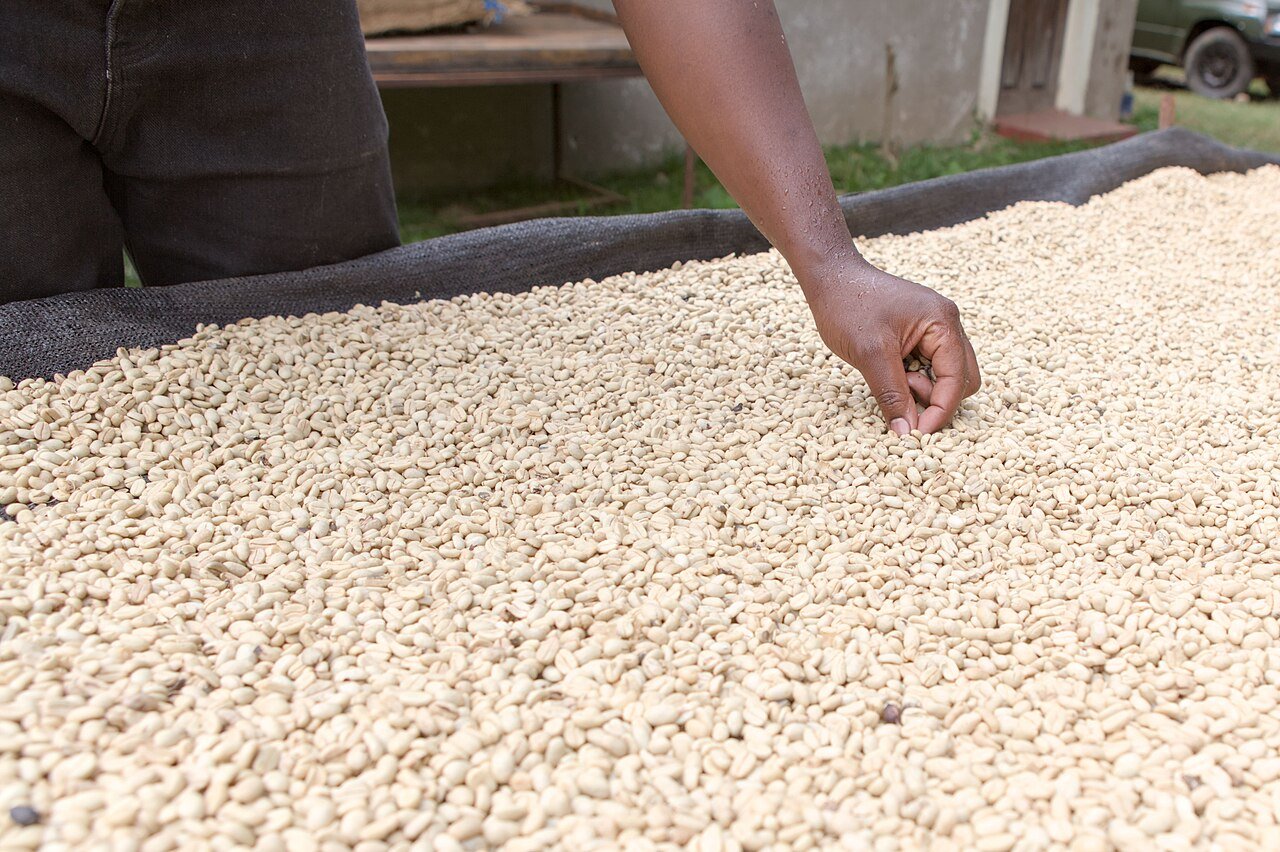
Hand sorting dried coffee on a farm in Tanzania. Photo: Harald Ulver, CC BY-SA 4.0, via Wikimedia Commons.
A simple tasting plan for Tanzanian samples
- Ask for three samples that differ on one thing, such as AA vs PB from the same station, or a northern vs a southern lot.
- Check the green: moisture, size, defects and smell.
- Roast each the same way, light to medium.
- Cup blind, then brew as you will sell it.
- Approve a pre-shipment sample from the actual lot.
Questions to ask any supplier of Tanzanian coffee
- Arabica or Robusta, and which region?
- Which grade (AA, A, AB, B, PB)?
- Washing station, cooperative or estate?
- Which crop year, and when was it milled?
- What are the moisture, defects and cup notes?
- Bought at the Moshi auction or directly?
- What traceability data comes with it for EUDR?
- Can I have a pre-shipment sample from the actual lot?
A good supplier answers all of these without fuss. We do, for every lot of Tanzanian coffee beans we offer.
A quick glossary of Tanzanian coffee terms
- PB (peaberry): a single round bean from a cherry where only one seed developed.
- AA / A / AB / B / C: size grades, AA the largest.
- Moshi auction: the weekly coffee auction in Moshi, Kilimanjaro.
- TCB: the Tanzania Coffee Board, which licenses the trade.
- TaCRI: the Tanzania Coffee Research Institute.
- CPU: central pulping unit, a cooperative washing station.
- Kagera: the north-western region where most Robusta grows.
- Biennial crop: a pattern of bigger and smaller harvests in alternate years.
Common mistakes when buying Tanzanian coffee beans
- Buying peaberry on the name alone. Cup it. A good AA can beat an average PB.
- Assuming all Tanzanian coffee is Kilimanjaro. Much of the best value now comes from the Southern Highlands.
- Mixing grades in the roaster. PB and AA roast differently.
- Roasting too dark. You lose the citrus brightness.
- Ignoring crop year. In a biennial pattern, quality and volume can change from year to year.
- Forgetting transit time from the west. Kagera Robusta has a long road to the port.
How to order Tanzanian coffee beans from us
- Tell us what you need: Arabica or Robusta, grade, region, volume and destination port.
- Get offers and samples.
- Agree the contract: grade, crop, moisture, packing, price and terms in writing.
- Approve a pre-shipment sample.
- We ship, and the documents follow.
When you are ready, contact our sales team for current Tanzanian offers, read our guide to unroasted coffee beans, or learn more about Continental Coffee Supply.
Frequently asked questions
What are Tanzanian coffee beans?
Coffee grown in Tanzania: mostly washed Arabica from Kilimanjaro, Arusha and the Southern Highlands, plus natural Robusta from Kagera.
What is Tanzanian peaberry?
A single, round coffee bean from a cherry where only one seed developed. It occurs in about 5% of coffee worldwide, and Tanzania is famous for sorting and selling it separately.
Is peaberry better than regular beans?
Not always. Many roasters find it brighter and more even in the roaster, but judge it by the cup.
What do Tanzanian coffee beans taste like?
Washed Arabica is typically bright and citrusy with medium body; southern lots are often sweeter and rounder; Kagera Robusta is heavy and chocolatey.
When are Tanzanian coffee beans harvested?
Southern regions from about May to September, northern regions roughly June to August. New crop usually reaches consuming markets around the turn of the year.
How is Tanzanian coffee sold?
Largely through the weekly Moshi auction, with some direct sales, under licences from the Tanzania Coffee Board.
Is Tanzanian coffee cheaper than Kenyan?
Usually, yes, though top Tanzanian lots can be priced close to good Kenyan coffee.
How much coffee does Tanzania produce?
About 1.6 million bags forecast for 2026/27, up 10.3%.
Which port does Tanzanian coffee ship from?
Mainly Dar es Salaam.
Do you ship Tanzanian coffee beans worldwide?
Yes, to ports around the world.
Can I get samples first?
Yes. We recommend cupping samples before ordering in volume.
Key takeaways
- Tanzanian coffee beans include bright washed Arabica and natural Kagera Robusta.
- Tanzania is famous for peaberry, but AA and AB lots can be just as good.
- The Southern Highlands are a growing source of good-value Arabica.
- New crop usually arrives around the turn of the year, earlier than Kenya’s main crop.
- 2026/27 output is forecast up 10.3% to about 1.6 million bags.
- EU buyers need traceability data under EUDR from 30 December 2026.
Leave a Comment
Your email address will not be published. Required fields are marked *