
Ethiopian green coffee beans are unroasted Arabica from the country where the species was born, and they are some of the most sought-after coffees in the world for their floral, citrus and berry flavours. Most lots are sold by region (Yirgacheffe, Sidama, Guji, Harar, Limu and others), by process (washed or natural) and by grade, with Grade 1 and Grade 2 being the specialty end. We sell Ethiopian green coffee beans as traceable single-origin lots, packed in 60 kg jute bags, and we ship them worldwide to roasters, importers and coffee brands.
If you are a roaster thinking about adding an Ethiopian to your menu, or a buyer who wants to understand what you are paying for before you sign, this guide is for you. It covers where the coffee comes from, how the regions and processes taste, how Ethiopian grading works, when the harvest arrives, what is happening in the market right now, how to roast it, and how to buy from us. Where we quote figures, the source is linked so you can check it.
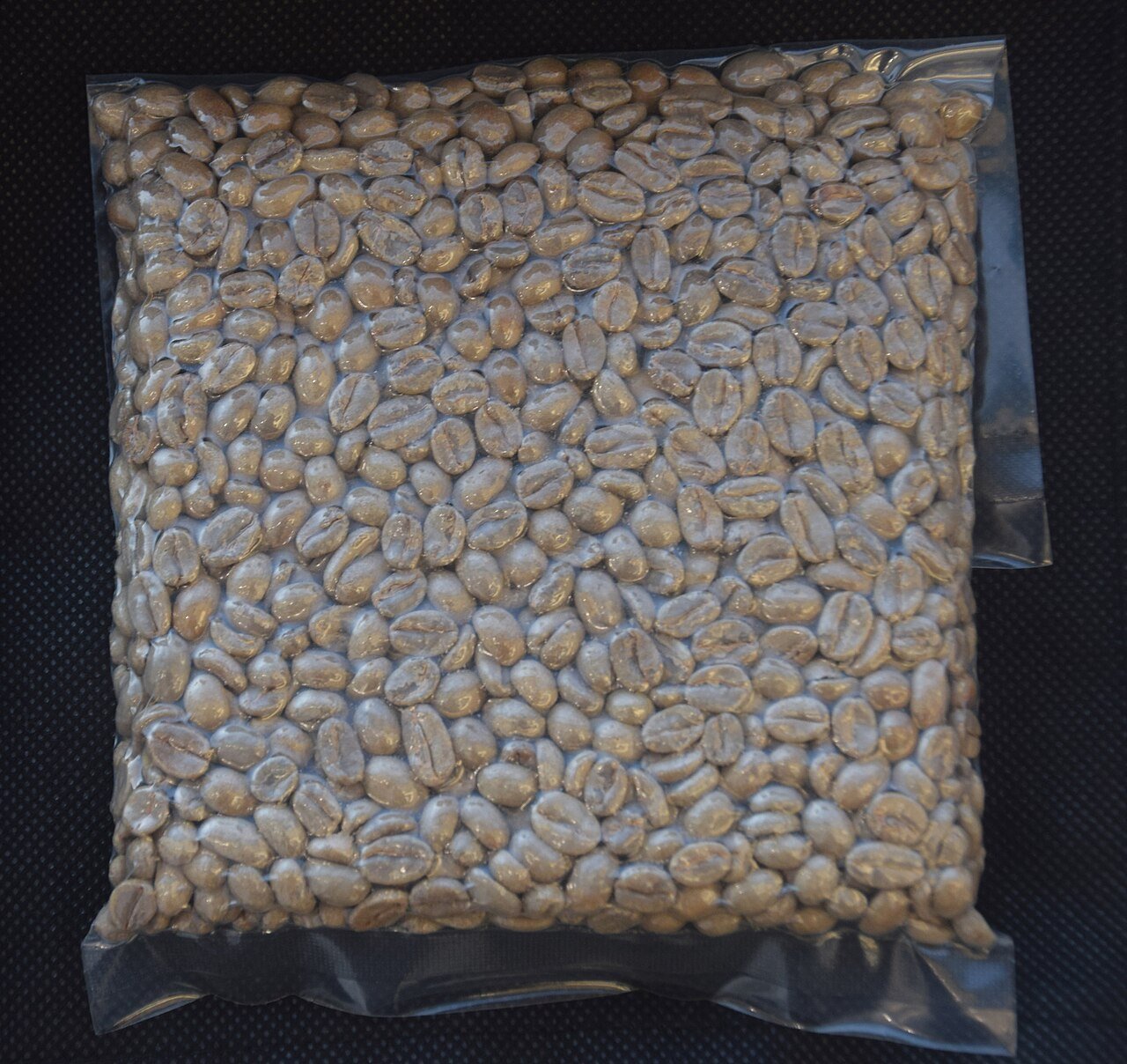
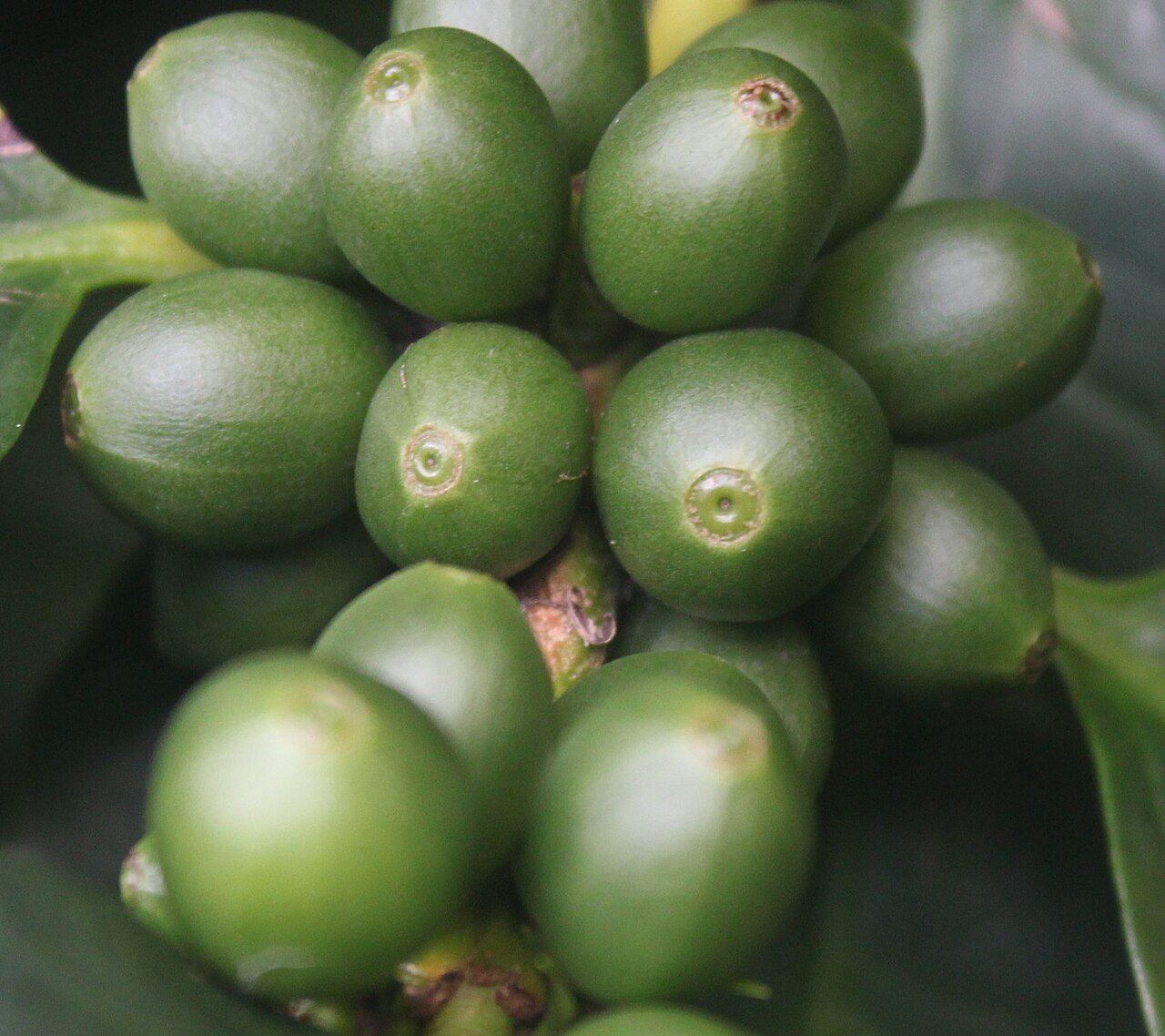
Yirgacheffe coffee beans. Photo: Yoshi Canopus, CC BY-SA 4.0, via Wikimedia Commons.
Table of Contents
Table of Contents
What are Ethiopian green coffee beans?
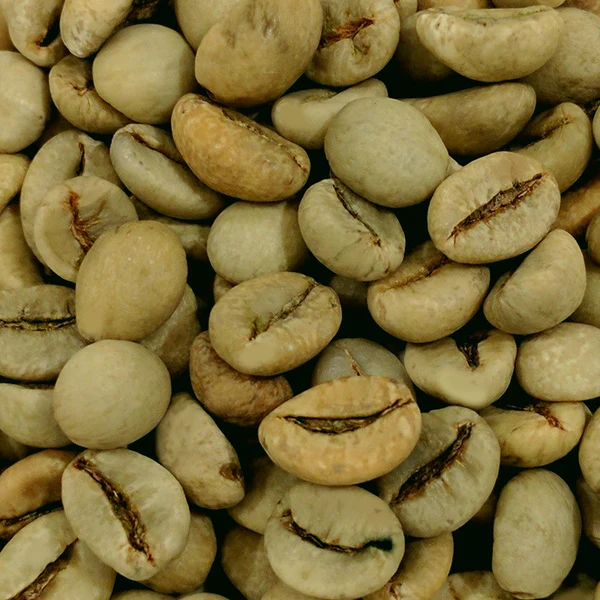
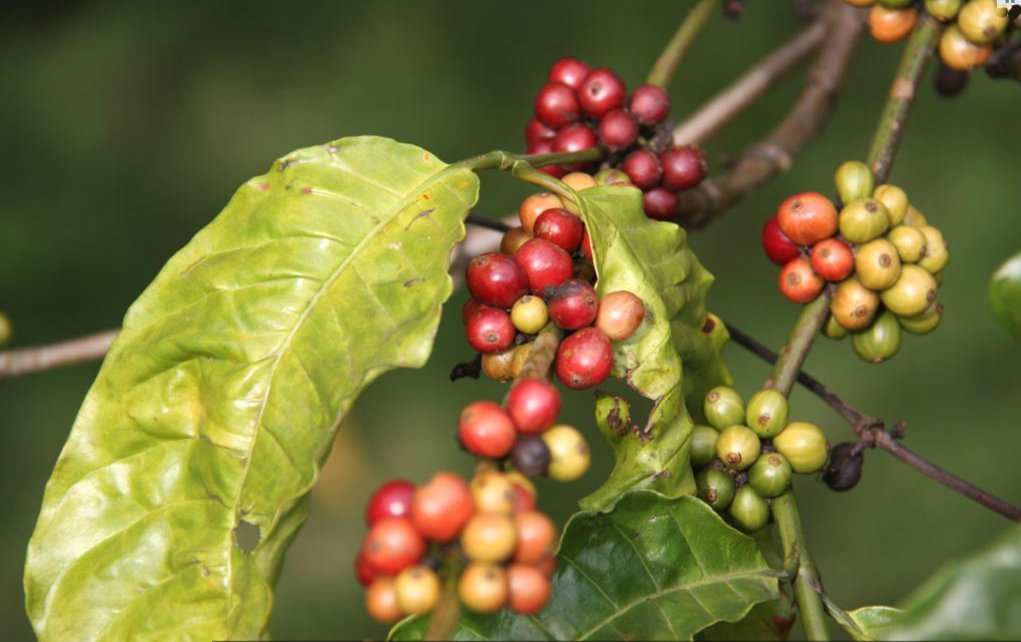
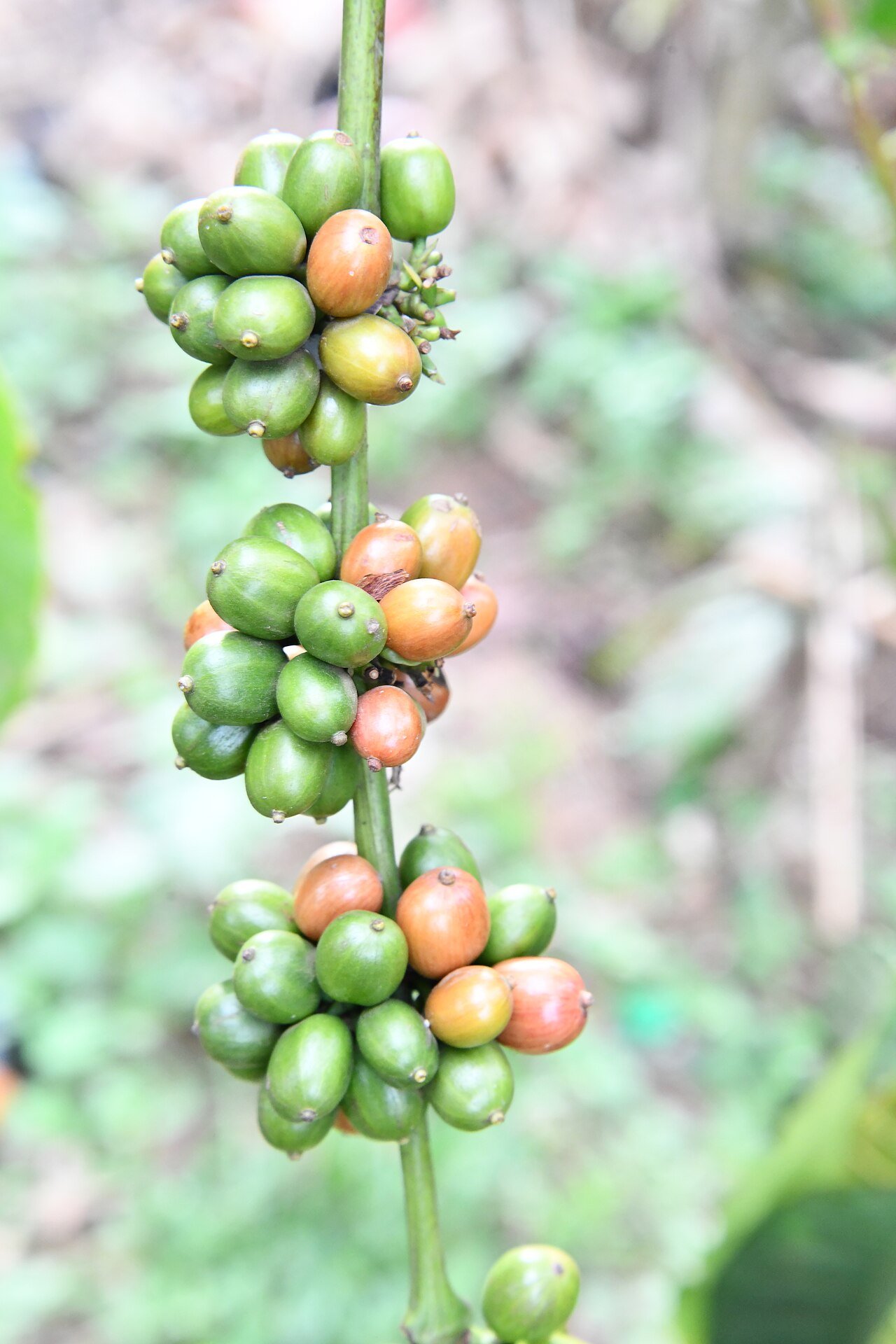
Green coffee is the raw seed of the coffee cherry after it has been processed and dried, before roasting. Ethiopian green coffee beans are simply that, grown in Ethiopia. What makes them special is where Ethiopia sits in coffee’s story.
Arabica started there. A 2024 genome study published in Nature Genetics found that Coffea arabica formed as a natural cross between Robusta (Coffea canephora) and a wild species called Coffea eugenioides, and that it developed more than 600,000 years ago in the forests of Ethiopia. Wild Arabica still grows there, and the country holds far more genetic variety in its coffee than anywhere else. You will often see Ethiopian coffee sold as “heirloom” or “landrace” for that reason: many farms grow a mix of local types rather than one named cultivar.
That variety is part of why Ethiopian cups can taste so different from coffees elsewhere. It is also not frozen in time. Ethiopia’s agricultural research institute has distributed more than 50 improved varieties with higher yields and better disease resistance, according to the latest USDA Foreign Agricultural Service report on the country.
If you want a broader look at the species, our guide to Arabica coffee beans covers it, and Arabica vs Robusta explains how the two main species differ.
Why roasters buy Ethiopian green coffee beans
There are a few honest reasons, and they are commercial as much as they are about taste.
- Flavour that customers notice. Jasmine, bergamot, lemon, peach, blueberry, strawberry. A good washed Yirgacheffe or natural Guji tastes unlike anything else on most menus. That makes it easy to sell as a single origin.
- A name people already know. “Ethiopia” and “Yirgacheffe” mean something to coffee drinkers. Ethiopia has gone as far as registering trademarks for its best-known names. WIPO reports that Yirgacheffe and Sidamo were registered in the United States, with Sidamo granted in February 2008, and that Ethiopian coffee trademarks are also registered in the European Union and Canada. By mid-2009, almost 100 royalty-free licence agreements had been signed with importers, roasters and distributors.
- Range. From bright, tea-like washed lots to jammy naturals to cheaper commercial grades for blends, Ethiopia can fill several slots on a roaster’s list.
- Supply is growing. Production is forecast to rise again in 2026/27, which we cover below.
If you are building a single-origin range, our guide to single origin coffee beans explains how to plan one, and Ethiopian green coffee beans are usually the first African coffee on that list.
Ethiopian coffee regions and how they taste
Region is the first thing on any offer for Ethiopian green coffee beans. The descriptions below are typical cup profiles as the trade usually describes them. Every lot is different, so always cup a sample before you buy.
Yirgacheffe
Probably the most famous name in Ethiopian coffee. Technically a district within the wider Gedeo zone, often sold together with neighbouring areas such as Gedeb and Kochere. Washed Yirgacheffe is the classic: light body, floral (often jasmine), lemon and bergamot, very clean. Naturals are sweeter with more berry.
Sidama (Sidamo)
A large southern region, and one of the three names Ethiopia trademarked. Sidama coffees are usually a little rounder than Yirgacheffe, with citrus, stone fruit and a sweet finish. A good everyday specialty Ethiopian and a reliable choice for a house single origin.
Guji
South and east of Sidama, at high altitude. Guji has become popular over the last decade, especially for naturals that taste of strawberry, blueberry and tropical fruit. Washed Guji can be very floral and sweet.
Harar (Harrar)
Eastern Ethiopia, drier and with a long tradition of natural (dry) processing. Harar coffees are known for heavy body, blueberry and winey or spicy notes. Quality can vary a lot between lots, so sampling matters even more here.
Limu, Jimma and Kaffa
The west and south-west, where wild coffee forests still stand. Limu is usually washed and gives a balanced, sweet, gently spiced cup. Jimma (Djimmah) is a big producer, often of naturals for commercial grades and blends. Kaffa is the forest region that gave coffee its name in many tellings.
West Arsi, Lekempti and others
West Arsi sits next to Sidama and Guji and produces coffees in a similar style. Lekempti and Nekemte in the west give fruity naturals with more body. There are many smaller areas too, and importers keep finding new ones.

Drying coffee cherries by hand, as is common across East Africa. Photo: Philip Asedri Dradrio, CC BY-SA 4.0, via Wikimedia Commons.
Washed vs natural Ethiopian green coffee beans
Ethiopia produces both, in large amounts, and the two taste very different. Our guide to coffee processing methods explains the mechanics. Here is what it means in the cup:
- Washed. The fruit is removed and the beans are fermented and washed before drying. Cleaner, brighter, more floral and tea-like, with crisp acidity. This is the style most people think of for Yirgacheffe.
- Natural. The whole cherry dries on raised beds or patios with the bean inside. Sweeter, heavier and fruitier, often with strong berry notes. Naturals need careful drying to avoid ferment or mould flavours, so sorting and grade matter.
- Honey, anaerobic and experimental lots. A growing number of Ethiopian washing stations now offer these, usually in small volumes at a premium.
A general description of the two from a major shipping line puts it simply: washed coffees are cleaner, brighter and crisper, naturals richer, fruitier and smoother. Many roasters carry one of each.
Ethiopian grades explained
Grade is the second thing you will see on an offer for Ethiopian green coffee beans, written as G1, G2, Gr.3 and so on. Ethiopian grades combine a physical inspection of the green coffee with a cup test.
One green coffee importer’s glossary sums it up: Ethiopia grades from 1 to 5 by defect count and cup quality, with Grade 1 being best, and a Grade 1 coffee has fewer than 3 defects in a 300 g sample. The Ethiopian Commodity Exchange has also described its grading as based on the combined result of raw (physical) and cup (liquor) values, using Coffee Quality Institute standards.
In practice, buyers tend to think of it like this:
| Grade | What it usually means for buyers | Typical use |
|---|---|---|
| Grade 1 | Very few defects, top cup scores | Specialty single origin, competition lots |
| Grade 2 | Few defects, good to very good cup | Specialty single origin, the most common washed specialty grade |
| Grade 3 | More defects, decent cup | Good commercial single origin, quality blends |
| Grade 4 and 5 | Commercial coffee with more defects | Blends, espresso bases, value lines |
Two cautions. First, the exact limits behind each grade are set by Ethiopian authorities and have changed over the years, so always ask for the defect count and cup notes on the actual lot rather than relying on the grade alone. Second, grade is not the same as flavour. A clean Grade 2 natural from a good washing station can taste better to your customers than a tired Grade 1. Our guide to coffee bean grading explains defect counts in more detail, and coffee cupping shows how to score samples yourself.
How to read an offer for Ethiopian green coffee beans
A typical offer line might read something like “Ethiopia Yirgacheffe Gr.2 Washed, crop 2025/26, screen 14 up, 60 kg jute”. Here is what to check on any offer:
- Region and, for traceable lots, the washing station, cooperative or farm.
- Grade (G1 to G5).
- Process: washed, natural, honey or other.
- Crop year. Ethiopian coffee is harvested late in the calendar year, so a “2025/26” coffee was picked around the end of 2025.
- Screen size. Ethiopian beans are often small. Screen 14 or 15 up is normal and does not mean low quality.
- Altitude. Many Ethiopian coffees grow at 1,800 to 2,200 m and above.
- Moisture at shipment, usually a maximum of around 11.5% to 12.5%.
- Packing: jute bags, often with GrainPro or similar hermetic liners for specialty lots.
- Terms: FOB Djibouti, CIF your port, or ex-warehouse in your country.
Not sure which terms to ask for? Our guide to importing coffee beans explains Incoterms, documents and customs step by step, and green coffee supplier lists the checks to run on whoever you buy from.
Harvest and shipping calendar
Timing is where many first-time buyers of Ethiopian green coffee beans get caught out. The coffee is fresh for only part of the year, and the best lots sell early.
- Harvest: the main harvest runs from October to February.
- Shipping: coffee typically ships 3 to 4 months after harvest, once it has been dried, rested, milled, graded and cleared for export.
- Washed before naturals: washed coffees often ship first. In one recent season, a large specialty importer expected washed coffees to ship in February and March, with naturals following and arrivals at its warehouse from March and April.
So for most buyers outside Africa, new-crop Ethiopian green coffee beans arrive roughly between spring and early summer. If you want a specific washing station or a Grade 1 lot, it pays to agree on samples and contracts early in the year. Our guide to the coffee harvest season shows how Ethiopia fits alongside other origins, so you can plan fresh coffee all year.
The Ethiopian coffee market in 2026
Ethiopia is getting bigger as a coffee exporter, and fast. Here are the main numbers.
- Production: the USDA Foreign Agricultural Service forecasts Ethiopia’s 2026/27 crop at 12.1 million 60 kg bags, up 4.7%, from 11.56 million bags the year before.
- Exports: forecast at 7.13 million bags in 2026/27. In 2024/25, exports reached 7.43 million bags worth $2.89 billion, up 31.9% in volume and 69.4% in value, according to the same report.
- Record revenue: the head of the Ethiopian Coffee and Tea Authority reported a record US$3 billion in coffee export earnings in the 2025/26 fiscal year, with Saudi Arabia, Germany and China the top markets.
- Who grows it: about 5.9 million people work in coffee production, and smallholders produce roughly 90% of output, per USDA.
- Home demand: Ethiopians drink a lot of their own coffee. Domestic consumption is forecast at 5 million bags.
- New buyers: China imported 670,000 bags in 2024/25, up 264%, having ranked only 17th among destinations a decade earlier.
What this means for buyers: more Ethiopian green coffee beans are reaching the market, but demand is rising too, especially from Asia and the Middle East. Good lots from well-known washing stations still sell out early. Building a relationship with a reliable supplier matters more than chasing the cheapest spot offer.
Old trees, new plantings and what they mean for future supply
One detail in the USDA report is easy to miss but matters for anyone planning to buy Ethiopian green coffee beans over several years. About 70% of Ethiopia’s coffee trees are old, some more than 100 years. Farmers are cutting many of them back (“stumping”) so they regrow, and stumped trees covered 15% of the harvested area in 2025/26. Studies in Sidama and South Ethiopia cited in the report found stumping can raise yields up to threefold within four years.
The government has also set aside 100,000 hectares for private-sector coffee development, which the report says would expand the commercial farm base by about 70%. Harvested area is forecast at 800,000 hectares in 2026/27.
Our reading of this, and it is an opinion rather than a forecast: supply of Ethiopian coffee should keep growing over the next few years, and more of it may come from larger, more modern farms alongside the smallholders. That could mean more consistent commercial lots for blends. It could also mean more competition for the classic smallholder washed coffees from the south, as buyers from China and the Middle East keep growing. If a particular region or washing station matters to your brand, lock it in early.
What Ethiopian green coffee beans cost
There is no single price. What you pay depends on:
- The Arabica futures market (the “C” price), which moves daily.
- The differential for Ethiopian origin, region, grade and process. Grade 1 specialty lots carry big premiums over commercial grades.
- Traceability. Lots from a named washing station usually cost more than regional blends.
- Volume and terms. A full container FOB Djibouti costs less per kilo than a few bags delivered to your warehouse.
As a broad reference, the Ethiopian Coffee and Tea Authority said a tonne of Ethiopian coffee sold for an average of US$7,500 in 2025/26, up from US$6,000 the year before. That is an export average across all grades, not a quote for any specific lot. Specialty lots sell well above it and commercial grades below. Our guide to green coffee prices explains how the futures market and differentials combine into the price on your invoice.
Traceability and the EU deforestation rules
If you sell coffee into the European Union, the EU Deforestation Regulation (EUDR) will apply to you. After two delays, larger operators and traders must comply from 30 December 2026, and very small businesses from 30 June 2027. The rules require proof that coffee was not grown on land deforested after the cut-off date, which means geolocation data back to the plot.
For Ethiopian green coffee beans this is a real issue, because most coffee comes from millions of smallholders. The Ethiopian Coffee and Tea Authority is building a national traceability system to meet the rules. If you sell in Europe, ask every supplier, including us, what traceability data comes with a lot before you buy.
Roasting Ethiopian green coffee beans
Ethiopian coffees have a reputation for being tricky to roast, and it is partly deserved. Here is what roasters commonly run into, as general guidance rather than a fixed profile.
- Dense, small beans. High-grown Ethiopian coffee tends to be hard and small. It can take heat well early in the roast, but the small screen means it can also run away from you near the end.
- Naturals roast differently from washed. Naturals often brown faster and can scorch or tip more easily. Many roasters go gentler on naturals.
- Light to medium suits most lots. The florals and citrus that people pay for fade quickly in darker roasts. Most specialty Ethiopian is roasted light to medium.
- Mixed bean sizes. Because many farms grow a mix of local types, bean size and shape can vary within a lot. Expect a less uniform roast colour than with a single-cultivar Central American coffee. That is normal.
- Rest it. Light-roasted Ethiopian coffee often tastes better after several days of rest.
Our guide to roasting green coffee beans covers roast phases, development time and profiling in detail.

Green coffee before roasting. Photo: Michael Allen Smith, CC BY-SA 2.0, via Wikimedia Commons.
How to brew and serve them
Washed Ethiopian coffee shines as pour-over and filter, where its clarity shows. Naturals are great as filter too, and also as a fruity single-origin espresso. Both make excellent cold brew. A sensory study run with the Specialty Coffee Association found cold-brewed Ethiopian coffee had more fruity flavour than the same coffee brewed hot. See our guides to coffee beans for cold brew and coffee beans for espresso for more.
Using Ethiopian green coffee beans in blends
You do not need to sell Ethiopian coffee only as a single origin. A share of it can lift a blend a lot. A few ideas to try on your own cupping table:
- Fruity espresso: 60% Brazilian base with 40% natural Ethiopian. Chocolate body with a berry top note.
- Bright breakfast blend: 50% washed Ethiopian, 50% a softer African or Latin American Arabica.
- Milk-friendly house espresso: 50% Brazilian Conilon, 30% Indian Robusta, 20% natural Ethiopian. The Robusta brings crema and body, the Ethiopian keeps it interesting.
- Specialty cold brew: 100% natural Ethiopian, or 60% Ethiopian with 40% Brazilian Conilon for more body.
Commercial grades (Grade 3 to 5) are often the smart buy for blends. You get the Ethiopian character at a lower price, and the defects matter less when the coffee is a smaller part of the mix.
Our Ethiopian green coffee beans
We sell Ethiopian green coffee beans through two products, depending on whether you need a named single origin or a reliable East African blend component.
Africa Arabica single-origin lots, including Ethiopia

This is where to buy Ethiopian green coffee beans with the country named on the bag. Lots are sold country by country and lot by lot, so you can put “Ethiopia” on your menu and tell the story behind it. Tell us the region, process and grade you are after and we will come back with what we can offer and samples.
Africa Arabica coffee beans, short spec:
- Species: Coffea arabica (green beans)
- Origins: Ethiopia, Kenya, Uganda, Tanzania, Rwanda, Burundi
- Sold as: single-origin, traceable lots
- Altitude: 1,300 to 2,200 m
- Process: washed, natural or honey
- Screen: 15 to 18, plus PB
- Moisture: max 12.5%
- Cup: floral, fruity, bright, clean
- Packing: 60 kg jute bags
African Arabica: East African blend component

If you want the bright, floral East African style for blends but do not need a single named country, this is the better value. It draws on the East African highlands, Ethiopia included.
African Arabica coffee beans, short spec:
- Species: Coffea arabica (green beans)
- Origin: East African highlands
- Altitude: 1,400 to 2,200 m
- Process: washed or natural
- Screen: 15 to 18 (AA / AB)
- Moisture: max 12.5%
- Cup: bright, fruity, floral, clean
- Packing: 60 kg jute bags
Browse all our Arabica coffee beans in one place.
Coffees that pair well with Ethiopian green coffee beans
Most roasters who buy Ethiopian green coffee beans also need a base coffee for blends and espresso. These are the coffees in our range that customers most often pair with an Ethiopian. All are green, graded and packed in 60 kg jute bags.
Brazilian Robusta (Conilon)

Smooth, chocolatey, low-acid. A classic base under a fruity Ethiopian in espresso. Brazilian Robusta coffee beans: natural process, screen 16/18 or 18/20, moisture max 12%, defects under 5%.
Indian Robusta
Shade-grown and very clean for a Robusta, with chocolate and nut. Adds crema and body without much harshness. Indian Robusta coffee beans: 600 to 1,200 m, natural (Cherry), screen 17/18 or 18/20, moisture max 12.5%.
Indonesia Robusta

Heavy body, dark chocolate and cedar. Good for milk-based espresso blends. Indonesia Robusta coffee beans: Sumatra and Java, 600 to 1,400 m, screen 16/18 or 18/20, moisture max 12%.
Ugandan Robusta

Cocoa, earthy, a mild spice note. Keeps an East African character in an Ethiopian-led blend. Ugandan Robusta coffee beans: 900 to 1,500 m, screen 15 to 18, moisture max 12%.
Vietnam Robusta

Sweet, rich and great value for high-volume blends. Premium Vietnam Robusta coffee beans: Screen 16/18, dry processed, moisture max 12.5%, density 700 to 720 g/l.
African Robusta

Strong, with 2.2% to 2.7% caffeine. Useful for high-caffeine blends. African Robusta coffee beans: East, West and Central Africa, screen 16/18 or 18/20, moisture max 12%.
See everything in the Robusta coffee beans category, or on the full products page. If you are weighing Robusta origins, our comparison of the best Robusta coffee beans helps.
Storing and shipping Ethiopian green coffee beans
Ethiopian coffee is prized for delicate floral and citrus notes, and those are the first things to fade when green coffee is stored badly. A few basics:
- Use hermetic liners such as GrainPro inside the jute bags for specialty lots. They slow moisture change and keep flavour longer.
- Keep it cool and dry. Away from walls, off the floor, out of direct sun.
- Watch the calendar. Most roasters aim to use specialty Ethiopian green coffee beans within roughly a year of arrival, before the next crop lands.
- Ship well. Shipping guidance from a major carrier recommends jute and dry bags and careful container stuffing to protect the beans in transit.
Our full guide to storing green coffee beans goes into temperature, humidity and stock rotation.
Ethiopian vs other East African coffees
Buyers often compare Ethiopian green coffee beans with Kenyan, Ugandan, Rwandan or Tanzanian lots. They share a lot, but there are differences worth knowing.
| Origin | Typical style (washed) | How it is usually graded | Where it fits |
|---|---|---|---|
| Ethiopia | Floral, tea-like, citrus; naturals very fruity | Grade 1 to 5, by defects and cup | Signature single origin, fruity espresso |
| Kenya | Juicy, blackcurrant, bright acidity | By screen size (AA, AB, PB) | Bold single origin |
| Uganda (Arabica) | Sweet, chocolate, gentle fruit | By screen size | Balanced single origin, blends |
| Rwanda and Burundi | Red fruit, sweet, clean | By grade and screen | Specialty single origin |
| Tanzania | Bright, citrus, medium body | By screen size (AA, A, B, PB) | Single origin, blends |
These are broad trade descriptions, and individual lots vary. The main point: Ethiopian coffee is graded on quality and cup, while several neighbours grade mostly on bean size. A small Ethiopian bean is not a sign of a lower grade. We sell lots from all of these countries through our Africa Arabica single-origin range, so you can cup an Ethiopian against a Kenyan or a Rwandan before you decide.
Specialty or commercial: which grade is right for your business?
It is easy to assume you should always buy Grade 1. Often you should not. The right grade of Ethiopian green coffee beans depends on how you will sell the coffee.
Specialty café or roaster selling single origins
Buy Grade 1 or Grade 2, from a named region and ideally a named washing station. Your customers are paying for the story and the cup, so the extra cost is part of the product. Consider one washed and one natural on the menu.
Wholesale roaster supplying offices and restaurants
A Grade 2 or good Grade 3 regional lot (for example “Sidama Grade 3 Natural”) often gives you most of the character at a much better price. Many customers will not notice the difference in a milky drink.
Blend and espresso programmes
Grade 3 to 5 commercial Ethiopian is usually the smart buy. At 20% to 40% of a blend, it brings fruit and aroma without pushing the cost up much. Pair it with a Brazilian Conilon or Indian Robusta base.
Private-label and ready-to-drink brands
Consistency matters most here. Pick one region and process, agree a spec, and keep buying the same profile. A regional Grade 2 or 3 is often easier to repeat crop after crop than a single micro-lot.
A simple tasting plan for Ethiopian lots
When you request samples of Ethiopian green coffee beans, a little structure helps you choose well:
- Ask for three or four samples that differ on one thing at a time, for example the same region washed and natural, or two grades from the same area.
- Check the green first. Moisture, defect count on 300 g, bean size spread and smell. Fresh green coffee smells grassy and sweet, not musty.
- Sample-roast light to medium, the same way for every sample, so you are comparing the coffee, not the roast.
- Cup blind if you can. It is surprising how often the cheaper lot wins.
- Brew it the way you will sell it. If it is going into espresso, pull shots. If it is going into cold brew, cold-brew it.
- Ask for a pre-shipment sample from the lot you choose, and compare it with the offer sample before the coffee ships.
Questions to ask any supplier about Ethiopian lots
- Which region, and is the washing station or cooperative named?
- What grade, and what were the defect count and cup notes on this lot?
- What crop year, and when was it milled and shipped?
- What moisture reading at shipment?
- Is it packed with hermetic liners?
- What traceability data comes with it, especially for EU buyers?
- Can I have a pre-shipment sample from the actual lot?
- What are the delivery terms and the expected arrival date at my port?
A good supplier answers all of these without fuss. We are happy to, for every lot of Ethiopian green coffee beans we offer.
Common mistakes when buying Ethiopian green coffee beans
- Buying on the region name alone. “Yirgacheffe” on a bag tells you where it is from, not how good it is. Cup the lot.
- Trusting the grade without the numbers. Ask for the defect count, moisture and cup notes on the actual lot.
- Ordering too late. The best washing-station lots are often contracted early in the year. Waiting until summer leaves you with what is left.
- Buying old crop as new. Always check the crop year. A tired Ethiopian loses exactly the florals you paid for.
- Roasting it like a Brazilian. Too dark and too fast, and you lose the point of buying it.
- Ignoring traceability. If you sell into the EU, check what data comes with the coffee before you commit.
- Skipping liners. Specialty Ethiopian lots in plain jute fade faster in storage.
How to order Ethiopian green coffee beans from us
We sell Ethiopian green coffee beans to roasters, importers, café groups and coffee brands around the world. Ordering is simple:
- Tell us what you need. Region, process, grade, how many bags or containers, and your destination port.
- Get offers and samples. We send samples of the lots that fit so you can cup and roast them yourself.
- Agree the contract. Grade, crop year, moisture, packing, price and delivery terms, all in writing.
- Approve a pre-shipment sample from the actual lot.
- We ship. Documents follow, and the coffee arrives at your port.
If you buy in volume, our guide to wholesale green coffee beans explains how container buying works. When you are ready, contact our sales team for current Ethiopian offers, or read more about Continental Coffee Supply.
Frequently asked questions
What are Ethiopian green coffee beans?
They are unroasted Arabica coffee beans grown in Ethiopia, the birthplace of the Arabica species. Roasters buy them green and roast them for their floral, citrus and berry flavours.
Where can I buy Ethiopian green coffee beans in bulk?
We sell them by the bag and by the container, as traceable single-origin lots, and ship worldwide. Contact us with the region, grade and volume you need.
What is the difference between Grade 1 and Grade 2?
Both are specialty grades. Grade 1 has the fewest defects (under 3 per 300 g sample, by one common definition) and top cup scores. Grade 2 has slightly more defects and is the most common washed specialty grade.
Are washed or natural Ethiopian coffees better?
Neither is better; they are different. Washed lots are cleaner, brighter and more floral. Naturals are sweeter, heavier and fruitier. Many roasters stock one of each.
Which Ethiopian region is best?
It depends on taste. Yirgacheffe is known for floral, citrus washed coffee. Guji is famous for fruity naturals. Sidama is a reliable, rounded all-rounder. Harar gives heavy, winey naturals.
When do new-crop Ethiopian green coffee beans arrive?
Harvest runs from about October to February, and coffee usually ships 3 to 4 months later. Most buyers outside Africa see new crop arrive from spring into early summer.
How much do Ethiopian green coffee beans cost?
Prices follow the Arabica futures market plus a differential for region, grade and process. As a broad export average, Ethiopia’s coffee authority reported about US$7,500 per tonne in 2025/26. Specialty lots cost more. We quote each order.
What roast suits Ethiopian coffee?
Light to medium for most specialty lots, to keep the florals and fruit. Commercial grades for blends can go a little darker.
Are Ethiopian green coffee beans good for espresso?
Yes, especially naturals as a fruity single origin, or 20% to 40% of a blend over a chocolatey base.
How long do Ethiopian green coffee beans keep?
Stored well, in hermetic liners in a cool, dry place, most roasters aim to use them within about a year of arrival.
Do you ship worldwide?
Yes. We ship green coffee to ports around the world.
Key takeaways
- Ethiopian green coffee beans are Arabica from the species’ birthplace, prized for floral, citrus and berry flavours.
- Choose by region, process and grade: Grade 1 and 2 for specialty, Grade 3 to 5 for blends.
- Washed lots are bright and clean; naturals are sweet and fruity.
- Harvest runs October to February; new crop usually ships 3 to 4 months later.
- Production and exports are rising, but the best lots still sell early.
- Check traceability if you sell into the EU, where EUDR applies to larger operators from 30 December 2026.
Sources and References
- Sci.News: Arabica coffee originated more than 600,000 years ago in Ethiopia (Salojärvi et al., Nature Genetics, 2024)
- Daily Coffee News: Ethiopia coffee report, USDA Foreign Agricultural Service (2026)
- The Star / Xinhua: Ethiopia earns record US$3 billion from coffee exports (2026)
- World Intellectual Property Organization: Ethiopia’s coffee trademarks
- Green Coffee Collective: coffee grade glossary
- 2merkato: Ethiopian Commodity Exchange adopts five-level grading system
- MSC: Ethiopian coffee guide, harvest and shipping
- Cafe Imports: Ethiopia purchase planning
- GCR: EUDR delayed until the end of 2026
- Specialty Coffee Association: cold brew sensory research


Leave a Comment
Your email address will not be published. Required fields are marked *