Arabica coffee beans come from the Coffea arabica plant, the species behind most of the world’s coffee and nearly all specialty coffee. They are prized for sweetness, aroma and bright acidity, carry less caffeine than Robusta, and usually cost more because the plant is harder to grow. If you buy coffee for a roastery, café or brand, Arabica coffee beans are likely to be the base of your best-selling products. We sell green Arabica coffee beans in bulk, including East African and single-origin lots, shipped worldwide.
This guide covers what makes Arabica different, where it grows, how origin, altitude, variety and processing shape the cup, how Arabica coffee beans are graded and priced, what is happening in the market right now, and how to choose and buy the right Arabica for your product. Facts are linked to their sources. Buying advice and tasting notes are our own and labelled as such.
What are Arabica coffee beans?
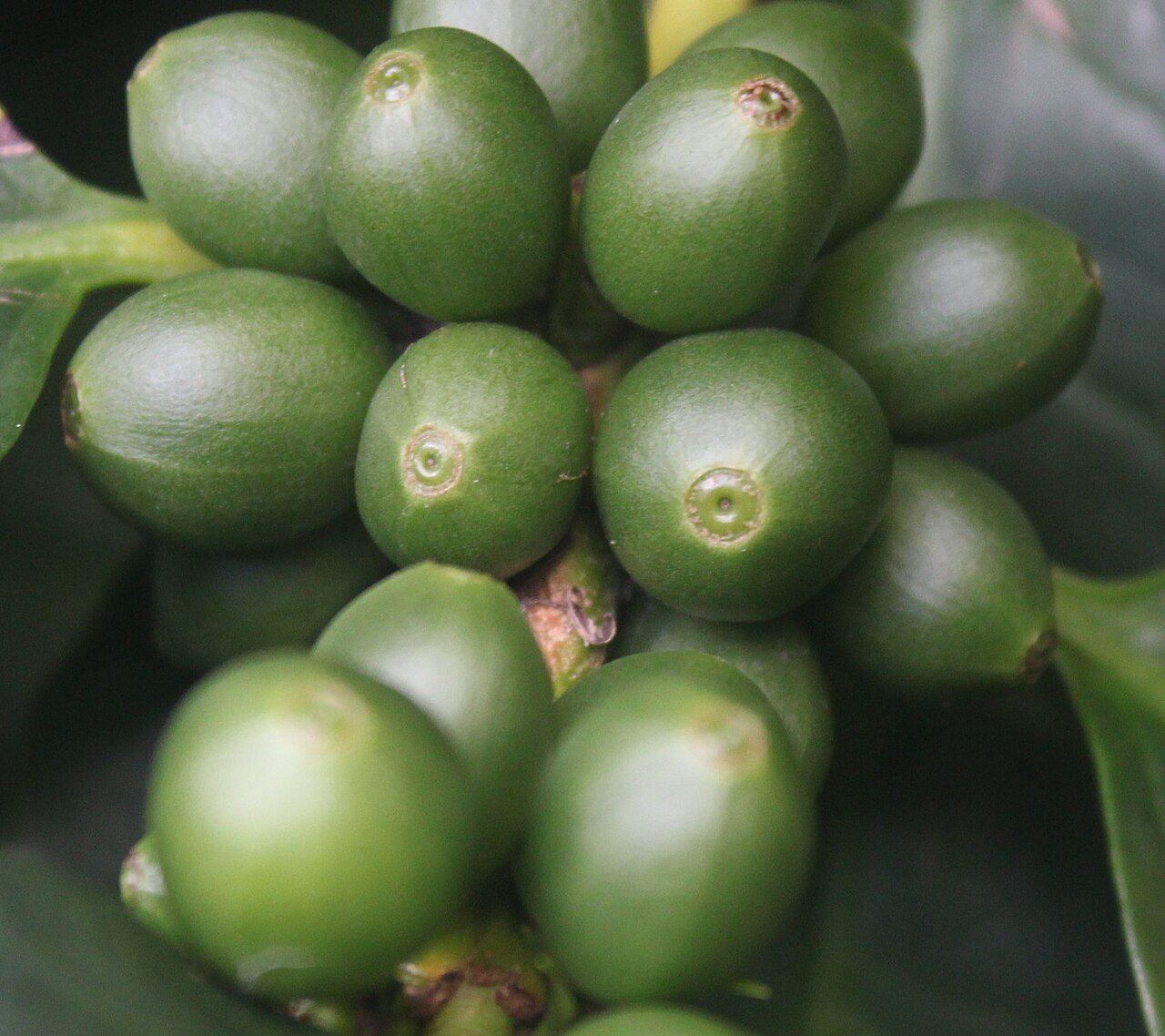
Arabica coffee beans are the seeds of Coffea arabica. According to Wikipedia’s Coffea arabica article, it is believed to be the first coffee species to have been cultivated, it accounts for about 60% of global production, and its natural populations are found in the forests of southern Ethiopia, South Sudan and Yemen. The same article explains that Arabica is a natural hybrid of two other coffee species, one of them Coffea canephora (Robusta), which makes it genetically quite different from Robusta despite that family link.
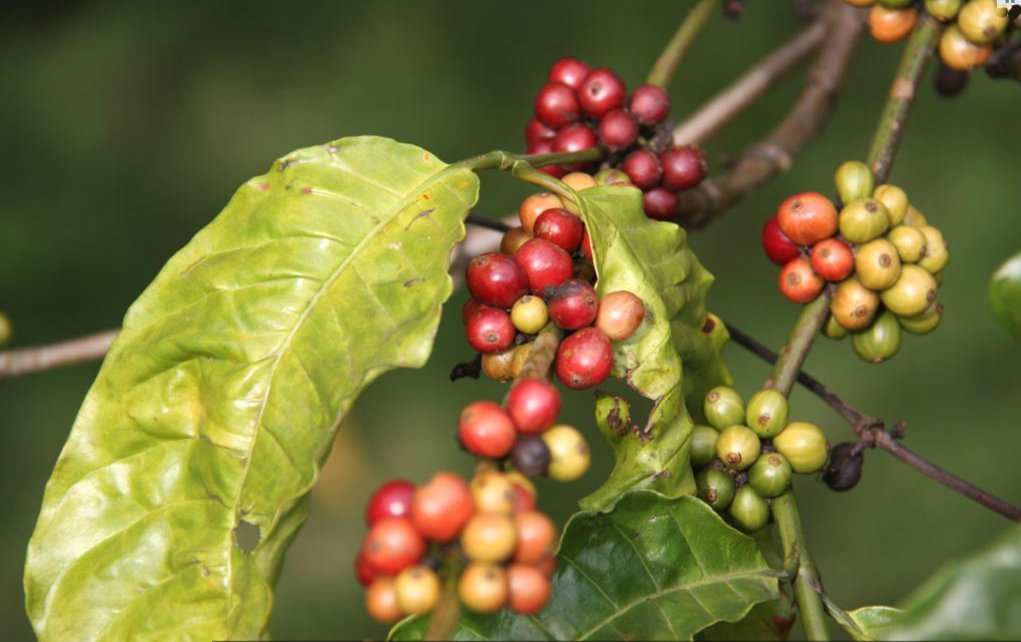
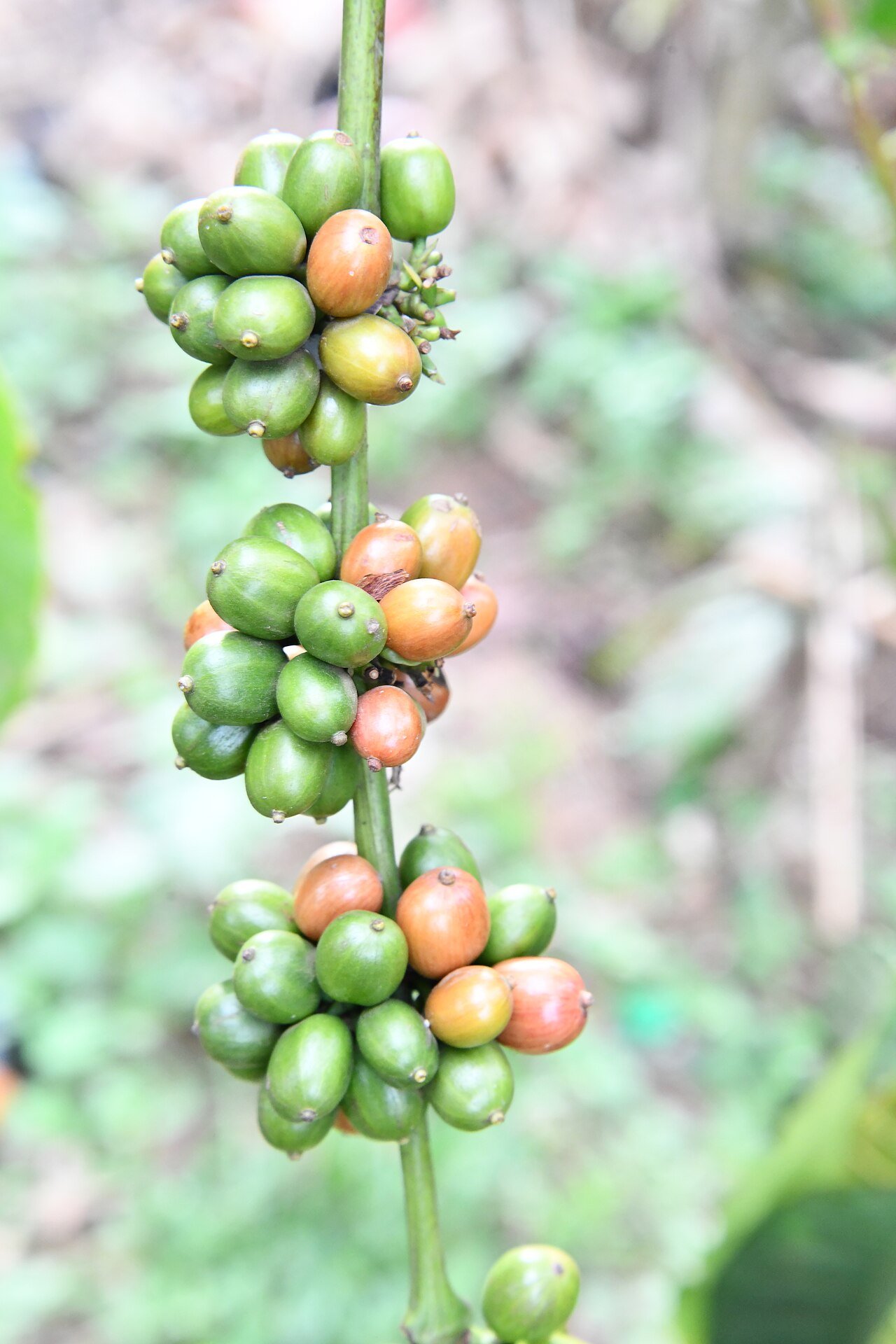
Each coffee cherry usually holds two seeds, and those seeds, once processed and dried, are the green Arabica coffee beans that roasters buy.

Arabica coffee beans vs Robusta
The two species behave very differently. Wikipedia’s Robusta article notes that Robusta has a greater crop yield and more caffeine than Arabica, about 2.7% compared with Arabica’s 1.5%, and less sugar, about 3% to 7% against Arabica’s 6% to 9%. Here is a summary:
| Arabica coffee beans | Robusta coffee beans | |
|---|---|---|
| Species | Coffea arabica | Coffea canephora |
| Share of world production | about 60% | about 40% |
| Caffeine | about 1.5% | about 2.7% |
| Sugar in the green bean | about 6% to 9% | about 3% to 7% |
| Typical taste | sweeter, more acidity, fruit and aroma | stronger, more bitter, earthy, heavier body |
| Typical altitude | usually 1,200 to 1,500 m, range sea level to 2,800 m | generally lower |
| Price | higher | lower |
The extra sugar in Arabica coffee beans is one reason they taste sweeter once roasted, while Robusta’s higher caffeine adds bitterness and strength. Our guide to Arabica vs Robusta explores the differences in depth, and our guide to the best Robusta coffee beans covers the other side.
Where Arabica coffee beans are grown
Arabica is grown in dozens of countries between the tropics, according to Wikipedia. Production is concentrated in a few big origins. The USDA’s July 2026 report forecasts world Arabica production at about 105.9 million 60 kg bags for 2026/27, led by these countries (USDA):
| Country | USDA 2026/27 Arabica forecast (million 60 kg bags) |
|---|---|
| Brazil | 47.5 |
| Colombia | 13.4 |
| Ethiopia | 12.1 |
| Honduras | 6.03 |
| Peru | 4.78 |
| Mexico | 3.58 |
| Guatemala | 3.13 |
| World total | 105.9 |
Brazil alone produces nearly half the world’s Arabica in this forecast. The USDA notes that over 70% of Brazil’s Arabica is grown in Minas Gerais, and that Brazil’s Arabica crop alternates between high-yielding and lower-yielding years, which makes the weather there the main indicator for world market conditions. Colombia, Ethiopia and Central America are the other big sources, while smaller origins such as Kenya, Rwanda and Tanzania produce less but are prized for quality.

A closer look at the main Arabica regions
East Africa
East Africa is where Arabica began, and it still produces some of the most distinctive coffee in the world. Ethiopia grows a huge range of local varieties, many never formally named, and its coffee runs from delicate and floral to intensely fruity depending on region and processing. Kenya is known for careful washing and grading, with AA being the largest bean size and often the most sought after.
Uganda is mostly a Robusta country, but the slopes of Mount Elgon produce sweet, chocolatey Arabica. Tanzania, Rwanda and Burundi add clean, bright coffees from small farms and washing stations. For buyers who want character and a story, this region is usually the first stop.
South America
Brazil is the giant, with huge, mechanised farms on rolling plateaus and a large share of natural and pulped natural coffee. Its Arabica tends to be nutty, chocolatey and low in acidity, which makes it a favourite base for espresso blends. Colombia grows washed Arabica across several mountain ranges, with harvests at different times in different regions, so it ships coffee for much of the year. Peru adds a large volume of washed Arabica, often grown by smallholders at altitude.
Central America and Mexico
Honduras, Guatemala, Mexico, Nicaragua, Costa Rica and their neighbours grow mostly washed Arabica on mountain farms. Many of their grading systems reward altitude, with “strictly hard bean” and similar grades for the highest-grown coffee. The cup is often balanced and sweet, with caramel, cocoa and citrus notes.
Asia and the Pacific
Asia is better known for Robusta, but it also grows Arabica, in places such as India, Indonesia, Papua New Guinea and parts of China and Southeast Asia. These coffees can be heavier and more earthy or spicy, depending on origin and processing.
Altitude and Arabica coffee beans
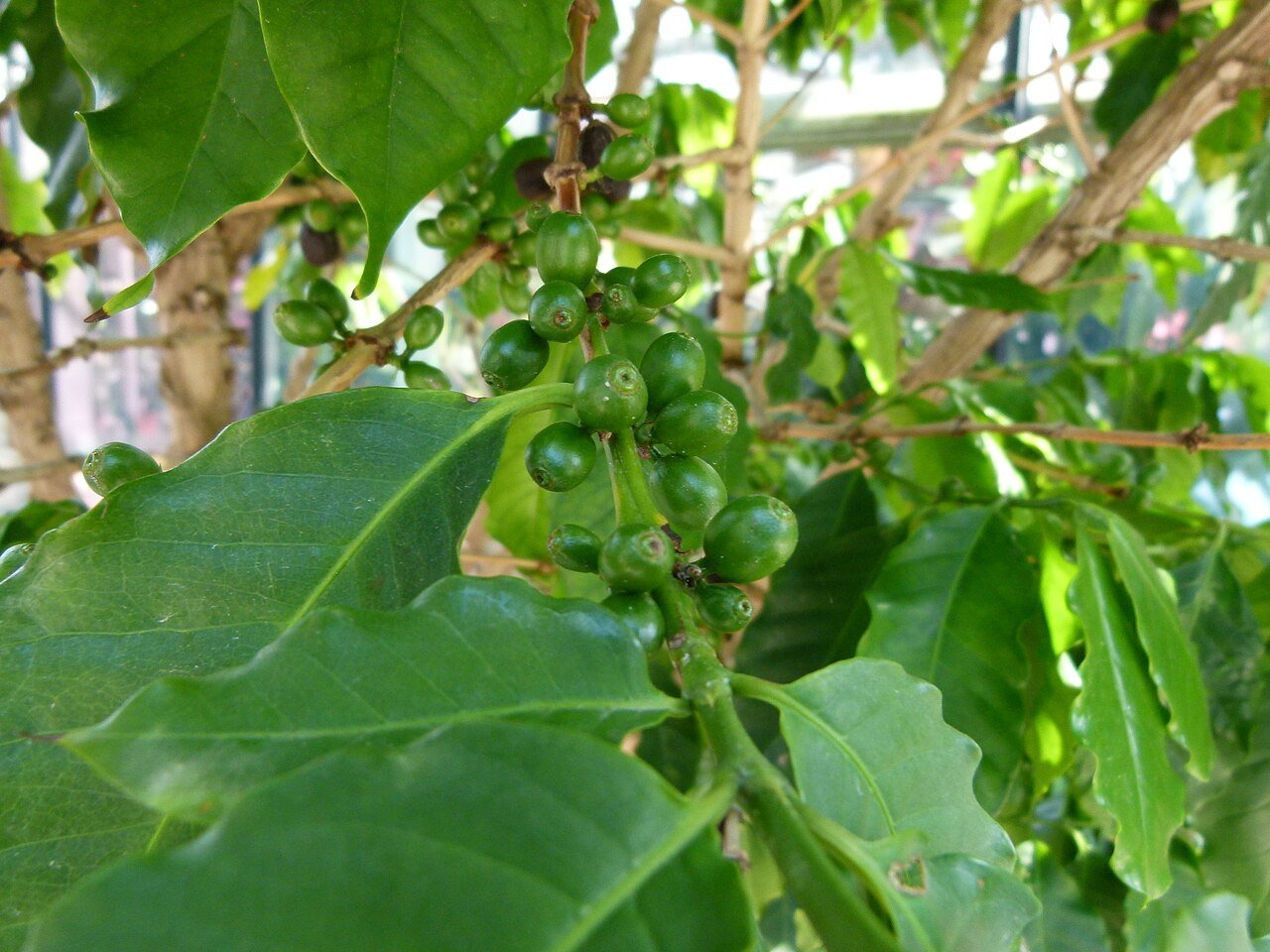
Arabica likes mountains. Wikipedia says it is usually cultivated at 1,200 to 1,500 metres, although some plantations grow it as low as sea level and as high as 2,800 metres, and that it typically grows at high elevations with moderate temperatures and well-drained soils.
As a general pattern in coffee buying, higher-grown Arabica coffee beans tend to be denser, ripen more slowly and show more acidity and complexity, which is why many grading systems reward altitude. Lower-grown Arabica is often softer, rounder and more chocolatey, which can suit espresso and milk drinks well. Neither is “better”; they suit different products.
Arabica varieties
Within the species there are many varieties, each with its own yield, disease resistance and cup quality. World Coffee Research’s free coffee varieties catalog gathers information on 55 Arabica varieties and 47 Robusta varieties from around the world, and is a good place to look up any variety you see on a spec sheet.
Some names you will often see on lots of Arabica coffee beans, described here in general terms:
- Typica and Bourbon: two of the oldest and most important lineages, known for good cup quality but often lower yields.
- Ethiopian heirloom (landrace) varieties: the many local types grown in Ethiopia, behind its famous floral and fruity coffees.
- SL28 and SL34: varieties strongly associated with Kenya’s juicy, intense coffees.
- Caturra, Catuaí and similar compact varieties: widely planted in Latin America for higher yields.
- Rust-resistant varieties: types bred to cope with coffee leaf rust, increasingly common on farms.
Variety matters most for specialty buyers. For many commercial uses, origin, processing and grade tell you more about how Arabica coffee beans will taste in your product.

How Arabica coffee beans taste by origin
These are typical profiles, described from common trade experience rather than guarantees for any lot:
- Ethiopia: floral and tea-like when washed, berry-rich when natural.
- Kenya: juicy and intense, often with blackcurrant and citrus.
- Uganda and Tanzania: sweet and rounded, chocolate, stone fruit and black tea.
- Rwanda and Burundi: clean, sweet, red fruit.
- Brazil: nutty, chocolatey, low acidity, often natural or pulped natural.
- Colombia and Central America: balanced, sweet, clean, with caramel and citrus.
Our African Arabica coffee beans bring the bright, fruity East African style, and our Africa Arabica coffee beans let you pick a specific country such as Ethiopia, Kenya, Uganda or Tanzania as a single origin. Our guide to single origin coffee beans explains how to sell them.

Processing and Arabica coffee beans
Processing changes the cup as much as origin. Washed Arabica coffee beans tend to be clean and bright; naturals, dried in the whole cherry, tend to be fruitier and heavier; honey-processed coffees sit between the two. Washed processing is common for Arabica in many countries, while Brazil processes most of its coffee as naturals. Our guide to coffee processing methods explains each method with sources.
How Arabica coffee beans are graded
Arabica coffee beans are graded by size (screen), defects, density and moisture, and judged by cupping. Country grade names differ: AA in Kenya, Grade 1 in Ethiopia, Supremo and Excelso in Colombia, SHB in Central America, Type 2 to 8 in Brazil. Our coffee bean grading guide explains these systems.
At the top of the market sits specialty coffee. A 2024 study in Frontiers in Sustainable Food Systems explains that on the 100-point scoring scales used in the trade, coffees scoring 80 or more are classed as Specialty for Arabica (or Fine for Robusta) (Frontiers, 2024). Not every Arabica is specialty; most of the world’s Arabica is commercial grade, which is perfectly suitable for many products.

What Arabica coffee beans cost
Arabica is priced off the ICE Coffee “C” futures market in New York, plus a differential for origin and quality. The International Coffee Organization’s September 2026 report shows how the main Arabica groups compared that month (ICO):
| ICO group (September 2026 average) | US cents per lb |
|---|---|
| Colombian Milds (washed Arabica) | 356.15 |
| Other Milds (other washed Arabica) | 329.44 |
| Brazilian Naturals (natural Arabica) | 290.19 |
| Robustas, for comparison | 167.49 |
The same report gives the New York Arabica futures average for September 2026 as 280.68 US cents per pound. Washed Arabica typically commands a premium over natural Arabica, and both sell at roughly double the Robusta indicator. Specialty and single-origin Arabica coffee beans usually sell above these indicator levels. Our guide to green coffee prices explains how a quote is built.
What is happening in the Arabica market
A few current trends matter if you buy Arabica coffee beans:
- A big Brazilian crop. The USDA forecasts Brazilian Arabica rebounding to 47.5 million bags in 2026/27, ending five years of weather-hit underperformance (USDA). The ICO reports Arabica prices falling more sharply than Robusta in September 2026 as that crop reached the market (ICO).
- A shifting export mix. The ICO reports that Arabica’s share of green bean exports in the first 11 months of coffee year 2025/26 fell to 59.6%, the first time on record it has dropped below 60% for that period (ICO).
- Disease pressure. Wikipedia notes that coffee leaf rust is a major threat to Arabica supply, causing losses of up to US$2 billion a year, which is one reason rust-resistant varieties are spreading.
In short, Arabica coffee beans are currently well supplied after Brazil’s rebound, but weather and disease keep the market volatile.
Reading an Arabica spec sheet
Here is an illustrative example of how a lot might be described, and what each part tells you:
Ethiopia, Sidama, washed, Grade 2, screen 14 and up, moisture 11.2%, crop 2026/27, 60 kg jute with liner.
- Ethiopia, Sidama: country and region, so you know the style to expect.
- Washed: a clean, bright processing style.
- Grade 2: the national grade, based on defects and cup quality.
- Screen 14 and up: the bean size range.
- Moisture 11.2%: within a safe range for storage and shipping.
- Crop 2026/27: the harvest it comes from.
- 60 kg jute with liner: packing that protects the coffee in transit.
If any of these are missing from an offer, ask for them.
Climate, disease and the future of Arabica
Arabica is a demanding plant, and climate change makes it harder to grow in some places. Beyond leaf rust, Wikipedia notes that the coffee berry borer, the main pest of coffee, may benefit from climate change and colonise higher altitudes that used to be too cold for it. Farmers are responding by planting more resistant varieties, moving to higher ground where possible, improving shade and soil care, and in some areas switching to Robusta.
For buyers, this means supply from any single origin can swing from year to year. Spreading purchases across several origins, and building relationships with suppliers who know their farms, makes your coffee supply more resilient.
Traceability and regulations
More buyers now want to know exactly where their Arabica was grown, for quality reasons and, in some markets, for legal ones. The European Commission states that from 30 December 2026, products including coffee that are placed on, sold within or exported from the EU must be free from deforestation (European Commission). If you sell in Europe, ask your supplier what traceability information comes with each lot. Our guide to single origin coffee beans covers this in more detail.
Building an Arabica range for a roastery
A practical starting range for many roasters, offered here as our suggestion, is three Arabicas:
- A blend base: a sweet, chocolatey, low-acid Arabica that works in espresso and milk, available in steady volume.
- An everyday single origin: a balanced, approachable coffee for filter, such as a washed Ugandan or Tanzanian.
- A standout single origin: something memorable, such as a natural Ethiopian or a Kenyan AA, rotated with the seasons.
Add a clean Robusta if your espresso needs more body and crema. With four coffees you can cover most of what a café or online shop sells, and keep your green stock manageable.
A simple tasting plan for new Arabica lots
When samples arrive, roast them all on the same simple profile, rest them for the same time, and cup them blind side by side with your current coffee. Then brew your top two the way your customers drink coffee, as filter, espresso or with milk. Write down sweetness, acidity, body, any faults and how it compares on price. This takes an hour or two and makes the decision far clearer than reading tasting notes on an offer sheet.
From cherry to green bean
Before any of this coffee reaches a roaster, a lot happens at origin. Ripe cherries are picked, either selectively by hand, stripped from the branch, or by machine on flatter farms. They are then processed, which means removing the fruit and drying the seeds, either washed, natural or honey style. Once dry, the coffee rests, then goes to a dry mill where the parchment or dried husk is removed, and the beans are sorted by size, density and colour to take out defects. Finally the green coffee is graded, bagged and prepared for export.
Every one of these steps affects quality. Careful picking means fewer unripe beans; careful drying prevents mould and off-flavours; good sorting removes the defects you would otherwise taste. When a supplier can tell you how a lot was picked, processed and sorted, it is usually a sign the coffee was handled with care.
Certified Arabica
Some buyers need certified coffee, such as organic or a sustainability certification, because their customers ask for it. Certified Arabica usually costs more, and the supply of any given certification is limited, so plan ahead. Always ask for a valid certificate covering the specific lot, and make sure the certification chain continues through to you if you plan to make the claim on your own packaging.
Buying Arabica for different markets
Taste preferences vary around the world. Specialty cafés in many cities favour light, bright, washed Arabica served as filter or espresso. Traditional espresso markets often prefer rounder, chocolatey Arabica blended with some Robusta. Many supermarket and food-service markets want consistent, mid-priced blends. Some fast-growing coffee markets are moving from instant coffee towards roasted coffee, and often start with milder, sweeter Arabica. Knowing which group your customers sit in helps you choose the right lots and the right price point.
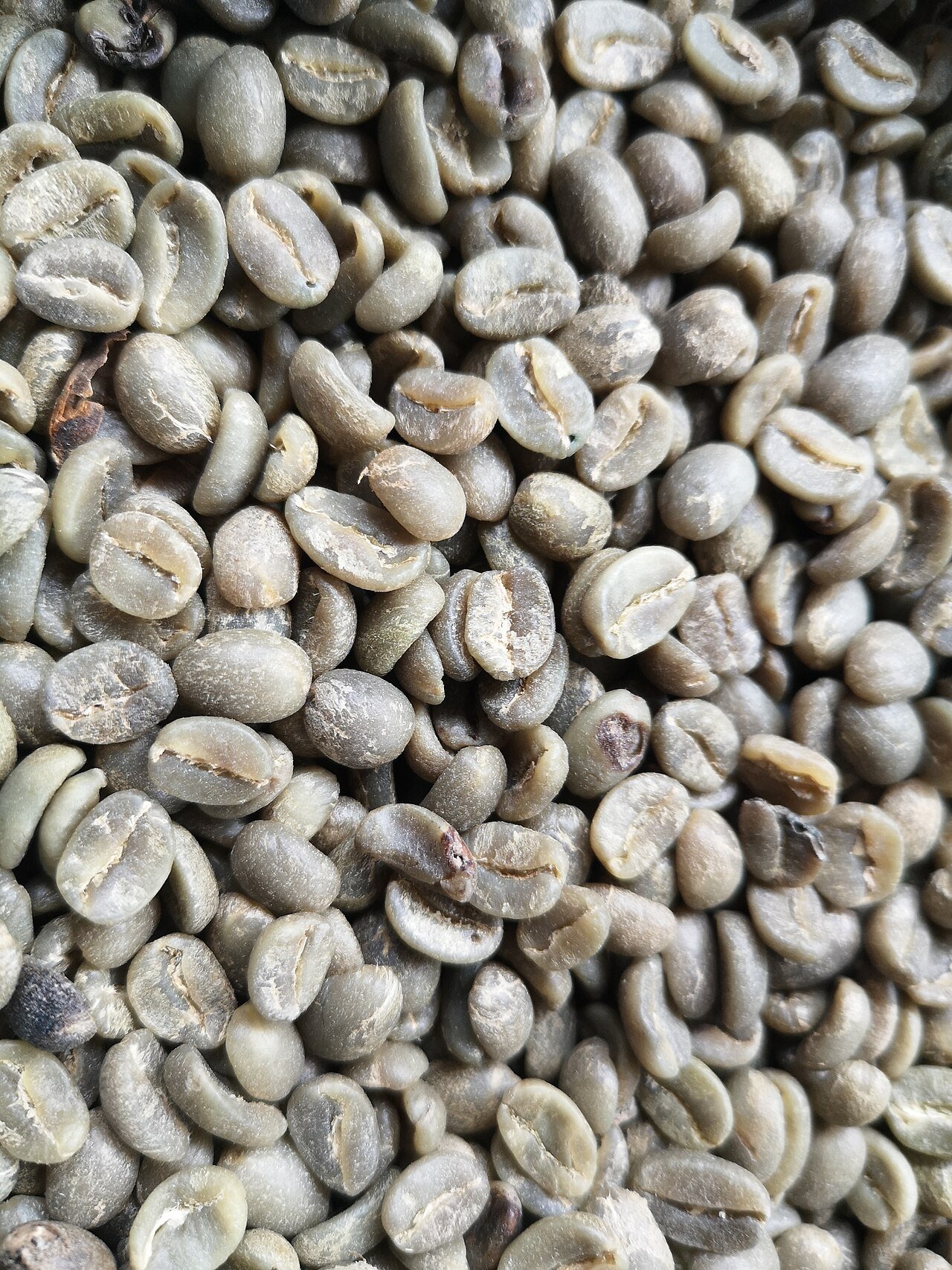
Judging green Arabica by eye and smell
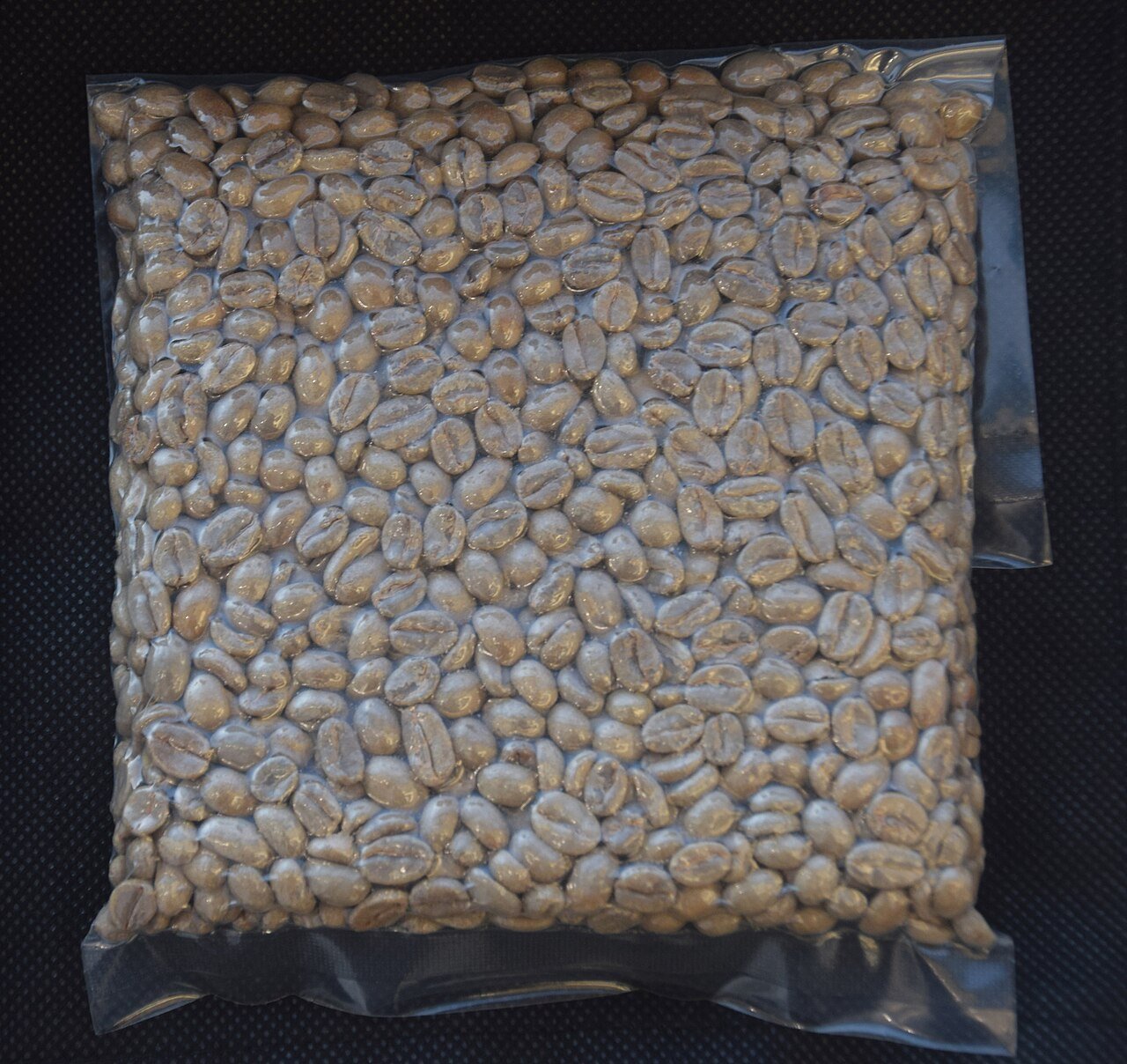
You can learn a lot before roasting. Good green Arabica is usually even in size and colour: washed lots often look blue-green to grey-green, naturals more yellowish. Look out for black, broken, chipped or insect-damaged beans, and for bits of stone, stick or husk. Smell the sample too: fresh coffee smells clean, like hay or dried grass, while musty, mouldy or chemical smells are warning signs. None of this replaces cupping, but it can rule out a poor lot in minutes.
How much Arabica should you buy?
Start from how much roasted coffee you sell each month, add roughly 15% to 20% for roasting loss, and you have your monthly green coffee need. Buy enough of each Arabica to cover a few months, so your coffee stays consistent, but not so much that it sits for a year and fades. Many roasters agree a yearly volume with their supplier and take it in several shipments, timed around each origin’s harvest. Our guide to green coffee prices explains how staged buying can also help with cost.
Arabica in ready-to-drink and instant products
Arabica is not only for cafés and retail bags. Ready-to-drink coffee and premium instant products often use Arabica, sometimes blended with Robusta, to give a smoother, more aromatic taste than Robusta alone. Low-acid, sweet coffees usually work best in cold and bottled drinks, while instant producers balance Arabica’s aroma against cost and yield. Our guides to coffee beans for cold brew and coffee beans for instant coffee cover these uses in detail.
Farmers and fair prices
Arabica is grown by millions of farmers, many on small plots, and the price they receive shapes whether good coffee keeps being grown. When world prices swing, farmers feel it first. Buying from suppliers who know their producers, paying fairly for quality and building long-term relationships all help keep quality coffee available. It also gives you a more honest and interesting story to tell your own customers about where their coffee comes from.
Three tiers of Arabica
It helps to think of the Arabica market in three broad tiers, described here in general terms rather than as formal categories.
Commercial or exchange-grade Arabica is the bulk of the market. It is clean enough for most roasted coffee, priced close to the futures market, and available in large, steady volumes. It suits supermarket blends, food service and many house espressos.
Premium Arabica sits a step above: better grades, more consistent sorting, often a named region, and a small premium to match. It suits roasters who want better quality than commodity coffee without the price of specialty.
Specialty Arabica scores 80 points or more on the trade’s cupping scale. It is often traceable to a washing station or farm, shows clear origin character, and carries a larger premium. It suits single-origin filter, guest espresso and retail bags sold on flavour and story.
Most roasters buy from more than one tier: specialty for their headline coffees, premium or commercial for their blends. Knowing which tier you need for each product is the simplest way to control cost without losing quality where it counts.
Choosing Arabica coffee beans for your product
The best Arabica coffee beans for you depend on what you make. This is our practical guide:
| Product | Arabica coffee beans that usually suit it | Read more |
|---|---|---|
| Filter and pour-over | Washed, high-grown, bright Arabica; single origins | Single origin guide |
| Espresso | Sweet, chocolatey Arabica as a base, often with some Robusta | Espresso guide |
| Milk drinks | Rounder, heavier Arabica such as Ugandan or Brazilian-style naturals | Espresso guide |
| Cold brew | Sweet, low-acid Arabica, naturals work well | Cold brew guide |
| Premium instant | Arabica blended with Robusta for aroma | Instant guide |
If your product is mostly milk-based, don’t pay for the brightest high-grown lot you can find; it may taste thin under milk. If you sell filter coffee to enthusiasts, that same lot might be your best seller.
Our Arabica coffee beans
We supply green Arabica coffee beans in bulk, graded and checked before shipping, worldwide. Here are our two Arabica lines and their typical specs; we confirm the exact specs, processing and crop year with every quote.
| African Arabica | Africa Arabica (single origins) | |
|---|---|---|
| Origin | East African highlands | Choose the country: Ethiopia, Kenya, Uganda, Tanzania, Rwanda, Burundi |
| Altitude | about 1,400 to 2,200 m | about 1,300 to 2,200 m |
| Processing | Washed or natural | Washed, natural, some honey |
| Screen | 15 to 18 | 15 to 18, plus peaberry |
| Moisture | 10% to 12.5% | 10% to 12.5% |
| Cup | Bright, fruity, floral, clean | Distinct by origin: floral, berry, citrus, chocolate |
| Best for | Filter, blend lift, espresso | Single-origin filter and guest espresso |
Both lines suit roasters who want bright, characterful Arabica coffee beans. If you need a specific country for a single-origin bag, choose Africa Arabica; if you want a flexible East African Arabica for blends and filter, choose African Arabica.
Blending Arabica coffee beans with Robusta
Many of the best-selling coffees in the world are blends. Arabica coffee beans bring sweetness and aroma; Robusta adds body, crema and caffeine. Some starting ratios we suggest:
- 80% Arabica, 20% Robusta: smooth espresso with extra crema. Try our Brazilian Robusta.
- 70% Arabica, 30% Robusta: classic Italian-style espresso. Try our Indian Robusta.
- 60% Arabica, 40% Robusta: strong milk blend. Try our Ugandan Robusta.
- 50% Arabica, 50% Robusta: bold value blend. Try our Vietnam Robusta, Indonesia Robusta or African Robusta.
Roast each separately if their densities differ, then blend and taste. Our roasting guide explains pre- and post-roast blending.
A buying checklist for Arabica coffee beans
- Origin and variety: which country, region and, if relevant, variety?
- Processing: washed, natural or honey?
- Grade: screen size, defect count and moisture.
- Crop year: fresh crop shows Arabica’s character best.
- Samples: cup the actual lot. Our coffee cupping guide explains how.
- Terms: Incoterm, payment, shipment period and contract terms.
- Traceability: what information comes with the lot, especially if you sell in the EU.
Our guide to choosing a green coffee supplier goes through these checks in more detail, and our guide to wholesale green coffee beans covers order sizes.

Roasting Arabica coffee beans
Arabica’s higher sugar content, as noted in Wikipedia’s Robusta article, means it caramelises and develops sweetness readily in the roaster. As general practice, roasters often take bright, high-grown Arabica coffee beans to light or medium for filter to keep the fruit and acidity, and to medium or medium-dark for espresso to build body and soften acidity. Dense, high-grown beans often need good heat early in the roast; softer, lower-grown beans can run faster. Natural Arabica can scorch more easily because of surface sugars, so many roasters start it a little cooler. Our full guide to roasting green coffee beans covers profiles and faults.

Storing Arabica coffee beans
Delicate Arabica coffee beans, especially washed lots, lose brightness faster than heavier Robusta. Keep green coffee cool, dry, off the floor and away from smells, use hermetic liners for lots you will hold for months, and rotate stock so the oldest coffee is roasted first. Our guide to storing green coffee beans gives targets for humidity and temperature.
When to buy Arabica coffee beans
Each origin harvests at a different time, so fresh Arabica arrives from different countries through the year: East African coffees, Brazilian coffees and Central American coffees all have their own windows. Buying soon after each origin’s harvest gives you the freshest Arabica coffee beans and the best choice of lots. Our guide to the coffee harvest season has a country-by-country calendar.
What Arabica costs per cup
Here is an illustrative calculation with made-up numbers. Suppose a good Arabica costs you US$8 per kilo landed. Roasting loses roughly 15% to 20% of the weight, so a kilo of green coffee gives about 820 g roasted. At around 18 g per double espresso, that is about 45 doubles, or roughly 18 US cents of coffee per drink. A cheaper coffee at US$6 per kilo would save around 4 to 5 cents per drink. For a café, the better Arabica coffee beans often cost very little extra per cup for a noticeable gain in taste.
Myths about Arabica coffee beans
“100% Arabica means high quality.” It only tells you the species. Grade, freshness, processing and roasting decide quality.
“Arabica is always better than Robusta.” For sweetness and aroma it usually is, but good Robusta beats poor Arabica, and Robusta adds things Arabica can’t, like thick crema.
“All Arabica tastes the same.” Origin, altitude, variety and processing create huge differences, as World Coffee Research’s catalogue of 55 Arabica varieties shows (WCR).
“Arabica has no caffeine kick.” It has less than Robusta, about 1.5% against 2.7% according to Wikipedia, but still plenty for most drinkers.
Common mistakes when buying Arabica coffee beans
- Buying on the word “Arabica” alone, without checking grade and crop year.
- Choosing very bright coffees for milk drinks, where they can taste thin or sour.
- Skipping samples.
- Buying old crop for light roasts, where age shows most.
- Ignoring landed cost, by comparing FOB with delivered prices.
- Relying on one origin, when weather or disease can hit a single country hard.
What happens after you enquire
When you contact us about Arabica, we start by asking how you will use it, how much you need and where it is going. We then suggest lots that fit, send a quote based on current market levels with the Incoterm and specs stated clearly, and arrange samples. Once you have tasted and are happy, we agree terms in writing, prepare the coffee and the export documents, and keep you updated through shipping. For new customers we are happy to start with a trial order, so you can check the coffee and our service before committing to larger volumes.
A short glossary
- Specialty: coffee scoring 80 or more on the trade’s 100-point cupping scale.
- Washed: fruit removed before drying, for a clean, bright cup.
- Natural: dried inside the whole cherry, for a fruitier, heavier cup.
- Screen size: bean size, measured in 64ths of an inch.
- Crop year: the harvest a coffee comes from.
- Differential: the premium or discount to the futures price for a given coffee.
- Peaberry: a single, round bean from a cherry that developed only one seed.
- Heirloom or landrace: traditional local varieties, especially in Ethiopia.
Buy Arabica coffee beans from us
Tell us how you will use the coffee, how much you need and where you are through our contact page. We will recommend Arabica coffee beans to suit, send a quote at current market levels with full specs, and send samples. You can browse our Arabica coffee beans and Robusta coffee beans, see all our products, read more about us, follow an order on our tracking page, or find more guides on our blog, including importing coffee beans.
Frequently asked questions about Arabica coffee beans
What are Arabica coffee beans?
The seeds of the Coffea arabica plant, the species behind about 60% of world coffee production and most specialty coffee.
Where do Arabica coffee beans come from?
The species originated in the forests of south-western Ethiopia, South Sudan and Yemen, and is now grown in dozens of tropical countries, led by Brazil, Colombia and Ethiopia.
How much caffeine do Arabica coffee beans have?
About 1.5% by weight, compared with about 2.7% for Robusta.
Why are Arabica coffee beans more expensive than Robusta?
Arabica yields less, grows at higher altitudes, is more vulnerable to disease such as leaf rust, and is in demand for premium coffee.
Are all Arabica coffee beans specialty grade?
No. Specialty coffee scores 80 points or more on the trade’s 100-point scale. Most Arabica is commercial grade.
What altitude do Arabica coffee beans grow at?
Usually 1,200 to 1,500 metres, though they range from near sea level to about 2,800 metres.
Should I buy washed or natural Arabica?
Washed for clarity and brightness; natural for fruit, sweetness and body. Many roasters stock both.
Can I blend Arabica with Robusta?
Yes. Many espresso and milk blends use 10% to 40% Robusta with an Arabica base.
Do you sell green Arabica coffee beans in bulk?
Yes. We supply East African and single-origin Arabica by the bag or container, shipped worldwide.
Key takeaways
- Arabica coffee beans make up about 60% of world production and are valued for sweetness, aroma and acidity.
- They carry less caffeine and more sugar than Robusta, and cost more.
- Brazil, Colombia and Ethiopia lead production; altitude, variety, origin and processing shape the cup.
- Washed Arabica usually sells at a premium to natural Arabica, and both well above Robusta.
- Choose Arabica to match your product, cup samples and confirm grade and crop year before buying.
Sources and References
- Wikipedia: Coffea arabica
- Wikipedia: Coffea canephora (Robusta)
- World Coffee Research: Coffee varieties catalog
- USDA Foreign Agricultural Service: Coffee: World Markets and Trade (July 2026)
- International Coffee Organization: Coffee Market Report, September 2026
- Frontiers in Sustainable Food Systems (2024): Sensory profiles of Robusta coffee

Pingback: Vietnamese Coffee Beans: Proven 2026 Guide to Buying Robusta - Continental Coffee Supply