
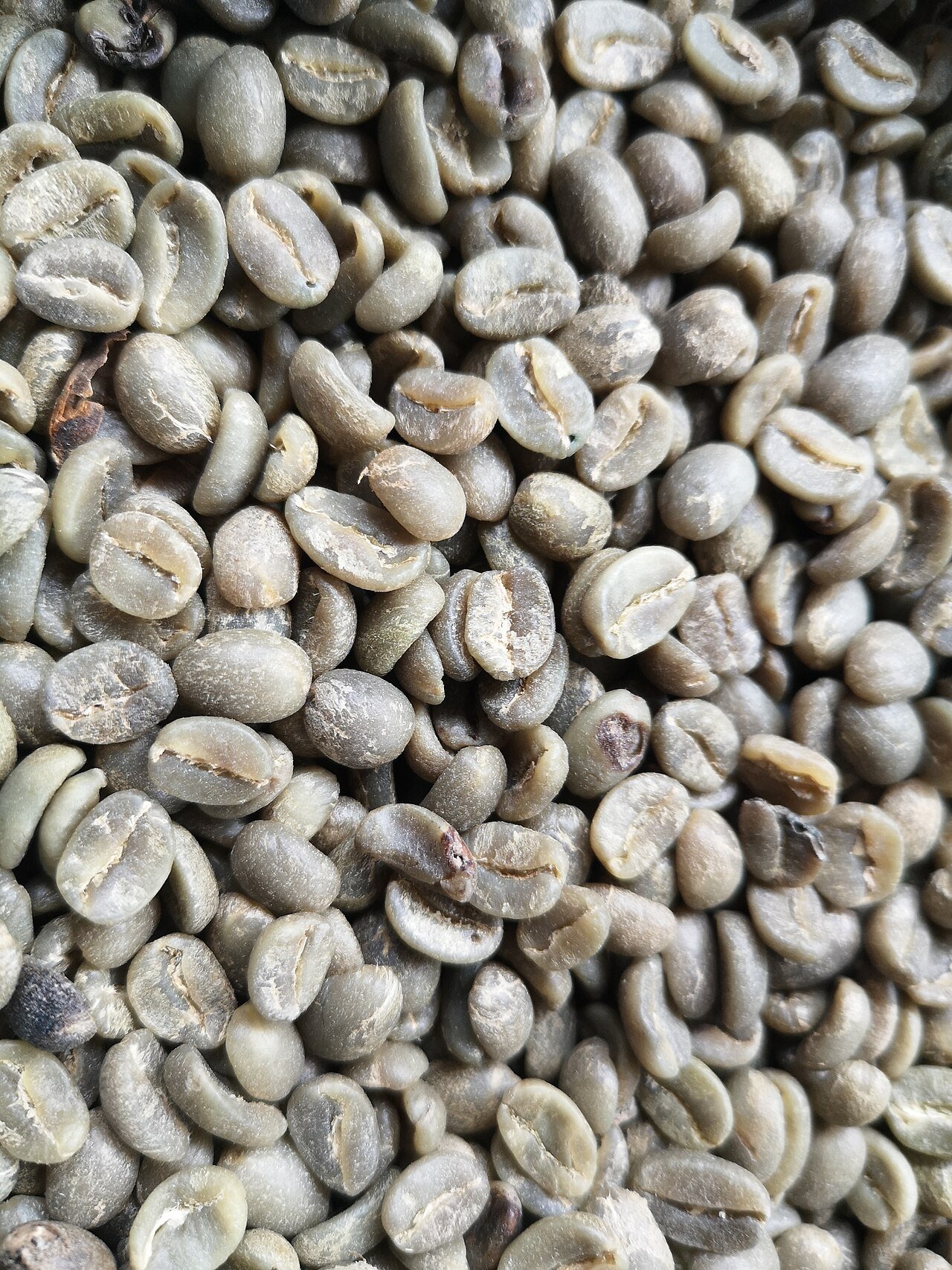
The best coffee beans for espresso are the ones that give you a sweet, balanced shot with good body and crema, in the style your customers like. Any coffee can technically be brewed as espresso. In practice, most espresso is made from a blend: an Arabica base for sweetness and aroma, often with a share of good Robusta for body, crema and strength. Traditional Italian-style espresso leans towards chocolatey Arabica with some Robusta; modern specialty espresso often uses 100% Arabica with brighter, fruitier flavours. If you roast your own, buying green coffee beans for espresso lets you build exactly the blend you want, at a much lower cost per kilo than buying roasted coffee.
We sell green Arabica and Robusta in bulk to roasters and cafés worldwide, so this guide is written from the buyer’s side. It explains what espresso actually needs from a coffee, how Arabica and Robusta behave in the cup, which origins work best, tried-and-tested blend ratios, how to roast and rest coffee beans for espresso, and what to check before you buy. Facts are linked to their sources. Blend recipes and practical tips are our own suggestions, and we label them as such.

What espresso needs from a coffee
Espresso is a concentrated coffee made by forcing very hot water under high pressure through finely ground, compacted coffee. According to Wikipedia’s espresso article, a shot is typically 25 to 30 ml, brewed in about 25 to 30 seconds, with a dark body under a lighter foam called crema. The same article notes that the Faema E61, a landmark machine, used an electric pump to pressurise water to 9 bars, and that crema forms because water under very high pressure dissolves more carbon dioxide, a gas produced in the coffee during roasting.
That short, intense brew magnifies everything in the coffee. Sweetness becomes syrupy, but sourness becomes sharper and bitterness more obvious. So good coffee beans for espresso tend to share a few traits:
- Natural sweetness, so the shot tastes rounded, not harsh.
- Balanced or moderate acidity, so it doesn’t turn sour when concentrated.
- Body, which gives the shot weight and helps it stand up to milk.
- Clean flavour, because defects are much easier to taste in espresso than in filter coffee.
- Consistency, so the shot tastes the same week after week.
Wikipedia also points out that espresso can be made with many types of beans and roast levels, despite the widespread myth that it needs dark-roast beans. The choice of coffee beans for espresso is really about the style you want.

A short history of espresso
Espresso is younger than many people think. According to Wikipedia, the first Bezzera and Pavoni espresso machines of 1906 took around 45 seconds to make a cup. Modern espresso, using hot water under real pressure, was pioneered by Gaggia in the 1940s and was originally called crema caffè, after the foam on top. Later, machines like the Faema E61 used an electric pump to reach 9 bars of pressure.
As espresso spread through Italy, roasters built blends to suit it, and good Robusta found a place in many of them for body and crema. That tradition still shapes how most people choose coffee beans for espresso today, even as specialty cafés experiment with lighter, single-origin shots.
Arabica or Robusta for espresso?
This is the first choice most buyers face. The two species behave very differently in a shot. Wikipedia’s Coffea canephora (Robusta) article states that Robusta contains more caffeine than Arabica, about 2.7% compared with about 1.5%, and less sugar, about 3% to 7% compared with Arabica’s 6% to 9%. It describes Robusta as having lower acidity, more bitterness and a more woody, less fruity flavour, and notes that good-quality Robusta beans are used in traditional Italian espresso blends to give a full-bodied taste and a better crema.
| Arabica | Robusta | |
|---|---|---|
| Caffeine | about 1.5% | about 2.7% |
| Sugar in the green bean | about 6% to 9% | about 3% to 7% |
| Typical flavour | sweeter, more acidity, fruit and aroma | lower acidity, more bitterness, woody and earthy |
| Role in espresso | sweetness, aroma, complexity | body, crema, strength |
In short: Arabica gives an espresso its sweetness and aroma, Robusta gives it weight, crema and kick. That is why so many coffee beans for espresso are sold as blends of the two. Our full guide to Arabica vs Robusta goes deeper into the differences.
Choosing coffee beans for espresso by style
Before you choose origins, decide what kind of espresso you are making. This table is our practical guide, not a formal standard.
| Espresso style | What it tastes like | Coffee beans for espresso that suit it |
|---|---|---|
| Traditional Italian | Heavy body, thick crema, chocolate and nuts, low acidity | Arabica base with 15% to 30% clean Robusta |
| Modern specialty | Brighter, sweeter, fruit-forward, lighter body | 100% Arabica, often a single origin |
| Milk-drink house blend | Strong enough to cut through milk, sweet, chocolatey | Sweet Arabica plus 20% to 30% Robusta |
| Strong and budget-friendly | Bold, bitter-sweet, high caffeine | 40% to 60% Robusta with a clean Arabica |
Once you know the style, picking coffee beans for espresso gets much easier. A café that sells mostly cappuccinos and lattes needs something different from a specialty bar serving straight shots.

The best origins for coffee beans for espresso
Origin shapes how a coffee behaves under pressure. Here are the coffees we sell and how each tends to work in espresso. The flavour notes are typical for each origin, not guarantees for a particular lot, so always cup and pull test shots before you commit.
African Arabica
Our African Arabica coffee beans bring sweetness, fruit and aroma. Washed East African lots can be quite bright, so in espresso they usually work best roasted a little further, around medium, or blended with a low-acid Robusta. On their own they can make a lively, modern single-origin espresso.
Africa Arabica single origins
If you want to choose a specific country, our Africa Arabica single-origin lots let you pick. Ugandan and Tanzanian Arabica are often rounder and more chocolatey, which suits espresso well. Natural Ethiopians make fruit-forward shots that people remember. These are among the most flexible coffee beans for espresso if you like to rotate a guest single origin.
Brazilian Robusta
Brazilian Conilon is one of the smoothest Robustas, with chocolate and nut notes and low acidity. That makes our Brazilian Robusta an easy first Robusta for an espresso blend; you can use a fairly high share before the shot turns harsh. Supply is also large and steady: the USDA forecasts Brazilian Robusta production at 24.4 million 60 kg bags for 2026/27 (USDA, July 2026).
Indian Robusta
Indian Robusta has a long reputation in espresso blends for clean bitterness and thick crema. It is India’s main coffee: Daily Coffee News, quoting the USDA, reports that Robusta accounts for over 70% of India’s crop (Daily Coffee News). Our Indian Robusta coffee beans are a strong choice for a classic Italian-style blend.
Ugandan Robusta
Ugandan Robusta grows higher than most Robusta and tends to taste of cocoa and dark chocolate with a long finish. In milk drinks it adds strength without harshness. See our Ugandan Robusta.
Vietnam Robusta
Vietnam grows more Robusta than anyone. The USDA forecasts Vietnamese Robusta at 31.4 million bags for 2026/27, part of a record 32.5 million-bag crop (USDA), and Wikipedia notes Vietnam accounts for over 40% of world Robusta production (Wikipedia). Clean, well-sorted grades like our Vietnam Robusta (Screen 16/18) make bold, affordable coffee beans for espresso and are a common blend base.
Indonesia Robusta
Indonesian Robusta is heavy and earthy, with cedar and dark chocolate. A small share adds serious body to a blend. See our Indonesia Robusta.
African Robusta
Strong and earthy, our African Robusta works well in dark espresso and strong blends.
For a deeper comparison of Robusta origins, read our guide to the best Robusta coffee beans.

Why supply matters for an espresso blend
An espresso blend is a product people expect to taste the same every day. That means its main components should come from origins with large, steady supply, so you can buy the same type of coffee again and again. Brazil and Vietnam are the obvious examples: the USDA says Brazil accounts for nearly 40% of world production, and forecasts Vietnam at a record 32.5 million bags for 2026/27 (USDA). Robusta as a whole is a huge market. Adding up the USDA’s 2026/27 figures, Robusta makes up 83.8 million of the 189.7 million bags forecast worldwide, or roughly 44% (our calculation from the USDA table).
This is one reason many coffee beans for espresso blends are built on Brazilian and Asian coffees, with more distinctive origins added in smaller shares for character. Our guide to the coffee harvest season explains when each origin’s new crop arrives, which matters when you plan blend supply.
Fine Robusta: why quality matters
Robusta has a bad reputation partly because so much of it is low grade. Good Robusta is a different thing. A 2024 study in Frontiers in Sustainable Food Systems notes that the Fine Robusta Standards and Protocols were published in 2019, and that on the 100-point scale used for both species, coffees scoring 80 or more are classed as Specialty (Arabica) or Fine (Robusta). The same paper notes that Robusta is mainly used for espresso, instant coffee and blends (Frontiers, 2024).
The practical lesson for buyers: when you choose coffee beans for espresso, don’t buy Robusta on price alone. A clean, well-sorted Robusta improves a blend; a dirty one ruins it. Look for low defect counts and cup it before you buy. Our guide to coffee cupping explains how.
Espresso blend recipes
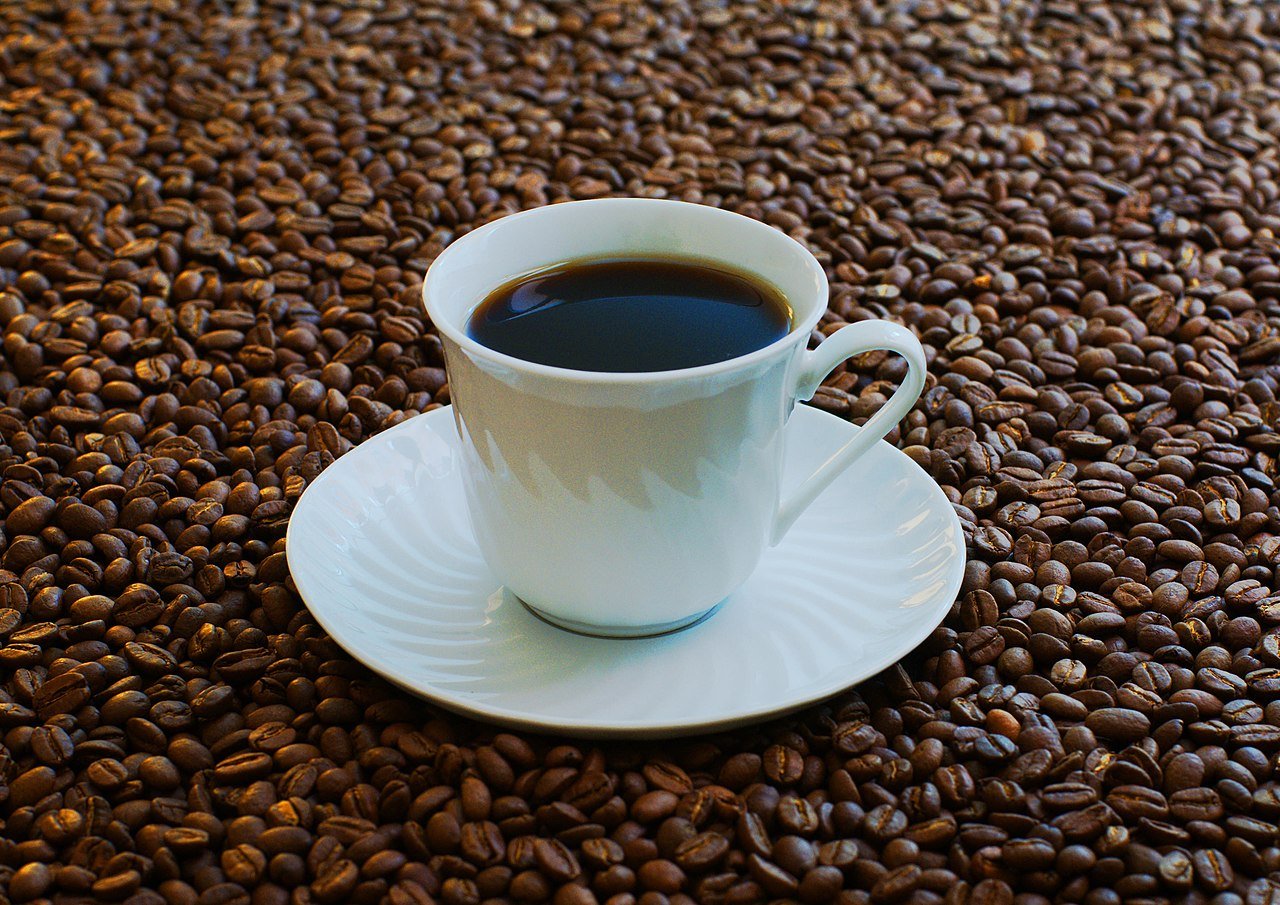
These are starting points we suggest for roasters building a blend from our green coffees. They are not fixed formulas: roast small batches, pull shots, taste straight and with milk, and adjust in 5% steps.
| Blend (our suggestion) | Arabica | Robusta | Roast | Result |
|---|---|---|---|---|
| Smooth house espresso | 80% African Arabica | 20% Brazilian Robusta | Medium to medium-dark | Sweet, chocolatey, good crema, gentle bitterness |
| Classic Italian bar | 70% African Arabica | 30% Indian Robusta | Medium-dark | Heavy body, thick crema, cocoa and spice |
| Milk-drink blend | 70% Africa Arabica (washed Uganda or Tanzania) | 30% Ugandan Robusta | Medium-dark | Cuts through milk, chocolate and caramel |
| Strong value blend | 50% African Arabica | 50% Vietnam Robusta | Dark | Bold, high caffeine, good in food service |
| Earthy and heavy | 60% African Arabica | 40% Indonesia Robusta | Medium-dark | Very heavy body, cedar, dark chocolate |
Many roasters roast Arabica and Robusta separately and blend after roasting, because the two species develop at different speeds. Our guide to roasting green coffee beans explains pre-roast and post-roast blending.
Single-origin espresso
Not every espresso has to be a blend. A single-origin shot shows off one coffee’s character and gives customers something to talk about. Good candidates are sweet, balanced coffees that don’t become too sour when concentrated, such as a washed Ugandan or Tanzanian Arabica, or a natural Ethiopian for a fruit-forward shot. Single origins are great as a rotating “guest” espresso next to a steady house blend. They are also a good way to try new coffee beans for espresso without changing your main recipe.

Roasting coffee beans for espresso
There is no single right roast for espresso. As Wikipedia notes, espresso can be made with many roast levels, and the idea that it must be dark is a myth. In practice, many roasters take coffee beans for espresso to medium or medium-dark, and develop them a little longer after first crack than they would for filter. That tends to soften acidity and build sweetness and body, which helps in a concentrated shot. Very light roasts can taste sour as espresso; very dark roasts lose sweetness and turn ashy.
Some practical points, from common practice rather than any formal standard:
- Arabica usually suits medium to medium-dark for espresso.
- Robusta usually needs medium-dark or darker; under-roasted Robusta tastes raw and harsh.
- Roast components separately if they are very different in density or species, then blend.
- Keep notes of every roast so you can repeat the one that worked.
Our full guide to roasting green coffee beans covers profiles, roast levels and faults.

Resting coffee beans for espresso after roasting
Freshly roasted coffee is full of carbon dioxide. That gas is part of what makes crema, according to Wikipedia, but too much of it right after roasting makes shots gush, foam and taste sharp and uneven. Most roasters rest coffee beans for espresso for several days to a couple of weeks before serving. The right rest depends on the coffee and roast, so test shots on day three, day seven and day ten and see when you like it best. Store roasted coffee in bags with one-way valves.
Grinding and dialling in
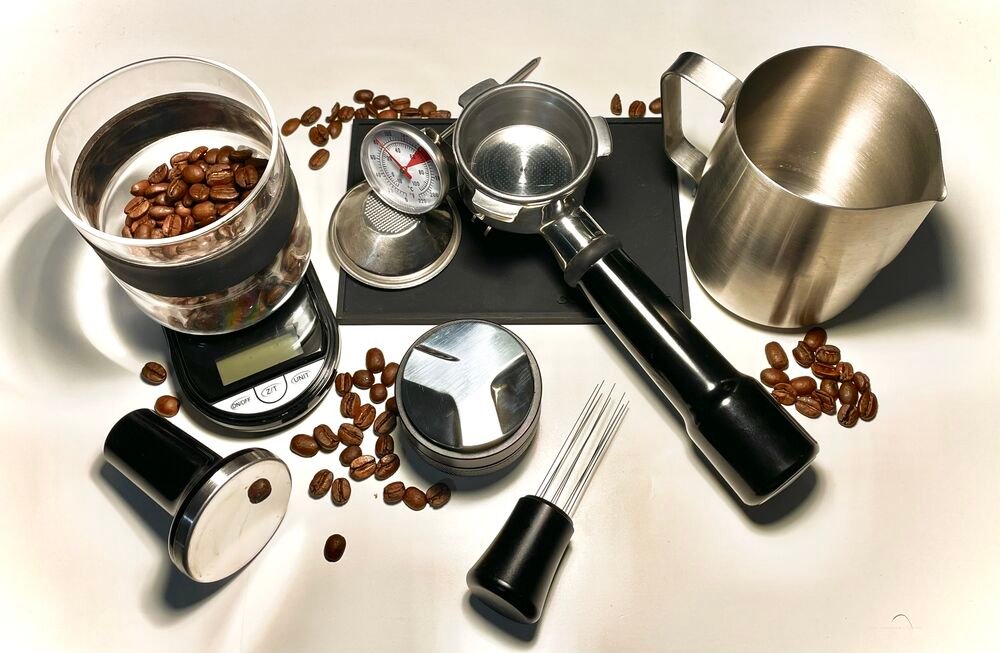
Even the best coffee beans for espresso will taste wrong if the shot is badly made. Wikipedia lists grind size, water temperature, pressure and tamping among the factors that affect espresso quality. When you change coffee or roast, expect to adjust:
- Grind: finer slows the shot and increases extraction; coarser speeds it up.
- Dose: keep it consistent, and change it in small steps.
- Shot time and volume: aim for a balanced taste, using the 25 to 30 ml and 25 to 30 seconds typical of espresso as a starting point.
- Taste: sour and thin usually means under-extracted; bitter and dry usually means over-extracted.
Robusta-heavy blends often pull faster and produce more crema than 100% Arabica, so a new blend may need a finer grind than your old one.
Coffee beans for espresso in milk drinks
Most espresso in many markets ends up in cappuccinos, lattes and flat whites. Milk softens acidity and bitterness but also dilutes flavour, so coffee beans for espresso used mainly in milk drinks need enough body and sweetness to come through. This is where a share of Robusta earns its place: as Wikipedia notes, good Robusta adds body and crema in traditional Italian blends. Chocolatey Arabicas from East Africa, or a washed Ugandan, also work well. Very bright, delicate coffees can taste thin in milk.

Coffee beans for espresso by type of business
Specialty café. Customers notice flavour, so sweetness and clarity come first. A sweet Arabica-led blend or a rotating single origin works well. Keep Robusta to a small share, if any, and use only very clean lots.
Busy neighbourhood café. Most drinks have milk. Choose coffee beans for espresso with body and chocolate notes, such as an Arabica base with 20% to 30% Brazilian or Ugandan Robusta.
Roaster selling to cafés. Consistency is everything, because your customers’ customers expect the same coffee daily. Build your house blend on steady-supply origins and keep the recipe stable through crop changes.
Office, hotel and food service. Machines vary, staff change and volumes are high. Forgiving, Robusta-rich blends that taste good across a range of settings are often the best value.
Building an espresso blend step by step
Here is a simple process we suggest for roasters building a blend from green coffee beans for espresso:
- Define the target. Write down the taste you want: for example, “sweet, chocolatey, low acidity, good in milk”.
- Choose a base. Pick one Arabica that is sweet and balanced on its own. This will usually be 60% to 80% of the blend.
- Choose a Robusta, if wanted. Pick a clean Robusta that adds the body and crema you need without harshness.
- Roast each separately to a level that suits it, and record the profiles.
- Make three test blends, such as 80/20, 70/30 and 60/40, and rest them for the same number of days.
- Pull shots of each, straight and with milk, and taste blind if you can.
- Adjust in 5% steps until you hit your target, then lock the recipe.
The whole process can take a few weeks, but once it is done you have a blend that is truly your own.
A simple tasting plan for new coffee beans for espresso
When you are testing new coffee beans for espresso, structure helps. Taste each sample in three ways: as a straight shot, as a cappuccino-style milk drink, and on the cupping table. For each, write down sweetness, acidity, bitterness, body, crema and any off-notes. Compare against your current coffee every time. If a new coffee is better in the cup but worse in milk, it may still be a good single origin rather than a blend base. Our guide to coffee cupping covers the cupping part in detail.
Ristretto, lungo and other shots
The same coffee beans for espresso can make different drinks. Wikipedia explains that ristretto, normale and lungo are not just the same shot stopped at different times; the grind is usually adjusted, finer for ristretto and coarser for lungo, to reach the target volume. A ristretto concentrates sweetness and body, while a lungo is lighter and can show more bitterness. Blends with good body tend to hold up best across all three.
Keeping the taste steady through new crops
Every year brings new harvests, and new crop coffee can taste a little different from last year’s. To keep your coffee beans for espresso tasting the same, cup new-crop samples against your current lots before switching, overlap old and new stock for a few weeks, and adjust the blend ratio slightly if the new crop is brighter or heavier. Keeping a small reference sample of your current blend makes this much easier. Our guide to the coffee harvest season explains when each origin’s new crop arrives.
What to check when buying green coffee beans for espresso
If you roast your own, the green coffee you buy sets the ceiling for your espresso. Before you buy coffee beans for espresso in volume, check:
- Defects. Espresso concentrates faults. Low defect counts matter more here than for many other uses. See our guide to coffee bean grading.
- Screen size and evenness. Even beans roast evenly, which keeps shots consistent.
- Moisture. Around 10% to 12.5% is a common target for stable green coffee.
- Processing. Naturals and honeys often add sweetness and body; washed coffees add clarity. Our guide to coffee processing methods explains the differences.
- Crop year. Fresh crop gives sweeter, livelier espresso. Our coffee harvest season guide shows when each origin arrives.
- A sample. Cup it and pull shots with it before committing.
For pricing, contracts and order sizes, read our guide to wholesale green coffee beans. If you import directly, our guide to importing coffee beans covers the process.
Washed, natural or honey beans for espresso?
Processing changes how coffee behaves in a shot. Washed coffees tend to be clean and bright, which gives clarity but can tip into sourness if the roast is light. Natural coffees, dried in the whole cherry, usually bring more sweetness, fruit and body, which many baristas like in espresso. Honey-processed coffees sit between the two. Natural Robusta is common and gives a heavy, rustic shot; washed Robusta is cleaner and lets you use a higher share before the blend tastes harsh. When you shortlist coffee beans for espresso, try a washed and a natural from the same origin side by side. Our guide to coffee processing methods explains why they taste different.
Density, altitude and espresso
High-grown Arabica is usually denser and often brighter, with more acidity. In espresso that can be wonderful or too sharp, depending on the roast. Lower-grown, softer coffees are often rounder and easier to make taste sweet as espresso. Robusta, mostly grown lower, adds body regardless. A practical rule many roasters use: if a high-grown coffee tastes too sour as espresso, roast it a touch further or pair it with a softer, chocolatey coffee. This is general guidance from roasting practice, not a fixed rule, but it helps when choosing coffee beans for espresso from different altitudes.
Two example blends side by side
To show how much the choice of coffee beans for espresso matters, picture two blends built on the same Arabica. This comparison is illustrative, describing how these coffees typically behave, not the result of a specific test.
- Blend A: 80% washed African Arabica, 20% Brazilian Robusta. Expect a sweet, balanced shot with soft acidity, milk chocolate and a decent crema. Easy to drink straight and good in a flat white.
- Blend B: 70% washed African Arabica, 30% Indian Robusta. Expect more body and bitterness, darker chocolate and spice, and a thicker, longer-lasting crema. Stronger in milk drinks, closer to a classic Italian bar shot.
Neither is better. They suit different customers. The point is that a 10% change in Robusta, and the choice of origin, can move your espresso a long way.
Water and equipment matter too
Even great coffee beans for espresso can be let down by the setup. Water makes up nearly all of the drink, so use clean, filtered water that tastes good on its own. Scale build-up in machines affects temperature and flow, so keep machines descaled and serviced. A good burr grinder that can make small, consistent adjustments is just as important as the espresso machine. If shots suddenly change without any change in coffee, check the water, grinder and machine before blaming the beans.
How much coffee should you buy?
Work out how many kilos of roasted espresso you use each month, then add roughly 15% to 20% for roasting loss to get the green coffee you need. Buy enough of each component to cover a few months, so your blend stays consistent, but not so much that the coffee sits for a year. Many roasters agree a yearly volume with their supplier and take it in several shipments. That keeps coffee beans for espresso fresh and protects you if one shipment runs late. Our guide to wholesale green coffee beans explains contracts and order sizes.
For current market levels and how quotes are built, see our guide to green coffee prices.
What a shot really costs
Here is a rough way to think about cost, using our own example numbers rather than market data. Roasting loses roughly 15% to 20% of the green weight, so 1 kg of green coffee gives you about 800 to 850 g roasted. If you use around 18 g of coffee for a double shot, that is roughly 45 doubles per kilo of green coffee. Even if a better Arabica costs noticeably more per kilo, the difference per drink is often small. That is why many cafés choose better coffee beans for espresso: customers taste the difference, but the extra cost per cup is modest. For high-volume food service, Robusta-heavy blends make a bigger difference to the bottom line.
Storing coffee beans for espresso
Green coffee keeps for months if stored cool, dry and away from smells; roasted coffee is best used within weeks of resting. Buy green coffee in amounts you can roast while it is fresh, and roast in batches sized to what you will use. Our guide to storing green coffee beans covers storage in detail.
Looking for coffees with a clear origin story? Our guide to single origin coffee beans explains what single origin means, how traceability works and how to build a menu that sells.
Not sure who to buy from? Our guide to choosing a green coffee supplier covers specs, samples, contracts, Incoterms and red flags.
For a full buyer’s guide to origins, varieties, grades and prices, see our guide to Arabica coffee beans.
Common mistakes when choosing coffee beans for espresso
- Buying cheap, dirty Robusta. It makes the whole blend taste rubbery or harsh.
- Using a very bright, light-roasted coffee for milk drinks. It can taste sour and thin.
- Changing too many things at once. Change one component or ratio at a time.
- Serving coffee too fresh. Rest it first.
- Judging on the cupping table alone. Always pull shots, straight and with milk.
- Building a blend on a coffee you can’t buy again. Use steady-supply origins for the base.
- Ignoring the crop year. Old coffee makes flat espresso.
Signs it is time to change your espresso coffee
- Shots that used to taste sweet now taste flat, papery or woody, which often means the green coffee is ageing.
- Customers say the coffee disappears in milk.
- You keep having to grind much finer or coarser to get the same shot.
- Crema has become thin and pale even with fresh roasts.
- You want a stronger or gentler house style than your current blend gives.
Any of these is a good reason to sample new coffee beans for espresso. Start by replacing one component at a time so you can tell what made the difference.
Questions to ask your supplier
- Which of your coffees do other roasters use for espresso, and in what share?
- What is the crop year, moisture, screen size and defect count?
- Is it natural, washed or honey processed?
- Can I have samples of two or three options to test side by side?
- Will the same type of coffee be available next year for my blend?
Clear answers make it far easier to pick coffee beans for espresso that you can buy again and again.
Home espresso vs café espresso
The same principles apply at home and in a café, but the priorities shift. Home machines often have less stable temperature and pressure, so forgiving coffees with good sweetness and body, such as a chocolatey Arabica with a little Robusta, usually give the most reliable results. Home roasters also buy smaller amounts, so freshness is easier to manage. Cafés, on the other hand, pull hundreds of shots a day on commercial machines, need consistency above all, and buy coffee beans for espresso in bags or containers. If you supply both, a balanced house blend that tastes good across different machines is often the most useful product you can offer.
Whatever the setting, the steps are the same: choose sweet, clean coffees, roast them to suit espresso, rest them, dial in carefully and taste with and without milk. Get those right, and your coffee beans for espresso will do the rest.
Our coffees for espresso
Here is how each coffee we sell fits into espresso. Shares are our suggested starting ranges, not rules.
| Our coffee | Role in espresso | Typical share in a blend (our suggestion) |
|---|---|---|
| African Arabica | Sweetness, aroma, fruit | 50% to 100% |
| Africa Arabica single origins | Character, single-origin shots | Up to 100% |
| Brazilian Robusta | Smooth body and crema | 15% to 40% |
| Indian Robusta | Clean bitterness, thick crema | 15% to 35% |
| Ugandan Robusta | Cocoa, strength in milk | 20% to 40% |
| Vietnam Robusta | Bold, affordable base | 20% to 60% |
| Indonesia Robusta | Heavy body, earthy depth | 10% to 40% |
| African Robusta | Strength for dark blends | 20% to 50% |
Order coffee beans for espresso from us
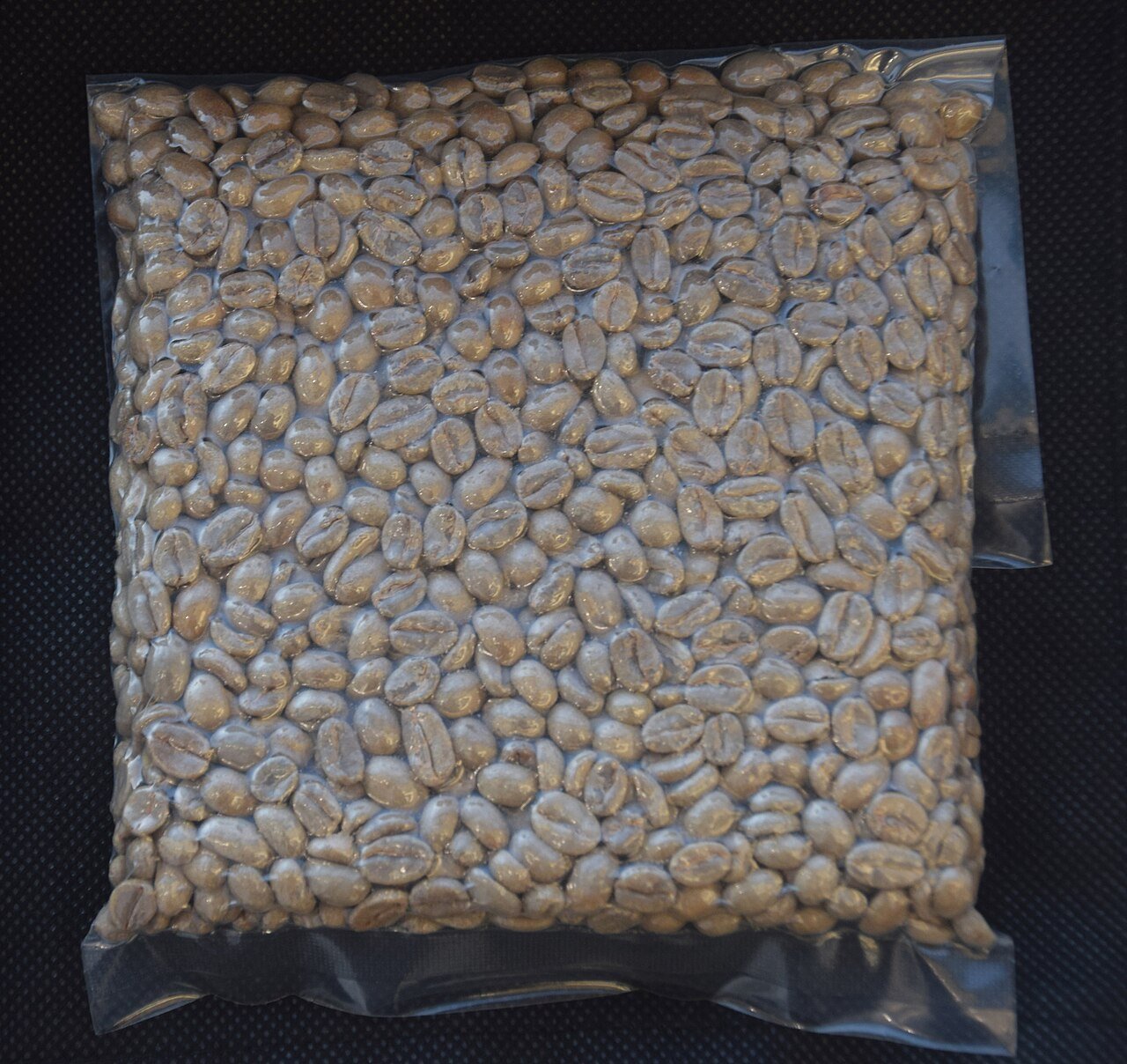
We supply green Arabica and Robusta for espresso in bulk, graded and checked before shipping, worldwide. Tell us the style of espresso you make, roughly how much you roast and where you are through our contact page, and we will suggest coffees and send samples so you can build and test your blend. You can browse our Arabica coffee beans and Robusta coffee beans, see all our products, read more about us, follow an order on our tracking page, or find more guides on our blog.
Frequently asked questions about coffee beans for espresso
What are the best coffee beans for espresso?
There is no single best. For a traditional shot, a sweet, chocolatey Arabica with 15% to 30% good Robusta is a classic choice. For a modern, brighter shot, a sweet single-origin Arabica works well.
Is Robusta good for espresso?
Good-quality Robusta is widely used in espresso, especially Italian-style blends, for body and crema. Low-grade Robusta can taste harsh, so quality matters.
Do I need special beans to make espresso?
No. Any coffee can be brewed as espresso, but coffees with sweetness, body and balanced acidity usually taste best.
Does espresso have to be dark roast?
No. Espresso can be made with many roast levels. Many roasters choose medium to medium-dark.
Which has more caffeine, Arabica or Robusta?
Robusta, with about 2.7% caffeine compared with about 1.5% for Arabica, according to Wikipedia.
What makes crema?
Carbon dioxide from roasting dissolves into the water under high pressure and forms the foam on top. Robusta tends to give more crema.
How long should I rest coffee beans for espresso?
Usually several days to a couple of weeks after roasting. Test shots on different days to find the sweet spot.
What blend ratio should I start with?
80% Arabica and 20% Robusta is a gentle start; 70/30 gives a stronger, creamier Italian-style shot.
Can I buy green coffee beans for espresso in bulk?
Yes. We supply green Arabica and Robusta for espresso by the bag or container and ship worldwide.
Are single-origin coffee beans for espresso better than blends?
Not better, just different. Single origins show one coffee’s character; blends give balance and consistency. Many cafés offer a house blend plus a rotating single origin.
Key takeaways
- The best coffee beans for espresso are sweet, balanced, clean and consistent, in the style your customers want.
- Arabica brings sweetness and aroma; good Robusta brings body, crema and caffeine.
- Build blend bases on steady-supply origins like Brazil and Vietnam, and add character coffees on top.
- Quality matters most in Robusta: buy clean, well-sorted lots.
- Roast medium to medium-dark, rest properly, and dial in with real shots.
- Always sample, cup and pull test shots before buying in volume.

Pingback: Coffee Beans for Cold Brew: 8 Proven Picks for Smooth Flavor - Continental Coffee Supply
Pingback: Coffee Beans for Instant Coffee: 7 Proven Origins Buyers Trust - Continental Coffee Supply