
Coffee beans for instant coffee are mostly Robusta. Factories that make soluble coffee pick dense, clean, natural-processed Robusta from places like Vietnam, Brazil, Uganda and India because it gives more soluble solids per kilo, a heavier body and a lower raw material bill than Arabica. Arabica still has a job, usually as a smaller share in freeze-dried and premium blends where aroma matters more than yield. We sell both, green and export-ready, by the bag, the ton or the container, and we ship worldwide.
That is the short answer. The longer one matters if you run a soluble plant, buy for one, or are thinking of starting a private-label instant brand, because the beans you pick decide your yield, your cost per jar and how your product tastes after it has been through an extraction tower and a dryer. Get the raw material wrong and no amount of process tuning will save the margin.
This guide covers what makes good coffee beans for instant coffee, how much green coffee you need per kilo of finished powder, how spray drying and freeze drying change the bean choice, the seven origins we see buyers use most, what to write into your contract, and where the market sits in late 2026. Where we quote numbers, we link the source so you can check it yourself.
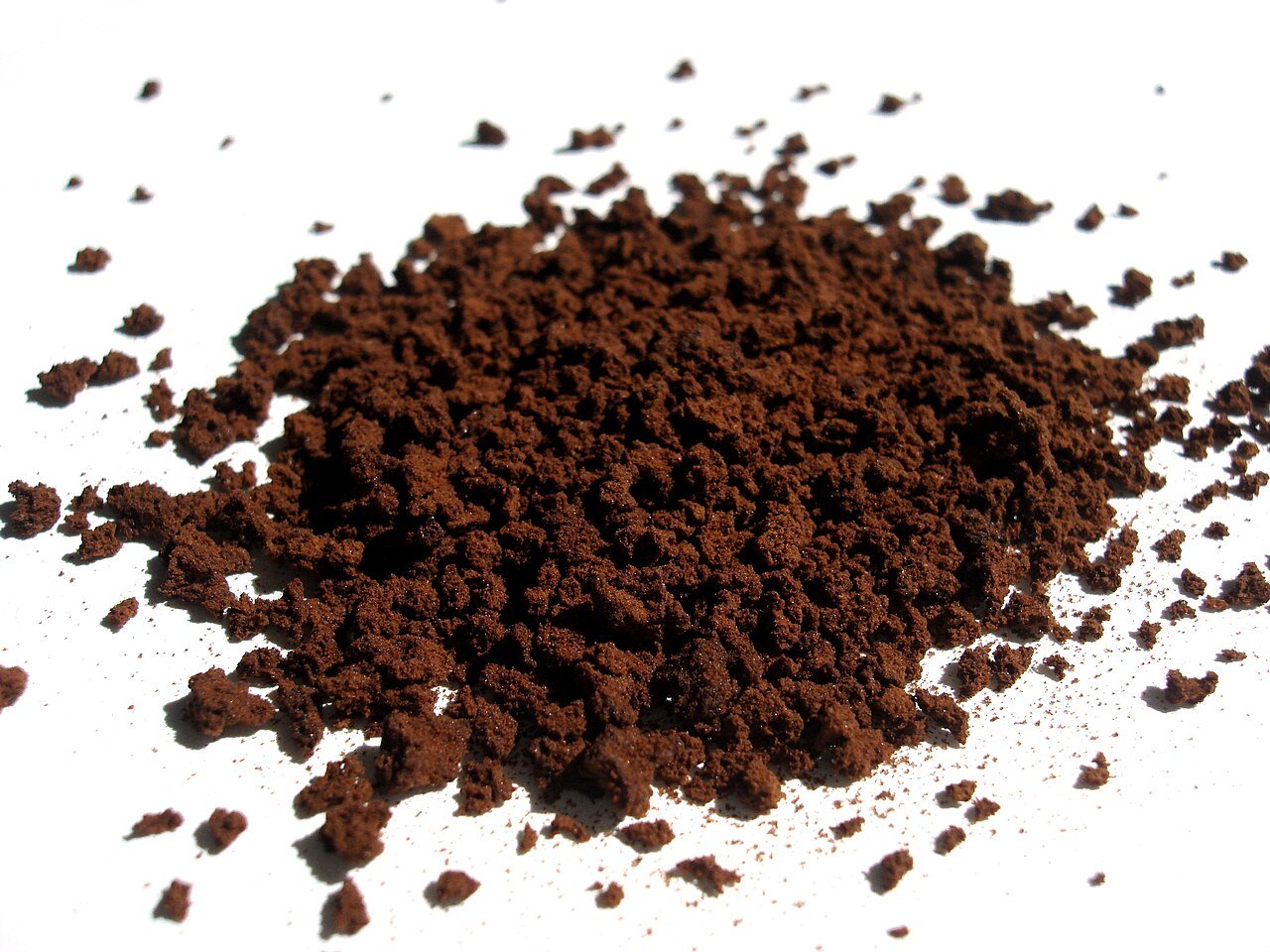
Table of Contents
Table of Contents
What makes good coffee beans for instant coffee?
A soluble plant is not a café. Nobody grinds to order or tweaks a recipe for one customer. Tonnes of coffee go through roasters, grinders and a battery of extraction columns every day, and the plant needs every bag to behave like the last one. So the qualities that count are a bit different from what a specialty roaster looks for.
Here is what matters most when you choose coffee beans for instant coffee:
- Soluble yield. How much of the bean ends up as powder. More soluble solids per kilo of green means fewer kilos bought per jar sold.
- Consistency. Same screen size, same moisture and similar density from lot to lot, so the roaster and the extraction line do not need resetting every week.
- Clean cup. Extraction at high temperature pulls out everything, faults included. Mouldy, fermented or earthy defects come through loud and clear in the jar.
- Body and strength. Instant coffee is often drunk with milk and sugar, in 3-in-1 sachets or in strong black cups. It needs weight to stand up to that.
- Price and supply. A plant running all year needs a raw material it can buy all year, at a price that leaves room for packing, energy and margin.
Put those five together and you can see why Robusta sits at the centre of the industry. Arabica wins on aroma. Robusta wins on almost everything else a factory cares about.
Green, not roasted
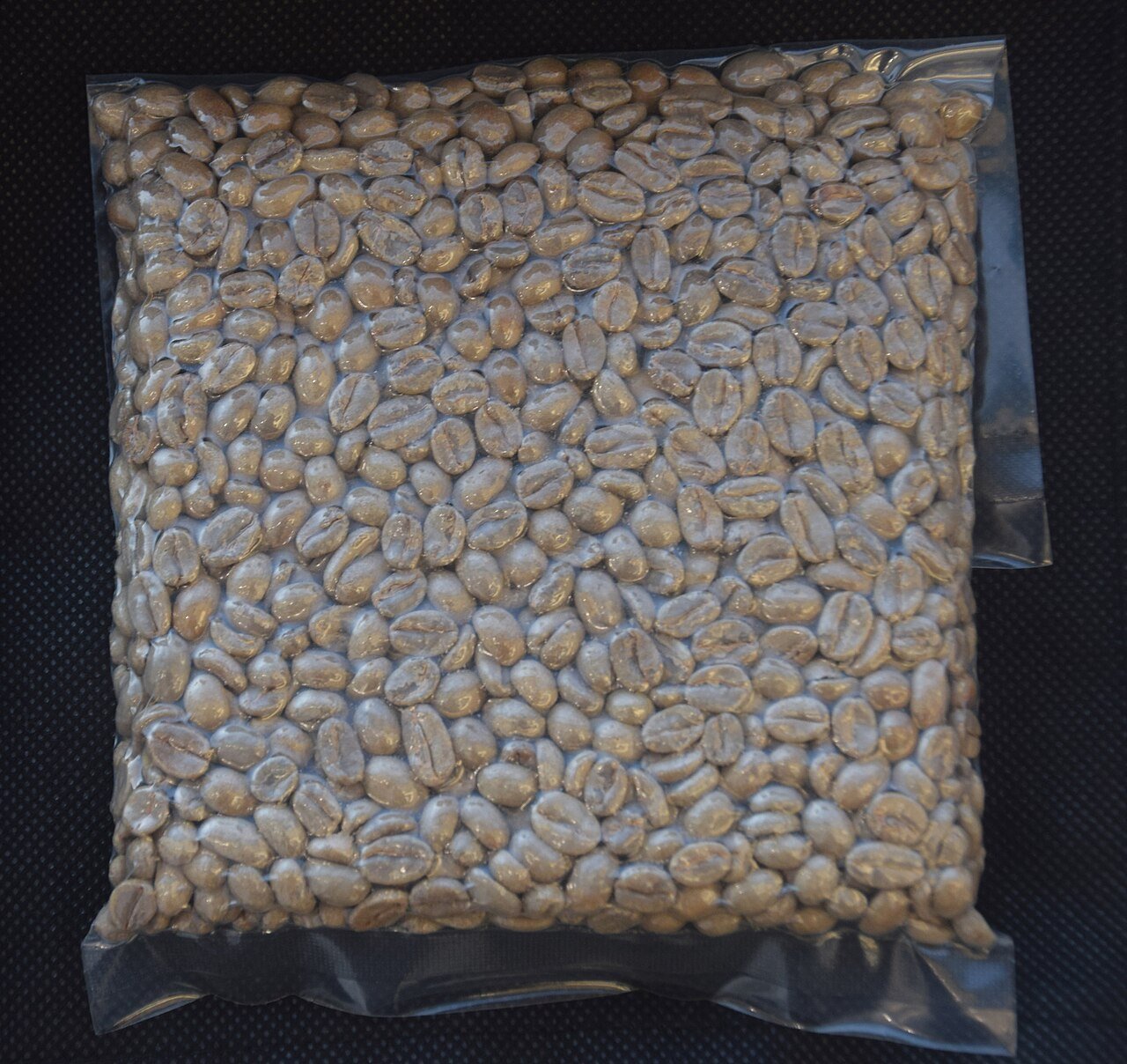
One point that confuses new buyers: soluble makers almost always buy green beans and roast them in-house. The roast is tuned to the extraction system and to the flavour of the final product, and it is a big lever on yield. Buying roasted coffee for an extraction plant makes little sense. All the coffee beans for instant coffee we sell are green, unroasted and packed for export. If you are new to handling green beans, our guide on storing green coffee beans covers warehouse conditions, and roasting green coffee beans walks through the roast itself.
Why Robusta dominates instant coffee production
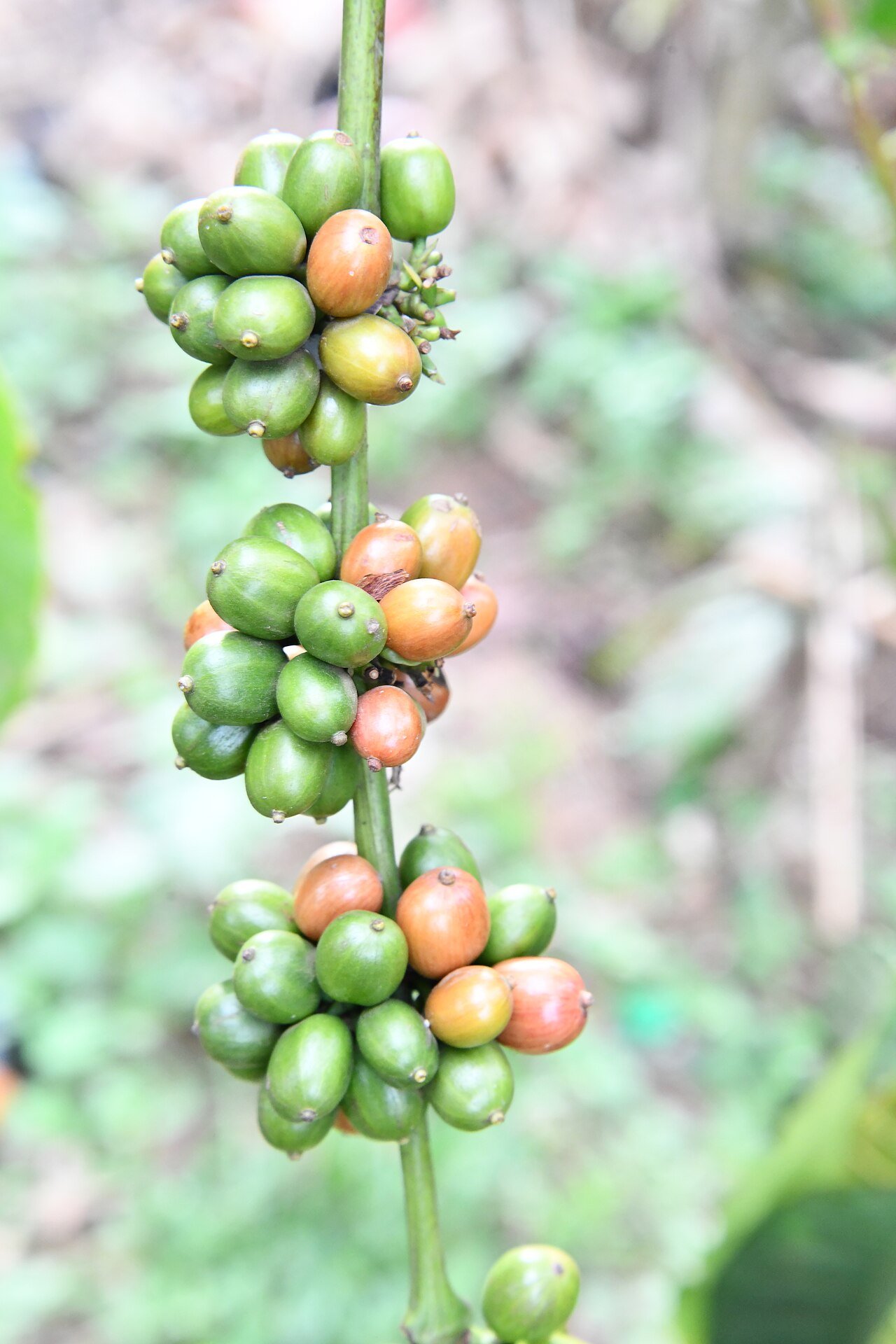
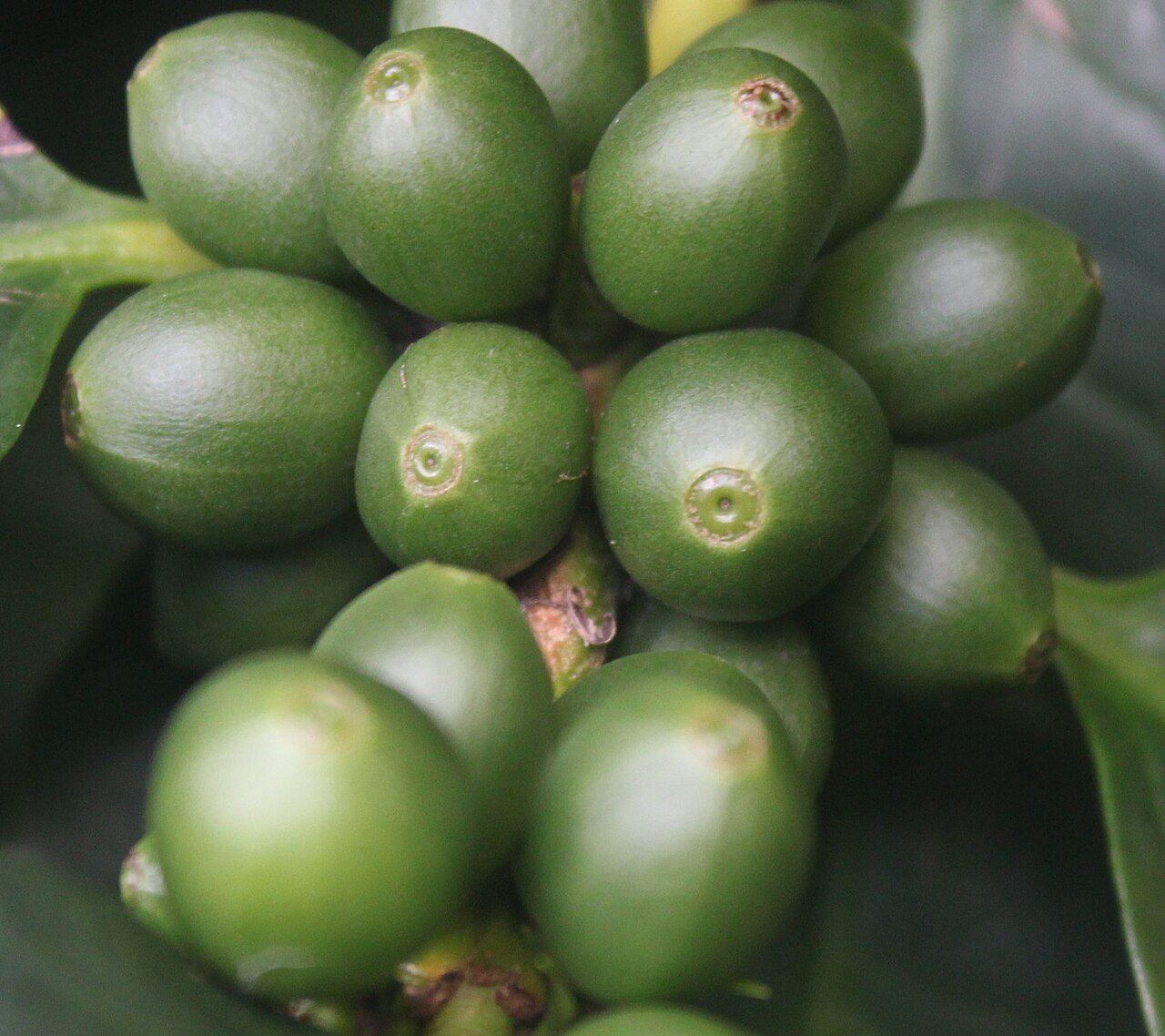
Robusta, properly called Coffea canephora, has three things going for it in a soluble plant: more extractable material, more body and a lower price. The industry has known this for decades.
Patent literature on soluble coffee is a good window into how manufacturers think. One US patent on instant coffee compositions describes high-yield instant coffees as those extracted above 45%, and notes that they typically include a high Robusta content to maximize extraction yield, while medium-yield instants in the 25% to 45% range usually lean on Arabica with little Robusta. That split tells you most of what you need to know about where each species fits.
A long-running coffee writer who looked at the big instant brands made the same point from the buyer’s side: manufacturers get a higher proportion of soluble material out of Robusta, and spray-dried instants are the ones most likely to be all-Robusta.
Brazil gives a real-world figure. The country is one of the largest makers of soluble coffee, and the head of its soluble industry association told a Brazilian farm newspaper in 2025 that across the industry the raw material is estimated at roughly 80% Conilon (Brazilian Robusta) and 20% Arabica, with some products made from 100% of one or the other. We think that 80/20 figure is a useful benchmark for anyone building a recipe from scratch.
Where Arabica still earns its place
Arabica is not shut out. Premium freeze-dried brands often use a good share of it, sometimes all of it, because its sweeter, more aromatic profile survives the gentler drying. If you are making a “gold” style product or a specialty instant, some washed Arabica in the blend lifts the aroma and softens Robusta’s woody edge. You pay for it in yield and in price per kilo, so most plants use Arabica as the seasoning, not the base. We cover the species differences in detail in Arabica vs Robusta.
How many green coffee beans make a kilo of instant coffee?
This is the number every soluble buyer needs on the first page of the business plan, and it is roughly 2.4 to 2.6 kg of green coffee for 1 kg of finished instant powder.
A European patent on high-yield instant coffee production puts the typical figure at about 2.4 kg of green beans per kilo of dry instant powder. It explains where the weight goes: around 0.4 kg is lost in roasting (water and gases), and extraction recovers about half of what is left. The same patent says green coffee is the largest single production cost in instant coffee and estimates world output at roughly 700,000 tonnes of instant coffee a year. A rule of thumb often quoted in the trade is a little higher, at 2.6 kg of green per kilo of instant. The gap between those two numbers comes down to bean choice, roast and how hard the plant pushes extraction.
What that means per container
Let us turn that into something you can plan a purchase around. A 20-foot container of green coffee is commonly loaded with around 320 jute bags of 60 kg, which is about 19.2 tonnes. Our own rough calculation:
| Green coffee bought | Ratio used | Approx. instant powder out |
|---|---|---|
| 19.2 t (one 20 ft container) | 2.4 : 1 | about 8.0 t |
| 19.2 t (one 20 ft container) | 2.6 : 1 | about 7.4 t |
| 100 t (about five containers) | 2.4 : 1 | about 41.7 t |
| 100 t (about five containers) | 2.6 : 1 | about 38.5 t |
The difference between those two ratios on 100 tonnes is more than 3 tonnes of finished product. At soluble coffee prices, that is real money, and it is why plants care so much about which coffee beans for instant coffee they buy. A denser, cleaner Robusta that extracts well can be worth paying a little more for per kilo of green, because you get it back per kilo of powder.
These are planning numbers, not guarantees. Your yield depends on your roast, your extraction temperatures, how many columns you run and whether you hydrolyse at high temperature. Treat the table as a starting point and confirm with trial runs on samples.
Spray-dried vs freeze-dried: how drying changes the bean choice
After extraction the plant has a liquid coffee concentrate. Drying turns it into powder or granules, and there are two main ways to do it.
Spray drying sprays the concentrate as a fine mist into very hot air. The droplets dry in seconds. It is fast, continuous and cheaper to run. A 2025 study in a Brazilian food science journal describes spray drying as the conventional, high-temperature method used for most soluble coffee. The heat costs some aroma, so spray-dried powders tend to be built on high-yield Robusta and finished with aroma recovery or agglomeration.
Freeze drying freezes the concentrate, breaks it into granules and removes the ice under vacuum. It is slower and uses more energy, but it keeps more of the original flavour, which is why freeze-dried products sell at a premium and are the ones most likely to carry a good share of Arabica. The same study looked at a newer hybrid method, spray-freeze-drying, and found it cut total processing time by about 45% compared with conventional freeze drying.
So, in plain terms:
- Making an economy or mid-range spray-dried powder? Build on clean natural Robusta, such as Vietnam, Brazil Conilon or Uganda.
- Making a freeze-dried “gold” product? Start with a smoother Robusta like Indian or Brazilian and add washed Arabica for aroma.
- Making 3-in-1 sachets with milk powder and sugar? Body and strength matter more than nuance, so high-yield Robusta does the heavy lifting.
7 proven origins of coffee beans for instant coffee
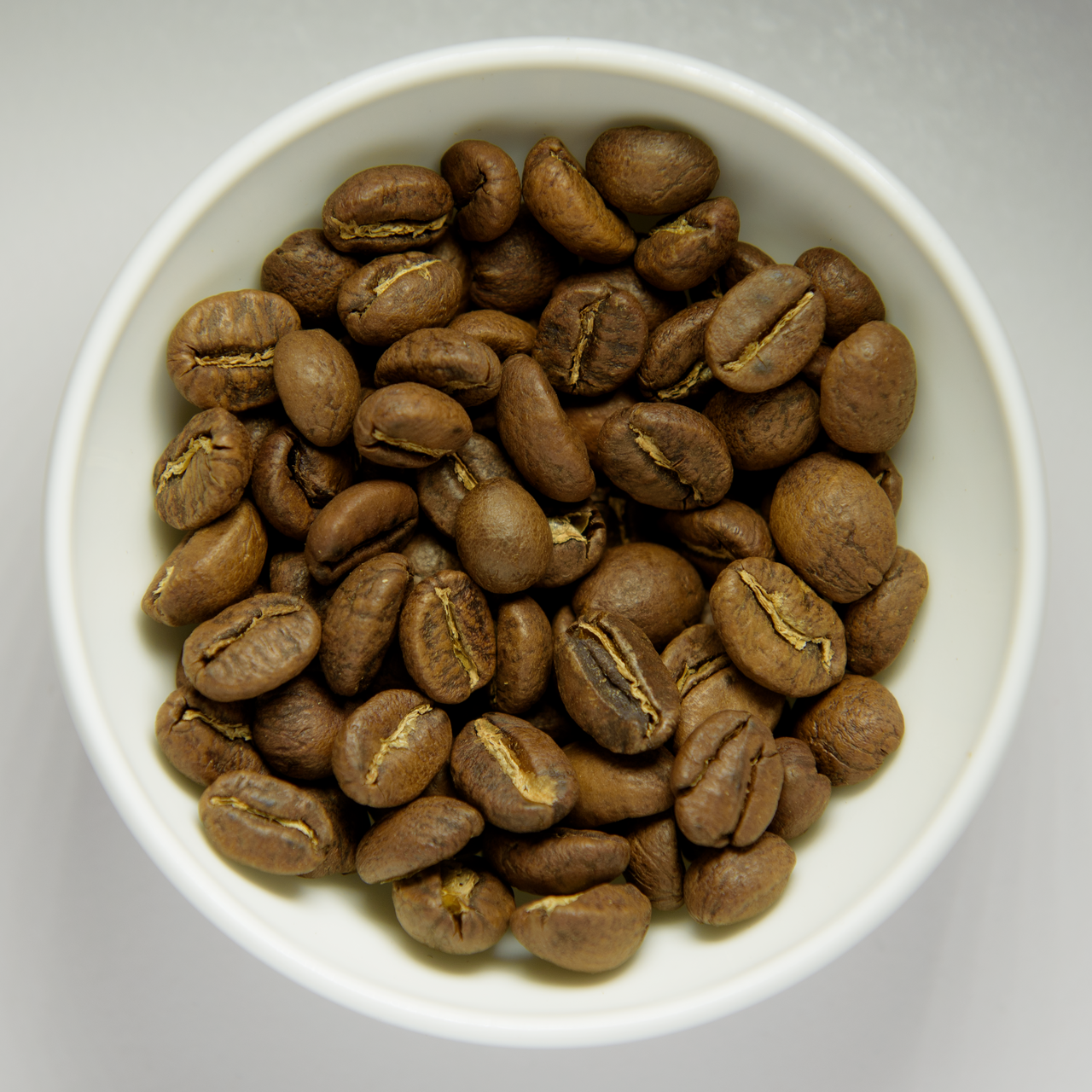
These are the coffee beans for instant coffee our soluble and blending customers buy most often. Each one comes from our own catalogue, so you can click through for the full product page, specifications and a quote. All are sold green, graded and packed in 60 kg jute bags.
1. Vietnam Robusta: the volume workhorse

If one origin is synonymous with coffee beans for instant coffee, it is Vietnam. The country is the world’s second-largest coffee producer and its leading Robusta supplier, a position the USDA expected it to keep in the 2025/26 crop year. Production is still growing: USDA’s Foreign Agricultural Service forecasts Vietnam’s 2026/27 crop at 32.5 million 60 kg bags, its third straight year of growth, with soluble and roasted exports alone forecast at 3.55 million bags. In other words, Vietnam is not just a bean supplier to instant plants, it runs a large soluble industry of its own.
Our Premium Vietnam Robusta coffee beans are Screen 16/18, dry processed, with a sweet, rich aroma and mild acidity. Short spec:
- Origin: Central Highlands, Vietnam
- Process: unwashed / dry / natural
- Screen: 16/18
- Moisture: max 12.5%
- Black / broken / foreign: 0.1% / 0.5% / 0.1%
- Density: 700 to 720 g/l
Best for: spray-dried powders, 3-in-1 mixes and any blend where volume and price are the first questions.
2. Brazilian Robusta (Conilon): smooth and low-acid

Brazil’s soluble industry runs largely on its own Conilon, and the scale is large. The Brazilian soluble coffee association reported exports of about 85,000 tonnes of soluble coffee, or 3.688 million bags, in 2025. Brazil is also heading for a record crop: the USDA puts its 2026/27 harvest at 71.9 million bags.
Conilon is softer than many Asian Robustas, with chocolate and nut in the cup and low acidity. That makes it a good base when you want an instant coffee that tastes rounder without paying Arabica prices. Our Brazilian Robusta coffee beans spec:
- Species: Coffea canephora / Conilon
- Process: natural, washed on request
- Screen: 16/18 or 18/20
- Moisture: max 12%
- Defects: under 5%
- Cup: smooth, chocolate, nutty, low acid
Best for: mid-range and freeze-dried blends, and as a smoothing partner for harsher Robustas. Of all the coffee beans for instant coffee we ship, this is the one most often paired with Vietnam.
3. Ugandan Robusta: forest-born and full-bodied

Robusta grows wild in Uganda’s forests, and the country is one of Africa’s biggest coffee exporters. Ugandan Robusta has a cocoa and earthy profile with a mild spice note, and it carries plenty of body. It works well when you want an African character in the blend or need a second Robusta origin so you are not tied to one supply chain.
Our Ugandan Robusta coffee beans:
- Altitude: 900 to 1,500 m
- Process: natural, washed on request
- Screen: 15 to 18
- Moisture: max 12%
- Cup: cocoa, earthy, mild spice, low acid
Best for: strong black instant, espresso-style soluble, and supply diversification.
4. Indian Robusta: the clean, shade-grown option
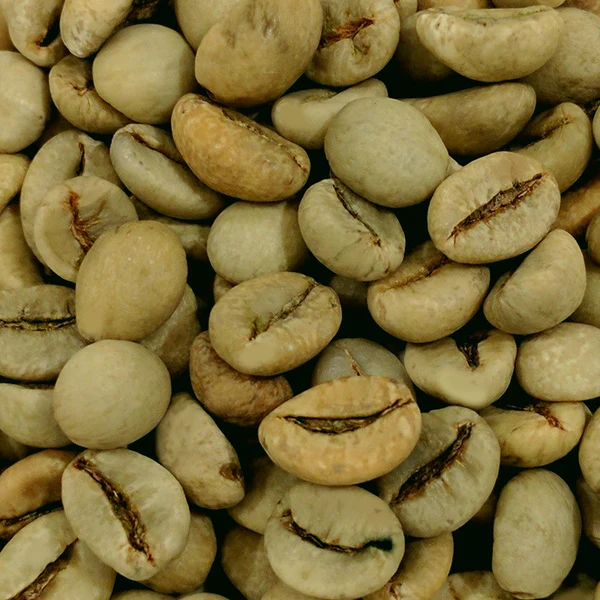
Indian Robusta is grown in the shade, often next to pepper and cardamom, in the hills of the south. It is some of the cleanest-tasting Robusta you can buy, which is exactly what a freeze-dried line wants. It costs a bit more than Vietnamese, but the cup is smoother and you need less Arabica to make the blend pleasant.
Our Indian Robusta coffee beans are sold per ton:
- Origin: South India, shade-grown
- Altitude: 600 to 1,200 m
- Process: natural (Cherry), washed on request
- Screen: 17/18 or 18/20
- Moisture: max 12.5%
- Cup: smooth, chocolate, nutty, low acid
Best for: premium freeze-dried products and Robusta-led blends that should not taste like Robusta. If you want premium coffee beans for instant coffee without a big Arabica bill, start here.
5. Indonesia Robusta: heavy and chocolatey

Indonesia is one of the biggest coffee growers in the world, and most of what it grows is Robusta. Sumatra and Java Robustas are heavy, with chocolate and cedar notes and low acid. They give an instant coffee a deep, dark flavour that holds up well in milk.
Our Indonesia Robusta coffee beans:
- Origin: Sumatra, Java
- Altitude: 600 to 1,400 m
- Process: natural, washed on request
- Screen: 16/18 or 18/20
- Moisture: max 12%
- Cup: heavy, chocolate, cedar, low acid
Best for: dark-style instant, milk coffee and canned or ready-to-drink bases.
6. African Robusta: flexible supply across the continent

Robusta’s home is Africa, and it is grown across East, West and Central Africa. Buying African Robusta as a category lets us match lots from several origins to your spec, which helps when one country has a short crop. Caffeine sits at 2.2% to 2.7%, so this coffee also suits energy-focused instant products.
Our African Robusta coffee beans:
- Origin: East, West and Central Africa
- Process: natural or washed
- Screen: 16/18 or 18/20
- Moisture: max 12%
- Defects: under 5%
- Caffeine: 2.2% to 2.7%
Best for: high-caffeine instant, blending stock, and buyers who want a second continent in their supply plan.
7. African Arabica: the aroma lift for premium blends

The one Arabica on this list is there for a reason. A 15% to 30% share of washed East African Arabica in a freeze-dried blend brings floral and fruity notes that Robusta simply does not have. It is how many “gold” style products get their aroma.
You can buy our African Arabica coffee beans as a reliable East African blend component, or choose single-origin lots from Ethiopia, Kenya, Rwanda and others through our Africa Arabica coffee beans page. Short spec:
- Species: Coffea arabica
- Altitude: 1,400 to 2,200 m
- Process: washed or natural
- Screen: 15 to 18 (AA / AB)
- Moisture: max 12.5%
- Cup: bright, fruity, floral, clean
Best for: premium freeze-dried instant and specialty soluble products.
Side-by-side: which coffee beans for instant coffee fit your product?
| Origin | Species | Typical screen | Cup | Best instant use |
|---|---|---|---|---|
| Vietnam | Robusta | 16/18 | Sweet, rich, mild acidity | Spray-dried, 3-in-1 |
| Brazil (Conilon) | Robusta | 16/18 or 18/20 | Smooth, chocolate, nutty | Mid-range, freeze-dried base |
| Uganda | Robusta | 15 to 18 | Cocoa, earthy, mild spice | Strong black instant |
| India | Robusta | 17/18 or 18/20 | Clean, chocolate, nutty | Premium freeze-dried |
| Indonesia | Robusta | 16/18 or 18/20 | Heavy, chocolate, cedar | Dark instant, milk coffee |
| Africa | Robusta | 16/18 or 18/20 | Strong, high caffeine | High-caffeine, blending stock |
| East Africa | Arabica | 15 to 18 | Floral, fruity, bright | Aroma share in gold blends |
Want to see every lot we hold right now? Browse the full Robusta coffee beans category, the Arabica coffee beans category, or the complete product list.
Three starting recipes for instant coffee blends
Every plant ends up with its own formula for blending coffee beans for instant coffee, but you have to start somewhere. These are reasonable first trials, not trade secrets. Roast and extract each on your own line before committing.
Economy spray-dried
- 70% Vietnam Robusta
- 30% Brazilian Conilon
Cheap, strong and stable. The Conilon rounds off some of the rougher edges. Good for 3-in-1 sachets and catering tins.
Mid-range “classic”
- 50% Brazilian Conilon
- 30% Ugandan Robusta
- 20% African Arabica
This sits close to the 80/20 Robusta-to-Arabica ratio Brazil’s industry reports as typical, and gives a fuller, more coffee-like cup.
Premium freeze-dried “gold”
- 50% Indian Robusta
- 20% Brazilian Conilon
- 30% washed East African Arabica
Clean, smooth and aromatic. Expect a lower yield and a higher cost per kilo of powder, which the shelf price has to carry.
If you also roast for cafés, our guide to coffee beans for espresso uses many of the same origins in different ratios.
Specifications to write into your contract
When you buy coffee beans for instant coffee by the container, the contract is where quality is won or lost. A vague contract gets you whatever was left in the warehouse. These are the lines we suggest every soluble buyer includes:
- Species and origin. Robusta or Arabica, country and, where possible, region.
- Crop year. Current crop extracts better and tastes fresher than old crop.
- Process. Natural, washed or semi-washed.
- Screen size. For example 16/18 or 18/20, with a tolerance for smaller beans.
- Moisture. Usually a maximum of 12% to 12.5%. Wetter coffee weighs more, so you pay for water, and it is at risk of mould in transit.
- Defects. Maximum black, broken and foreign matter percentages, or a total defect count.
- Density. Useful for Robusta: denser beans usually roast more evenly and extract better.
- Packing. 60 kg jute bags or bulk liner bags, plus marking.
- Sample approval. Pre-shipment sample, and the right to reject if the shipment does not match.
- Delivery terms. FOB, CFR or CIF, port of loading and destination.
For how grading systems work in practice, read coffee bean grading explained. For how natural and washed processing change the bean, see coffee processing methods.
Why moisture deserves extra attention
Moisture is the spec that new buyers skip and old buyers obsess over. Every extra percentage point is water you pay for at coffee prices. Worse, wet coffee in a hot container can develop mould and musty flavours, and a soluble plant concentrates those flavours rather than hiding them. Ask for moisture readings on the pre-shipment sample, and check again on arrival.
How to judge samples before you buy in volume
A soluble factory should never buy a container of coffee beans for instant coffee on paper alone. Here is the process we recommend, and the one we support with samples:
- Ask for type samples of two or three origins that fit your recipe.
- Check the green. Count defects on a 300 g or 350 g sample, measure moisture and look at screen size.
- Cup the coffee. A standard cupping shows faults clearly. Our coffee cupping guide explains how.
- Run a pilot. If you have a pilot extractor, roast and extract a few kilos to measure yield directly. That number beats any brochure.
- Approve a pre-shipment sample from the actual lot that will be loaded.
- Check on arrival. Compare the shipment against the approved sample.
It sounds like a lot of work for coffee beans for instant coffee, but a single bad container can cost far more than the time spent sampling.
The instant coffee market in late 2026: what buyers should know
Prices and trade flows shape what you pay for coffee beans for instant coffee, so a quick look at the wider picture is worth it.
Supply is growing
Two big Robusta origins are expanding at the same time. Vietnam’s crop is forecast to keep rising into 2026/27, as noted above, and Brazil is expecting a record harvest of 71.9 million bags according to the USDA’s July 2026 Coffee: World Markets and Trade report. More supply generally means more choice and better availability for buyers, though weather can change that quickly.
Prices have eased from the peak
After the very high prices of 2024 and 2025, Vietnamese export prices have come down. In March 2026, Vietnam’s export price was $4,553 per tonne, 22% lower than a year earlier, according to the USDA report covered by Daily Coffee News. That is still high by historical standards, so careful bean selection and good yields matter more than ever. Our article on green coffee prices explains how the futures market turns into the price on your invoice.
Trade rules are shifting
Tariffs now affect where soluble coffee is made and sold. Brazil’s soluble industry association said a 50% tariff on its soluble coffee entering the United States from August 2025 cut shipments there, and total Brazilian soluble exports fell 10.6% by volume in 2025 even as revenue rose on higher raw material prices. For buyers, the lesson is simple: having more than one origin approved for your recipe protects you when trade rules change. That is one reason we offer seven.
Vietnam is processing more at home
Vietnam is moving up the value chain, shipping more roasted and soluble coffee rather than only green beans. FAS says the country is shifting toward higher-quality and more traceable coffee. Over time, that could mean more competition for the best green Robusta lots, so long-term buyers should build supplier relationships now rather than buying only on the spot.
Starting a private-label instant brand? Begin with the bean
Not everyone reading this runs an extraction plant. A lot of our enquiries come from people building an instant coffee brand who will use a toll manufacturer, a factory that makes the powder to your recipe and packs it under your label. If that is you, the beans still matter, and in some ways they matter more, because the raw material is one of the few parts of the product you control directly.
Here is how it usually works. You agree a recipe and a target price with the toll manufacturer. Some factories buy the green coffee themselves and charge you per kilo of finished powder. Others let you supply your own coffee beans for instant coffee and charge a processing fee. Supplying your own green gives you control over origin, consistency and cost, and it lets you put a real origin story on the jar, something like “100% Robusta from the Central Highlands” or “Indian Robusta with East African Arabica”, rather than “a blend of Arabica and Robusta” with nothing behind it.
A few things to settle before you sign with a toll manufacturer:
- Who owns the green coffee while it sits in their warehouse, and who carries the insurance.
- The yield they guarantee. Ask how many kilos of powder you will get back per tonne of green, and what happens if the run comes in under that number.
- Minimum run size. Many factories will not switch a line for less than a set batch, so your green coffee order needs to match.
- Sample runs. Pay for a small trial on the exact lot you plan to buy before committing a full container.
We work with brand owners at this stage and can ship coffee beans for instant coffee straight to the toll manufacturer’s warehouse, with documents in your name or theirs.
Shipping and storing coffee beans for instant coffee
Green coffee is a living, slightly hygroscopic product. It takes on moisture from the air and gives it back, and a container crossing the equator goes through big swings in temperature. Condensation inside the box, often called container rain, is one of the main causes of damage in transit. A few simple habits cut the risk a lot:
- Load dry coffee. Moisture at or under the contract maximum before the doors close.
- Use liners or absorbent paper. Kraft paper on the walls and ceiling, or desiccant strips, soak up condensation before it drips on the bags.
- Ventilated containers are worth asking about on long routes through hot climates.
- Move it on arrival. Do not leave a container standing in the sun at port for days. Get it into a cool, dry, well-aired warehouse.
- Stack on pallets, away from walls and off concrete floors.
Soluble plants usually turn their green stock over quickly, but buyers who stock several months of coffee beans for instant coffee to hedge prices need proper storage. Robusta is fairly forgiving, though it will still fade and pick up off-flavours if it is stored warm and damp. Our full guide to storing green coffee beans covers temperature, humidity and stock rotation in detail.
Bags or bulk?
Most of our coffee beans for instant coffee ship in 60 kg jute bags, which are easy to sample, count and handle. Large plants sometimes prefer bulk shipping, where a whole container is filled loose inside a food-grade liner bag. Bulk loads a little more coffee per container and saves bag handling at the factory, but you need equipment at your end to unload it. Tell us how your intake works and we will quote the packing that suits it.
Robusta quality has moved on
There is an old idea that Robusta is simply the cheap stuff, good for nothing but filling a jar. That has never been completely fair, and it is less true every year. Farmers in Vietnam, India, Uganda and Brazil have put real work into picking ripe cherry, drying it properly and sorting out defects, and the better lots now cup clean and sweet. Vietnam’s own industry is pushing in the same direction, with USDA reporting a shift toward higher-quality and more traceable coffee.
For a soluble buyer, this is good news. Better coffee beans for instant coffee mean fewer faults surviving the extraction, less need for heavy flavour correction and an end product that people actually enjoy drinking. It also opens the door to “fine Robusta” style instant products, where a clean single-origin Robusta is the selling point rather than something to hide. If you want to compare the leading origins in more depth, our guide to the best Robusta coffee beans goes origin by origin.
Not sure who to buy from? Our guide to choosing a green coffee supplier covers specs, samples, contracts, Incoterms and red flags.
For a full buyer’s guide to origins, varieties, grades and prices, see our guide to Arabica coffee beans.
Common mistakes when buying coffee beans for instant coffee
We see the same few problems again and again, usually with new plants or new private-label brands:
- Buying on price alone. The cheapest green coffee often has more defects and lower density. Yield drops, flavour suffers, and the saving disappears.
- Skipping the pilot. Two Robustas with identical paper specs can extract very differently.
- Relying on one origin. A short crop, a strike at port or a new tariff can stop your line. Approve a second origin early.
- Ignoring moisture. Paying for water and risking mould is a bad trade.
- Using too much Arabica. It sounds premium, but in spray-dried products much of the aroma is lost anyway, and yield falls.
- Not planning around harvests. Crop timing affects price and freshness. Our guide to the coffee harvest season shows when each origin comes to market.
Want a coffee with a clear origin story? Our guide to single origin coffee beans explains what single origin means and how to buy well.
How to buy coffee beans for instant coffee from us
We supply coffee beans for instant coffee to soluble plants, private-label brands, roasters and traders around the world. The process is straightforward:
- Tell us what you make. Spray-dried or freeze-dried, target cost, monthly volume and destination port.
- Get a shortlist and samples. We suggest origins from the list above and send samples for cupping and pilot runs.
- Agree the spec and price. Screen, moisture, defects, packing and delivery terms, all in writing.
- Approve the pre-shipment sample.
- We load and ship. Documents follow the vessel, and you receive the container at your port.
New to buying across borders? Importing coffee beans covers documents, duties and logistics step by step, and wholesale green coffee beans explains how volume buying works. When you are ready, contact our sales team for a quote, or read more about Continental Coffee Supply.
Frequently asked questions
What are the best coffee beans for instant coffee?
For most products, clean natural Robusta is the best choice because it gives a high soluble yield, strong body and a lower cost. Vietnam and Brazilian Conilon are the most common bases. Premium freeze-dried products often add washed Arabica for aroma.
Is instant coffee made from Arabica or Robusta?
Both, but mostly Robusta. In Brazil, the industry estimates its soluble raw material at about 80% Conilon and 20% Arabica. Some premium brands use 100% Arabica.
How many kilos of green coffee make 1 kg of instant coffee?
About 2.4 to 2.6 kg. Roasting removes some weight, and extraction recovers roughly half of the remaining roasted coffee as soluble solids.
Can I use Arabica coffee beans for instant coffee?
Yes. Arabica gives a sweeter, more aromatic instant, especially when freeze-dried. Expect a lower yield and higher cost per kilo of powder.
Do instant coffee factories buy green or roasted beans?
Almost always green. The roast is matched to the extraction system, so plants roast in-house.
What screen size is best for instant coffee?
Screen 16/18 is the most common for Robusta used in soluble production. Larger 18/20 lots cost more and are usually chosen for freeze-dried or premium lines.
What moisture level should green coffee have?
Most contracts set a maximum of 12% to 12.5%. Higher moisture means you pay for water and risk mould.
Is freeze-dried coffee better than spray-dried?
Freeze drying keeps more flavour and aroma but costs more to run. Spray drying is faster and cheaper and is the conventional method for most soluble coffee.
How much do coffee beans for instant coffee cost?
Prices follow the Robusta and Arabica futures markets plus origin and quality differentials, and change daily. We quote each order based on origin, grade, volume and delivery terms.
Do you ship worldwide?
Yes. We ship green coffee by the container to ports around the world.
What is the minimum order?
It depends on the origin and current stock. Most soluble customers buy by the full container. Ask us about smaller trial lots.
Key takeaways
- The best coffee beans for instant coffee are usually clean, dense, natural-processed Robusta.
- Plan on roughly 2.4 to 2.6 kg of green coffee per kilo of instant powder.
- Spray-dried products lean heavily on Robusta; freeze-dried products often add Arabica for aroma.
- Vietnam, Brazil, Uganda, India, Indonesia and wider Africa all supply good soluble Robusta; East African Arabica adds aroma.
- Write moisture, screen, defects and sample approval into every contract for coffee beans for instant coffee.
- Approve at least two origins so tariffs or short crops do not stop your line.
Sources and References
- European Patent Office: EP3166417, Production of an instant coffee product in high yield
- US Patent and Trademark Office: Coffee composition patent, high-yield and medium-yield instant coffee
- Ciência e Agrotecnologia (SciELO): Comparison of freeze-drying and spray-freeze-drying coffee
- USDA Foreign Agricultural Service: Coffee: World Markets and Trade (July 2026)
- Daily Coffee News: Vietnam coffee report, production rising for third straight year (USDA FAS)
- Viet Nam News: Vietnam remains world’s No.2 producer and leading Robusta supplier
- Datamar News: Brazilian soluble coffee exports in 2025 (ABICS data)
- AgFeed: Brazilian soluble industry raw material mix (in Portuguese)
- Coffee Habitat: How instant coffee is made and which beans it uses

Pingback: Vietnamese Coffee Beans: Proven 2026 Guide to Buying Robusta - Continental Coffee Supply
Pingback: Coffee Beans for Cold Brew: 8 Proven Picks for Smooth Flavor - Continental Coffee Supply