
Buying good coffee is only half the job. The other half is keeping it good until you roast it. We have seen excellent lots turn dull and papery in a few months because they sat in a hot, damp corner. We have also seen ordinary coffee stay fresh for a year because the roaster looked after it properly. Storing green coffee beans well is not complicated, but it does take some care, and it pays you back in every cup.
We ship green coffee to roasters and importers in many different climates, from cool northern warehouses to hot, humid ports. This guide pulls together what we have learned about storing green coffee beans: what damages them, the conditions they like, how long they last, how to spot ageing, and how to set up your space so your coffee tastes as good in month eight as it did in month one.

Why storing green coffee beans properly matters
Green coffee is alive in a slow, quiet way. It is a seed, it still holds water, and it keeps changing after harvest. Over time it loses moisture, its oils and acids break down, and it starts to pick up smells from around it. All of that shows up in the roast.
Well-stored coffee keeps its sweetness, acidity and aroma for many months. Badly stored coffee goes “baggy”, a trade word for a flat, papery, cardboard taste, sometimes with a woody or straw-like edge. It also roasts less evenly, because beans that have dried out or soaked up moisture don’t behave the way you expect.
There is a money side too. Green coffee is your biggest cost. If you lose even a few months of quality on a container because of poor storage, that is real money gone. Storing green coffee beans correctly protects the investment you already made.
What can go wrong when storing green coffee beans
Moisture and humidity
This is the big one. Green coffee is usually shipped at about 10% to 12.5% moisture. If the air around it is very humid, the beans soak up water. Above roughly 13% moisture, the risk of mould rises sharply, and mould can ruin a whole bag and is a food safety problem. If the air is very dry, the beans lose moisture, and the coffee can taste flat and roast too fast.
Scientists talk about water activity as well as moisture content. In simple terms, it tells you how “free” the water in the bean is to cause trouble. Specialty buyers often look for water activity of around 0.5 to 0.6. You don’t need a lab to store coffee well, but it helps to know why humidity matters so much.
Heat
Warmth speeds up every chemical change in the bean. Coffee stored at 30 °C ages much faster than coffee stored at 20 °C. Big temperature swings are also bad, because they can cause condensation inside bags, especially plastic-lined ones.
Light
Direct sunlight warms the beans and can fade them. Keep coffee out of sunny windows and away from skylights.
Oxygen
Air slowly oxidises the oils in the bean. This is why high-value coffee is often packed in hermetic liners that limit air exchange.
Smells
Green coffee is a sponge for odours. Store it next to spices, fuel, paint, cleaning products, fish or even strong-smelling cardboard, and you may taste it in the cup. This catches a lot of people out.
Pests
Rodents and insects, especially the coffee berry borer and some storage beetles, can damage beans. A clean, sealed space with regular checks keeps them out.
The ideal conditions for storing green coffee beans
If you remember nothing else from this article, remember these targets:
- Temperature: steady, ideally around 15 to 25 °C, and as cool as you can reasonably manage within that range.
- Relative humidity: about 50% to 65%, with 60% a good target.
- Light: dark or low light, no direct sun.
- Air: clean, with some ventilation but no strong drafts.
- Smells: none. Keep coffee in a room of its own if you can.
Hit those numbers and storing green coffee beans becomes fairly easy. Miss them by a lot, and even the best packaging only buys you time.

Packaging for storing green coffee beans
Jute and sisal bags. The classic coffee bag. It breathes, which helps in a stable climate but means the coffee responds to the air around it. Jute alone is fine for coffee you will roast within a few months in a good storage room.
Hermetic liners. A thick, multi-layer plastic bag inside the jute that limits moisture and oxygen exchange. Coffee in a hermetic liner holds its quality noticeably longer, especially in humid climates or on long voyages. Many specialty lots ship this way. Once you open a liner, fold it closed tightly or use a clip.
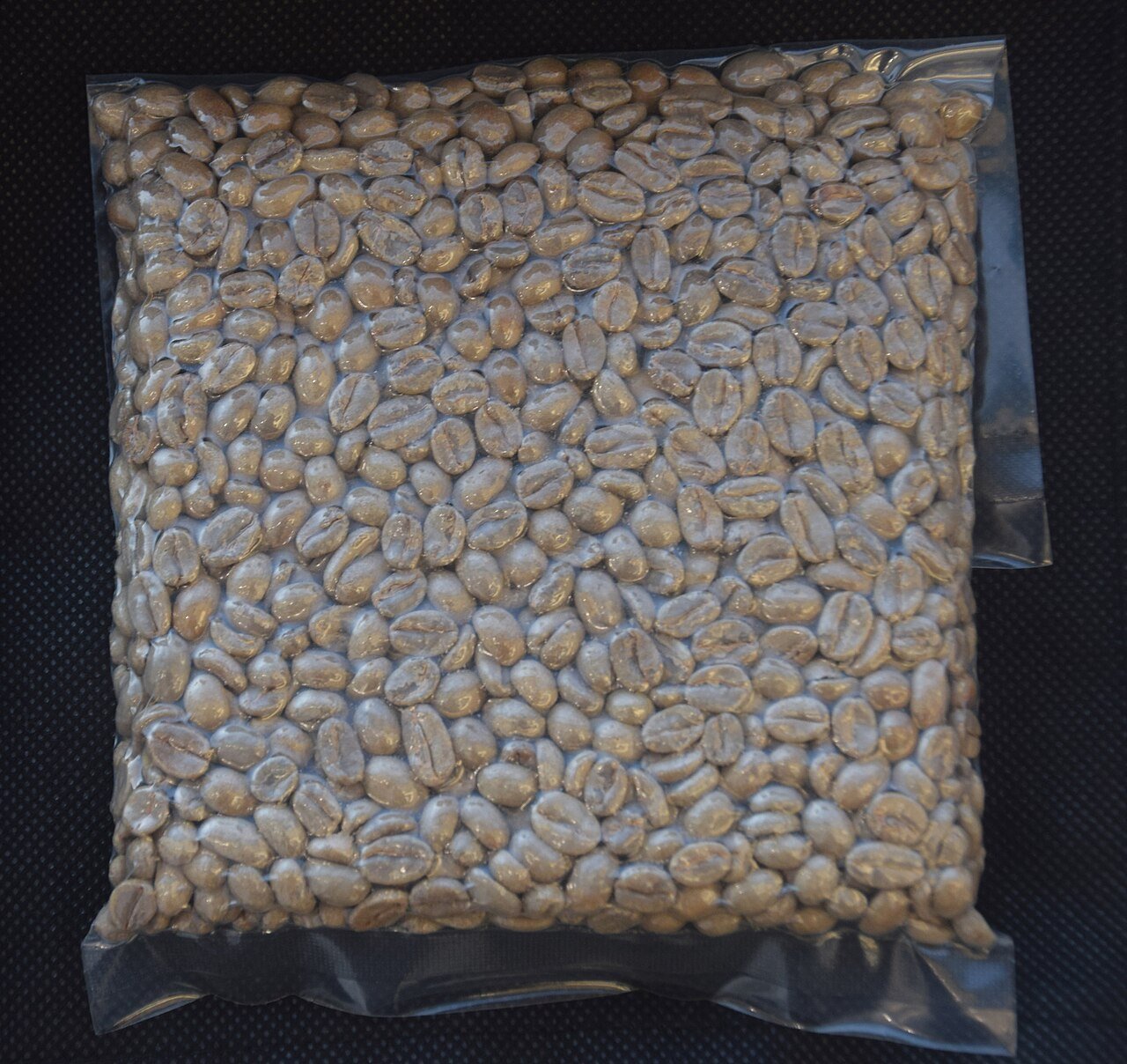
Vacuum packs. Small lots of very high-value coffee are sometimes vacuum-packed in boxes. They keep very well but cost more.
Bulk containers. Some commercial Robusta ships loose in a lined container. That coffee should be bagged or moved into silos with controlled conditions soon after it arrives.
If you buy in jute only and your climate is humid, consider asking your supplier about liners. It is one of the cheapest ways to make storing green coffee beans easier.
Storing green coffee beans during shipping
Storage really starts before the coffee reaches you. A shipping container crossing the equator can heat up in the day and cool at night, and moisture in the air and in the coffee can condense on the inside of the roof. This is called “container rain”, and it can leave wet patches on the top bags.
Exporters guard against it in a few ways: lining the container walls and roof with kraft paper or cardboard, adding desiccant strips or bags, shipping well-dried coffee, and using hermetic liners for more valuable lots. When you buy, ask how the coffee will be packed in the container. It is a small question that tells you a lot about how seriously the supplier takes storing green coffee beans on the way to you.
How the coffee was dried at origin also affects shelf life. Our guide to coffee processing methods covers why good drying matters.
Choosing coffee for espresso? Our guide to coffee beans for espresso covers the best origins, blend ratios and roasting.
Larger warehouses and silos
Big roasters and importers store hundreds of tonnes. At that size, storing green coffee beans usually means climate-controlled warehouses with temperature and humidity monitoring, pest control contracts and sometimes silos for bulk coffee. The principles are exactly the same, just with better tools. Many smaller roasters use a bonded or specialist coffee warehouse near the port and call off a few pallets at a time, which saves space and keeps the coffee in good conditions until they need it.
For current market levels and how quotes are built, see our guide to green coffee prices.
Setting up a room for storing green coffee beans
You don’t need a purpose-built warehouse. Plenty of roasters do a great job of storing green coffee beans in a corner of their unit. What matters is getting a few basics right.
- Use pallets. Never put bags straight on concrete. Floors can be cold and damp, and moisture wicks up into the bottom bags.
- Keep away from walls. Leave a gap between bags and outside walls so air can move and condensation on the wall doesn’t reach the coffee.
- Don’t stack too high. Very tall stacks crush the bottom bags and make it hard to rotate stock. A few layers per pallet is plenty for most roasters.
- Keep the roaster away. Your roaster gives off heat and smoke. Store coffee in a separate room or at least well away from it.
- Label everything. Origin, lot number, arrival date. You will thank yourself later.
- Measure the air. A cheap digital thermometer and hygrometer tell you what is really going on. Check it daily for a few weeks to learn how your room behaves through the day and the seasons.
If your readings are too humid, a dehumidifier is usually the best investment you can make for storing green coffee beans. If the room gets too hot in summer, insulation, shade or a small air conditioner can make a big difference.
How long you need to store coffee depends on when the next crop arrives. Our guide to the coffee harvest season explains the timing for each origin.
How long do green coffee beans last with good storage?
This is the question we get most. The honest answer is “it depends”, but here are realistic figures for coffee that is stored well:
- Washed Arabica: at its best for roughly 6 to 9 months after arrival, still good up to about a year.
- Natural Arabica: similar, sometimes fading a little faster.
- Robusta: often holds its flavour a bit longer, up to a year or more.
- Coffee in hermetic liners: can stay fresh noticeably longer than coffee in plain jute.
These are not cliff edges. Coffee doesn’t go bad overnight on month ten. It slowly loses brightness and sweetness. For a dark espresso blend you may not notice for a long time. For a light-roast single origin, you will notice sooner. That is why the way you are storing green coffee beans matters more for delicate Arabica than for heavy Robusta.
One more point: the clock starts at harvest, not at delivery. Ask your supplier when a lot was harvested. A “past crop” coffee, from the previous harvest, may already be several months old when it reaches you.
Signs your green coffee is ageing in storage
Watch for these:
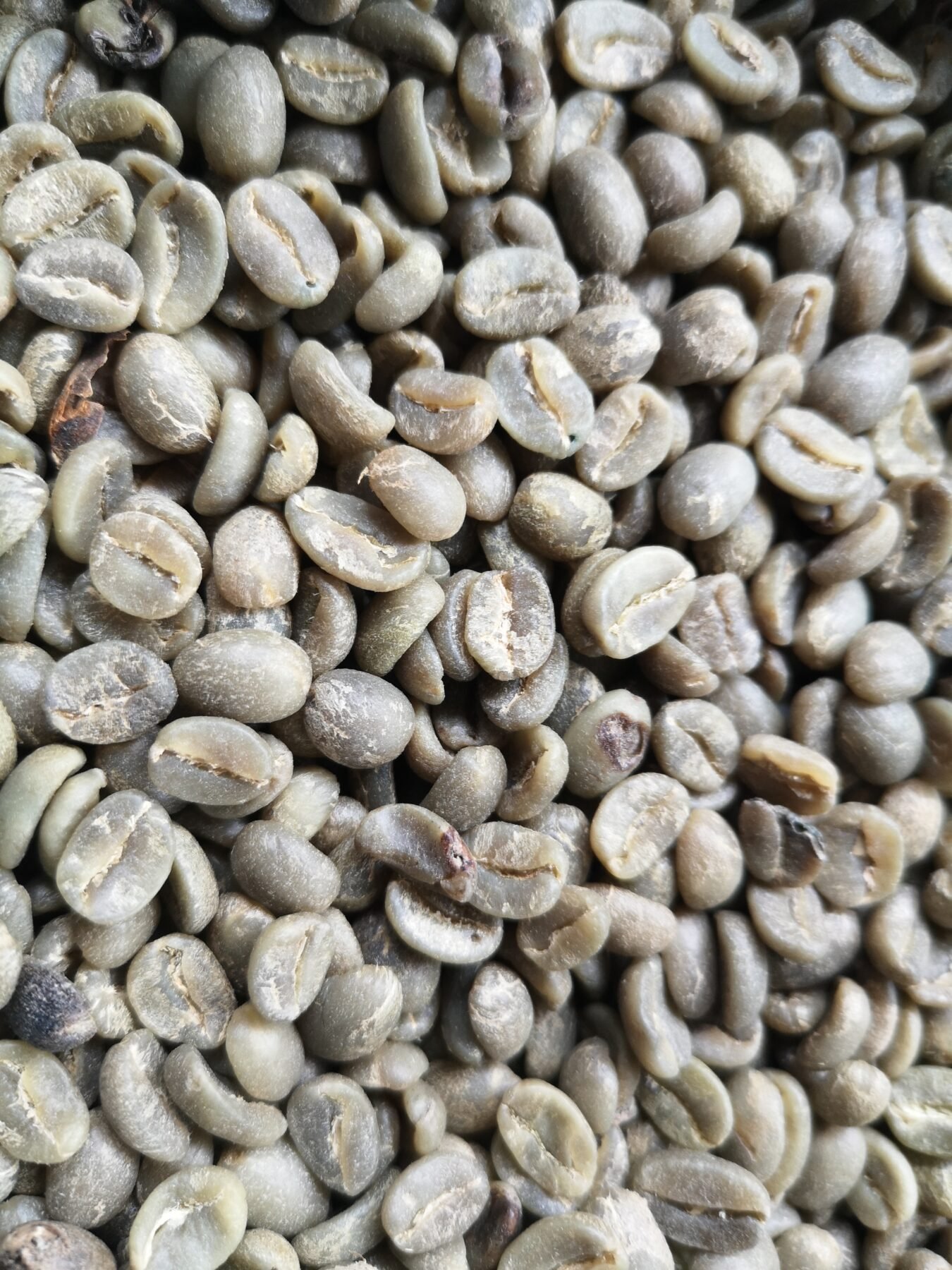
- Colour fading. Blue-green beans turn paler, then yellowish or whitish at the edges.
- Smell changes. Fresh coffee smells like hay or grass. Old coffee smells dull, papery or musty.
- Roasting changes. Old, dry coffee often roasts faster and less evenly, and first crack may come earlier.
- Taste changes. Less acidity and sweetness, more wood, straw, paper or cardboard.
If you notice these, use that coffee first, perhaps in a darker blend where the ageing shows less, and look again at how you are storing green coffee beans in that part of your space.

Storing green coffee beans in different climates
Hot and humid places. This is the hardest climate. Humidity is the enemy. Use hermetic liners, keep the room air-conditioned or at least dehumidified, and order smaller amounts more often so coffee doesn’t sit for months.
Hot and dry places. Heat speeds ageing and dry air pulls moisture out of the beans. Keep coffee in the coolest part of the building, away from sun-facing walls, and use liners to slow moisture loss.
Cool, temperate places. The easiest. A dry, unheated room often works well. Watch out for damp in winter and for condensation if you move coffee from a cold room into a warm one.
Cold places. Cold itself is fine, but avoid freezing and thawing cycles, and let coffee come up to room temperature before you open liners so moisture doesn’t condense on the beans.
An example from a small roastery
Here is a typical setup we see work well. A roaster using about two tonnes a year keeps around three months of stock on site. The coffee sits on two pallets in a small back room with no windows, well away from the roaster. A portable dehumidifier runs in the wet season and a small fan keeps air moving. A digital hygrometer on the wall is checked every morning and the reading goes in a notebook.
Every bag has a sticker with the lot number and arrival date. New bags go to the back. The rest of the year’s coffee is contracted with the supplier and arrives in three more shipments. Nothing fancy, and it costs very little, but the coffee in month eleven tastes almost as good as in month one. That is what storing green coffee beans properly looks like in real life.
The same roaster once tried keeping a full year of a delicate washed Arabica in the same room through a hot summer without the dehumidifier. By autumn the coffee had faded noticeably. It was still usable in a dark blend, but it had lost the bright, fruity character the roaster paid extra for. That lesson stuck.
Cupping a sample every few months is the easiest way to catch ageing early. Our guide to coffee cupping shows how.
Check every shipment when it arrives
Good storing green coffee beans habits start the day the container is opened. Take a few minutes to check:
- The bags. Any wet patches, stains, tears or mould? Photograph anything odd before you sign for it.
- The smell. Open one or two bags. Clean and hay-like is good. Musty or chemical is not.
- Moisture. If you have a moisture meter, take a reading. It should match the spec sheet within a point or so.
- The beans. Look for colour, size and defects against your sample.
If something is wrong, tell your supplier straight away with photos. A good supplier will want to know. If you bought from abroad, our guide to importing coffee beans explains insurance and what to do if a shipment arrives damaged.
Stock rotation when storing green coffee beans
The simplest rule for storing green coffee beans is first in, first out. Use your oldest coffee first. Put new arrivals at the back or the bottom, and label every bag with its arrival date.
Then think about how much you order. Many roasters buy too much at once because the price per kilo is lower. That only makes sense if you will roast it while it is still fresh. A common approach is to agree a yearly volume with your supplier, then take delivery in several smaller shipments. You get the price benefit of a bigger contract and fresher coffee in your warehouse. Our guide to wholesale green coffee beans covers contracts and order sizes in more detail.
Does Arabica or Robusta store better?
Robusta usually holds up a little better. It is denser, has less sugar and fewer delicate aromatic compounds to lose, and it is often roasted dark, which hides small changes. Arabica, especially light-roasted washed Arabica, shows ageing sooner. If you stock both, prioritise the good storage spots for your Arabica. We explain the wider differences in our Arabica vs Robusta guide.
Storing green coffee beans in small amounts
If you roast in small batches, at home or in a tiny shop, storing green coffee beans is even simpler. Keep them in a breathable cotton bag or a food-grade bucket with a loose lid, in a cool cupboard away from the kitchen stove and spices. Avoid the fridge and freezer, which bring condensation problems, and don’t keep coffee in sealed glass jars on a sunny shelf.
Storing green coffee beans vs roasted coffee
People sometimes treat green and roasted coffee the same way, but they are very different. Roasted coffee goes stale in weeks and needs airtight bags with one-way valves. Green coffee keeps for months and actually prefers a little air exchange in a stable room. So the rules for storing green coffee beans are about steady temperature and humidity, while the rules for roasted coffee are about keeping air out. Don’t mix them up, and don’t store roasted coffee in the same sacks you used for green.
If you roast your own coffee, our guide to roasting green coffee beans also covers resting and keeping roasted coffee fresh.
A quick storage checklist
Print this out and stick it on the wall of your storage room:
- Bags on pallets, not on the floor
- Gap between bags and outside walls
- Room between 15 and 25 °C, with no big swings
- Humidity around 60%, checked daily
- No sunlight, no roaster heat, no strong smells
- Every bag labelled with origin, lot and arrival date
- Oldest coffee used first
- Liners folded closed after opening
- Regular checks for pests and damp
If you can tick every item, you are storing green coffee beans better than a lot of the trade.
Looking for coffees with a clear origin story? Our guide to single origin coffee beans explains what single origin means, how traceability works and how to build a menu that sells.
Not sure who to buy from? Our guide to choosing a green coffee supplier covers specs, samples, contracts, Incoterms and red flags.
For a full buyer’s guide to origins, varieties, grades and prices, see our guide to Arabica coffee beans.
New to buying green coffee? Our guide to unroasted coffee beans covers shelf life, roasting loss, prices and what to check before you buy.
Common mistakes when storing green coffee beans
- Putting bags straight on the floor.
- Storing coffee next to the roaster, a boiler or a sunny window.
- Keeping it in the same room as spices, cleaning products or fuel.
- Never measuring humidity, then wondering why the coffee changed.
- Buying a year of Arabica in one go with nowhere cool to keep it.
- Leaving hermetic liners open after taking some coffee out.
- Not labelling bags, then roasting new coffee while old coffee goes stale at the back.
Start with coffee that arrives in good shape
Storing green coffee beans well is much easier when the coffee arrives at the right moisture and in good bags. We test moisture on every lot before shipping and keep it within export standards, so your storage starts from a good place. Browse our Arabica and Robusta ranges, including African Arabica, Africa Arabica, Vietnam Robusta, Indian Robusta, Brazilian Robusta, Ugandan Robusta, Indonesia Robusta and African Robusta, or see everything we sell.
Frequently asked questions
What is the best humidity for storing green coffee beans?
Around 50% to 65% relative humidity, with 60% a good target.
What temperature is best?
Steady and cool, ideally between about 15 and 25 °C, without big daily swings.
Can I store green coffee in the freezer?
It is possible for small, sealed portions, but condensation on thawing can cause problems. For most roasters it isn’t worth it.
Do hermetic bags really help?
Yes, especially in humid climates or for coffee you will keep more than a few months.
How do I know if my coffee has gone bad?
Look for faded or yellowing beans, a musty or papery smell, and a flat, cardboard taste after roasting. Any visible mould means the coffee should not be used.
Is storing green coffee beans in plastic buckets OK?
For small amounts, food-grade buckets with a loose lid are fine in a cool, dry place. Avoid sealing very fresh, high-moisture coffee airtight in warm conditions, because trapped moisture can cause problems.
Should I use desiccant packs?
In a humid room they can help inside liners or buckets, but fixing the room humidity is the better long-term answer.
Final thoughts
Storing green coffee beans comes down to a few habits: keep it cool, dry, dark and away from smells, get it off the floor, rotate your stock and don’t buy more than you can roast while it is fresh. Get those right and your coffee will reward you. If you have questions about a specific coffee or climate, or you want a quote, get in touch through our contact page. You can read more about us or follow an existing order on our tracking page.
Pingback: Ugandan Coffee Beans: 2026 Buyer's Guide to Proven Grades - Continental Coffee Supply
Pingback: Coffee Beans for Cold Brew: 8 Proven Picks for Smooth Flavor - Continental Coffee Supply
Pingback: Coffee Beans for Instant Coffee: 7 Proven Origins Buyers Trust - Continental Coffee Supply