
Coffee cupping is the standard way the coffee trade tastes and judges coffee. You brew coarsely ground coffee directly in a cup, smell it, break the crust that forms on top, and then slurp the liquid from a spoon as it cools, scoring or describing what you find. Buyers use coffee cupping to decide which green coffee to buy, roasters use it to check their roasts, and farmers and exporters use it to value their lots. In late 2024 the Specialty Coffee Association replaced its long-standing 2004 cupping protocol with a new system called the Coffee Value Assessment, so if you learned cupping a few years ago, some of the rules have changed.
This guide is written for people who buy and roast green coffee. It explains what coffee cupping is, the current standards, the equipment and numbers you need, a step-by-step method, how to spot defects, how cupping Robusta differs from cupping Arabica, and how to use cupping results when you buy. Facts and figures are linked to their sources. Where we give practical advice of our own, we say so.

What is coffee cupping?
Coffee cupping is a structured tasting method. Instead of brewing coffee with a machine, every sample is brewed the same simple way, in identical cups, so that differences in the cup come from the coffee and not from the brewing. Wikipedia’s coffee cupping article describes the standard procedure as deeply sniffing the coffee, then slurping it from a spoon so it is aerated and spread across the tongue, and notes that cuppers take roughly 4 to 5 millilitres onto the spoon each time. It can be done informally by anyone or by trained professionals known as Q Graders.
The slurping looks odd the first time you see it, but it has a purpose. Pulling the coffee in hard with air spreads it across the whole mouth and carries aroma up to the nose, where most of what we call “flavour” is actually detected.
Why coffee cupping matters when you buy green coffee
Specs tell you a lot about green coffee: moisture, screen size, defect count, processing. But they don’t tell you how it tastes. Coffee cupping is how you find out before you commit money. Buyers typically cup:
- Offer samples, to decide which coffees are worth buying.
- Pre-shipment samples, taken from the actual lot before it ships, to approve it.
- Arrival samples, to check the coffee that landed matches what was approved.
- Their own roasts, to check roast quality and consistency.
If you only remember one thing from this guide, make it this: never buy a large lot without coffee cupping a sample from that lot. Our guide to wholesale green coffee beans explains where samples fit into the buying process, and our coffee bean grading guide covers the physical checks that go alongside the cup.

The standards: from the 2004 protocol to the Coffee Value Assessment
For about twenty years, most professional coffee cupping followed the 2004 cupping protocol and scoring form published by the Specialty Coffee Association of America. According to Daily Coffee News, that form and protocol became widely adopted as industry standards, and the SCAA later merged with the Specialty Coffee Association of Europe in 2017 to form today’s SCA.
In late 2024, the SCA formally adopted new standards. In its official announcement, the SCA says three Coffee Value Assessment standards, SCA-102 (sample preparation and tasting mechanics), SCA-103 (descriptive assessment) and SCA-104 (affective assessment), supersede the 2004 Cupping Protocol and Form, and that the new standards are freely available for industry use.
The SCA’s Coffee Value Assessment page explains that, rather than relying on a single score, the CVA combines four assessment types:
- Physical assessment, based on the 2004 SCA green coffee grading system.
- Descriptive assessment, which records aroma, flavour, texture and aftertaste using standardised language.
- Affective assessment, which captures the evaluator’s impression of quality, linked to personal or market preferences.
- Extrinsic assessment, covering information beyond the cup, such as certifications, traceability and processing.
What this means in practice: the new approach separates “what does this coffee taste like?” from “how much do I like it?”. Many importers, roasters and Q Graders still talk in 100-point scores, and older coffee cupping forms are still in wide use, so you will see both for some time. If you set up a coffee cupping routine today, it is worth downloading the free SCA standards and deciding which approach suits your business.
Equipment you need for coffee cupping
You don’t need a laboratory, but you do need consistency. This is a practical list based on common professional setups.
| Item | What to use | Why it matters |
|---|---|---|
| Scale | Accurate to 0.1 g | Every cup needs the same dose |
| Grinder | Burr grinder, purged between samples | Even grind, no carry-over between coffees |
| Cups or bowls | Identical glass or ceramic, about 200 to 260 ml | Same volume and heat loss in every cup |
| Kettle | Holds enough for all cups, with a thermometer | Water temperature affects extraction |
| Water | Clean, odour-free, filtered | Water taints or flattens flavour |
| Spoons | Deep, round cupping spoons | Lets you slurp a consistent amount |
| Timer | Any phone or kitchen timer | Keeps every step on schedule |
| Rinse cups and spittoons | Any clean cups | Clean spoons between coffees; spit to stay sharp |
| Forms or notebook | SCA forms or your own sheet | Notes you can compare later |
A small sample roaster is very useful if you cup green coffee often, so you can roast samples the same way every time.
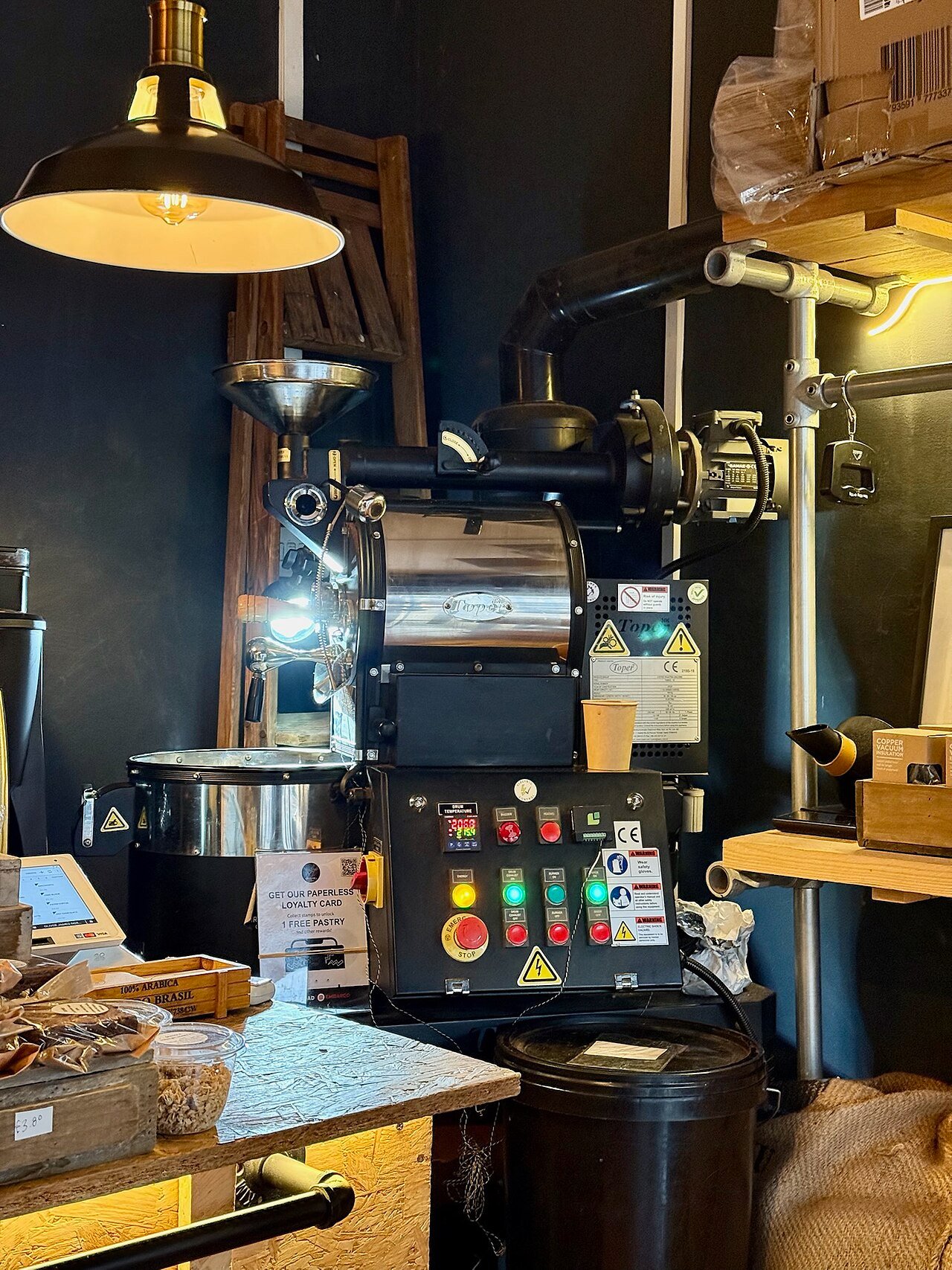
Roasting samples for coffee cupping
How you roast a sample changes what you taste, so cupping roasts should be consistent and fairly light. Green coffee importer Royal Coffee’s step-by-step cupping guide summarises the SCA roasting guidelines as an 8 to 12 minute roast, done 8 to 24 hours before cupping, with roast level measured between 30 minutes and 4 hours after roasting. The same guide notes that a roast that is too light may not develop aromatic compounds properly, while one that is too dark may hide flavours and mask defects.
Our practical advice: keep a dedicated, simple sample profile and use it for every green coffee you evaluate. If one sample is roasted darker than another, you are comparing roasts, not coffees. Our guide to roasting green coffee beans covers roast levels in detail.
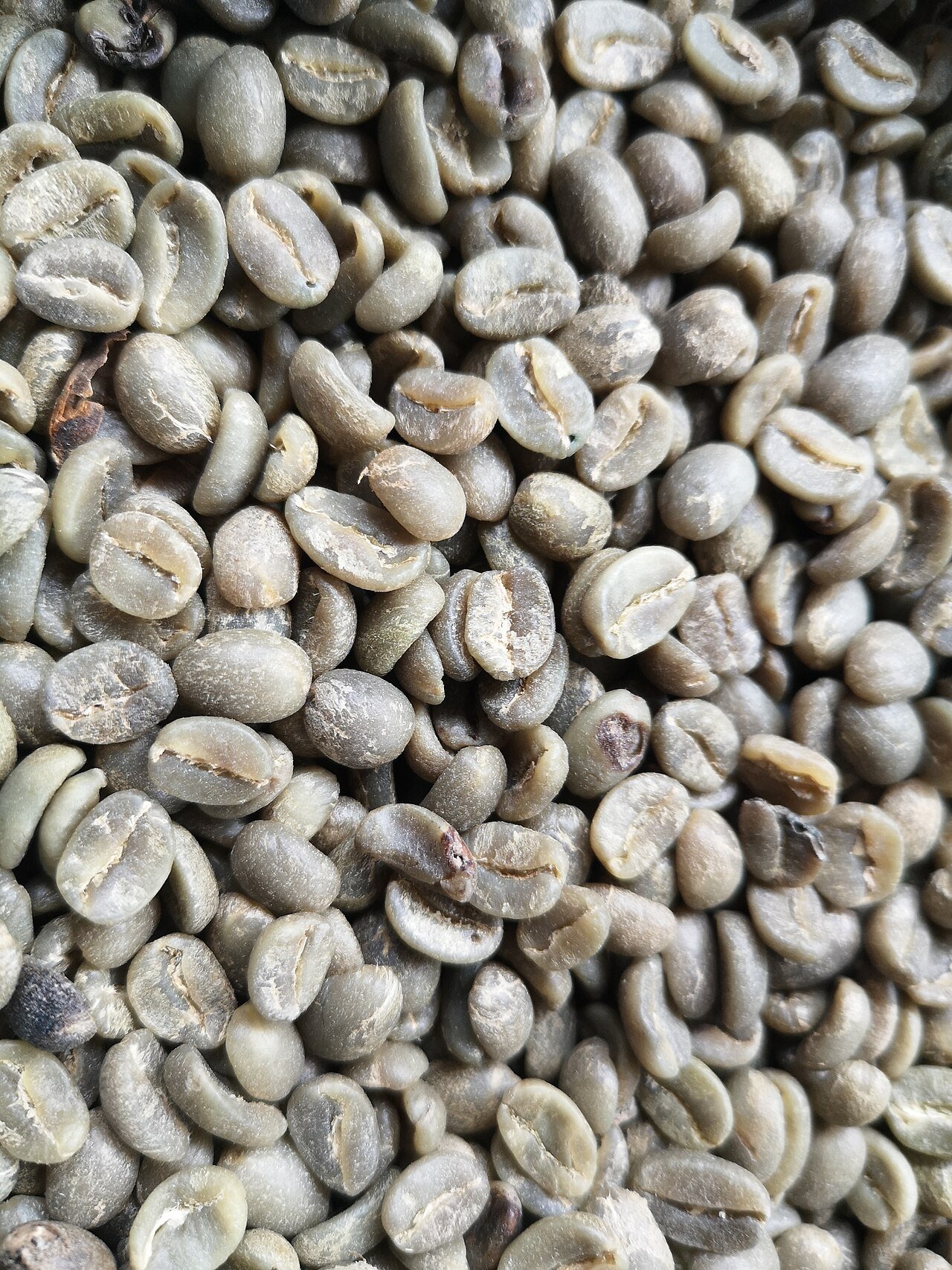
Ratio, grind and water
The numbers matter, because they decide how strong each cup is and whether cups can be compared. Royal Coffee’s guide lists these SCA figures:
- Ratio: 8.25 g of whole-bean coffee to 150 ml of water, roughly 1:18, weighed before grinding.
- Grind: 70% to 75% of the grounds should pass through a US standard #20 sieve, which is a fairly coarse grind.
- Water: clean, odour-free and chlorine-free, ideally around 150 ppm total dissolved solids, with an acceptable range of 75 to 250 ppm.
- Cups: five cups per coffee sample for a standard SCA cupping.
For water temperature, the importer Cafe Imports’ Cupping 101 guide recommends water between 195 and 205°F (about 90 to 96°C), boiled only once, and advises that no more than 15 minutes should pass between grinding the coffee and starting the cupping.
Note that the ratio is coffee to water, not coffee to cup size. If your cups hold more than 150 ml, scale the coffee dose up to match the water you actually pour.
Why not just brew it normally?
People often ask why the trade bothers with coffee cupping instead of making a pour-over or espresso. The answer is fairness. Every brewing method favours some coffees over others, and small changes in grind, dose or technique can change the result. Cupping strips brewing down to the basics: coffee, water, time. That makes it easier to compare ten coffees on one table and know the differences come from the beans.
That said, coffee cupping is not the last word. Once you have a shortlist, brewing the coffee the way your customers will drink it is still worth doing.
Setting up a space for coffee cupping
Choose a room that is quiet, well lit and free of strong smells. Avoid cupping next to the roaster while it is running, because roasting smoke will cover the aromas you are trying to find. A plain table, good daylight or neutral lighting, and enough space to walk around the cups are all you need. Keep the room at a comfortable, steady temperature so the coffee cools at a similar rate every session.
Practical tip: give each session a short time slot when people are alert, often mid-morning, and ask tasters to avoid strong food, coffee, toothpaste or smoking for a while beforehand.
Coffee cupping step by step
Here is a practical sequence that follows the common SCA-style approach. Timings come from the sources above; the rest is standard practice.
Step 1: Set the table
Lay out the cups in rows, one row per coffee, with labels hidden underneath or coded so tasters don’t know which coffee is which. Put rinse water and spittoons within reach. Coffee cupping works best in a quiet room with no strong smells, so no perfume, cooking or cleaning sprays nearby.
Step 2: Weigh and grind
Weigh each cup’s dose as whole beans, then grind one cup at a time. Purge the grinder with a few beans of the next sample before grinding it, so the last coffee doesn’t contaminate the next.
Step 3: Smell the dry fragrance
Lift each cup and smell the dry grounds. Note what you find: chocolate, nuts, fruit, flowers, spice, or anything odd like mustiness. This is the first clue to quality.
Step 4: Pour the water
Start a timer and pour hot water steadily to the top of each cup, making sure all the grounds are wet. Pour in the same order you will taste, so every cup steeps for the same time.
Step 5: Break the crust
The grounds float up and form a crust. Royal Coffee’s guide gives 4 minutes as the standard time before breaking the crust. Put your nose close to the cup, push the crust back gently with the spoon a few times, and breathe in the burst of aroma. This wet aroma is often the strongest smell you will get from the coffee.
Step 6: Skim
Use two spoons to lift away the foam and floating grounds. Rinse spoons between cups so you don’t carry one coffee into another.
Step 7: Let it cool, then slurp
Wait until the coffee is cool enough to taste properly. Royal Coffee notes that around 170°F (about 77°C) is a common tasting temperature, which can mean waiting 10 to 15 minutes after pouring. Take a spoonful, bring it to your lips and slurp hard so it sprays across your mouth. Spit or swallow, then note what you taste.
Step 8: Taste again as it cools
Coffee changes as it cools. Acidity and sweetness often become clearer, and defects that were hidden while hot can show up. Taste each cup several times as the temperature drops.
Step 9: Check the cups agree, then record
Taste across all cups of the same coffee. If one cup tastes different, for example sour or musty while the others are clean, that points to a defective bean or uneven lot. This is why standard coffee cupping uses several cups per sample. Write your notes or scores before discussing with others, so you don’t influence each other.

What you are tasting
Whatever form you use, coffee cupping comes back to a handful of qualities:
- Fragrance and aroma: the smell of the dry grounds and the wet coffee.
- Flavour: the overall taste and aroma together in the mouth.
- Aftertaste: what stays after you spit or swallow, and how long it lasts.
- Acidity: brightness or liveliness, such as citrus, apple or berry.
- Sweetness: how sweet the coffee seems without any sugar.
- Body or mouthfeel: how heavy and textured it feels, from tea-like to syrupy.
- Balance: how well everything fits together.
- Cleanliness and uniformity: whether there are off-flavours and whether all cups taste the same.
You don’t need to score all of these to get value from coffee cupping. Even simple notes on aroma, acidity, sweetness, body and any faults will tell you whether a coffee is worth buying.
Describing flavours: the lexicon and the flavour wheel
One of the hardest parts of coffee cupping is finding the right words. Two tools help. The first is the World Coffee Research Sensory Lexicon, which was created at the Sensory Analysis Center at Kansas State University and identifies 110 flavour, aroma and texture attributes in coffee, with references for measuring their intensity. The second is the Coffee Taster’s Flavor Wheel. According to Kansas State University, World Coffee Research and the Specialty Coffee Association of America published the lexicon and a new coffee sensory wheel together, based on the university’s work.
A tip from common practice: start at the centre of the wheel with broad words (fruity, nutty, sweet) and move outwards only when you are confident (stone fruit, then peach). It is better to write “fruity, like stone fruit” than to guess a specific fruit you are not sure of.

Spotting defects during coffee cupping
For a buyer, finding faults is often more important than finding nice flavours. A coffee with lovely notes in four cups and a mouldy fifth cup is a risk. Some common off-notes and what they often point to (these are general associations used in the trade, not a diagnosis):
- Fermented, vinegary, overripe or boozy: problems in processing or drying, or overripe cherries.
- Musty, earthy, mouldy or damp: moisture problems during drying, shipping or storage.
- Phenolic, medicinal or rubbery: often linked to specific defects; rubbery notes are a common complaint in low-grade Robusta.
- Papery, woody or flat: old or badly stored coffee that has lost freshness.
- Grassy or peanut-like: often an under-roasted sample rather than a green coffee fault, so check your roast first.
Several of these, including fermented, papery, musty/earthy, musty/dusty, moldy/damp and phenolic, appear as defined attributes in the WCR lexicon, which makes it easier to describe them consistently. If a sample shows faults linked to moisture or age, read our guides on storing green coffee beans and coffee processing methods to understand where they may come from.
Cupping coffees from different processing methods
Processing changes what you should expect on the table. Washed coffees usually cup clean and bright, so a muddy or ferment-y cup is a warning sign. Naturals are expected to be fruitier and heavier, but there is a fine line between ripe fruit and over-fermentation, and coffee cupping is how you find it. Honey coffees often sit in between. Wet-hulled and monsooned coffees are naturally earthy and low in acidity, so judge them on whether that character is clean and pleasant, not on whether they taste like a washed Kenyan.
A useful exercise is to cup a washed and a natural from the same origin side by side, for example two Africa Arabica lots or a washed and a natural African Arabica. Our guide to coffee processing methods explains the differences you will taste.
For current market levels and how quotes are built, see our guide to green coffee prices.
Reading cupping notes alongside a price list
Coffee cupping tells you about quality; a price list tells you about cost. The skill is putting them together. A coffee that scores a little lower but tastes clean and suits your blend can be better value than a higher-scoring lot that costs much more and adds little to the final cup. On the other hand, a cheap lot with defects in one or two cups can cost you more in unhappy customers than you save per kilo.
When comparing offers, list each coffee’s price, grade and your coffee cupping notes in one table. Ask which coffee does the job you need at the best landed cost. Our guides to wholesale green coffee beans and coffee bean grading explain how grade and price connect.
Coffee cupping for Robusta
Robusta tastes very different from Arabica, so judging it on an Arabica form is unfair to it. A 2024 study in Frontiers in Sustainable Food Systems on sensory profiles of Robusta notes that the Fine Robusta Standards and Protocols were published in 2019 by the Coffee Quality Institute to strengthen the market evaluation of Robusta quality. The same paper explains that both the Arabica and Robusta protocols score coffee on a 100-point scale, with coffees of 80 points or more classed as Specialty (Arabica) or Fine (Robusta). It also notes that Robusta is mainly used for espresso, instant coffee and blends.
Practical advice for coffee cupping of Robusta:
- Cup Robusta against Robusta. Comparing it to a washed Arabica tells you little about whether it is a good Robusta.
- Look for clean bitterness and sweetness. Good Robusta tastes of dark chocolate, nuts, malt or spice with a long finish. Poor Robusta tastes rubbery, grainy or harsh.
- Also test it in use. If the coffee is for espresso, pull a shot with it in your blend, not just on the cupping table.
Our Robusta range includes Indian, Ugandan, Brazilian, Vietnam, Indonesia and African Robusta. Cupping two or three side by side is a quick way to see how much Robusta origins differ.

What coffee cupping scores mean
Under the traditional 100-point system, 80 points is the line that separates specialty Arabica, or fine Robusta, from the rest, as the Frontiers paper above describes. Scores in the high 80s and 90s are rare and usually command high prices. Commercial coffee usually scores below 80, which is perfectly fine for many uses.
The newer CVA approach moves away from one headline number, combining physical, descriptive, affective and extrinsic information, according to the SCA. For buyers, the lesson is the same either way: a score is a summary. Read the notes, check for defects and taste it yourself.
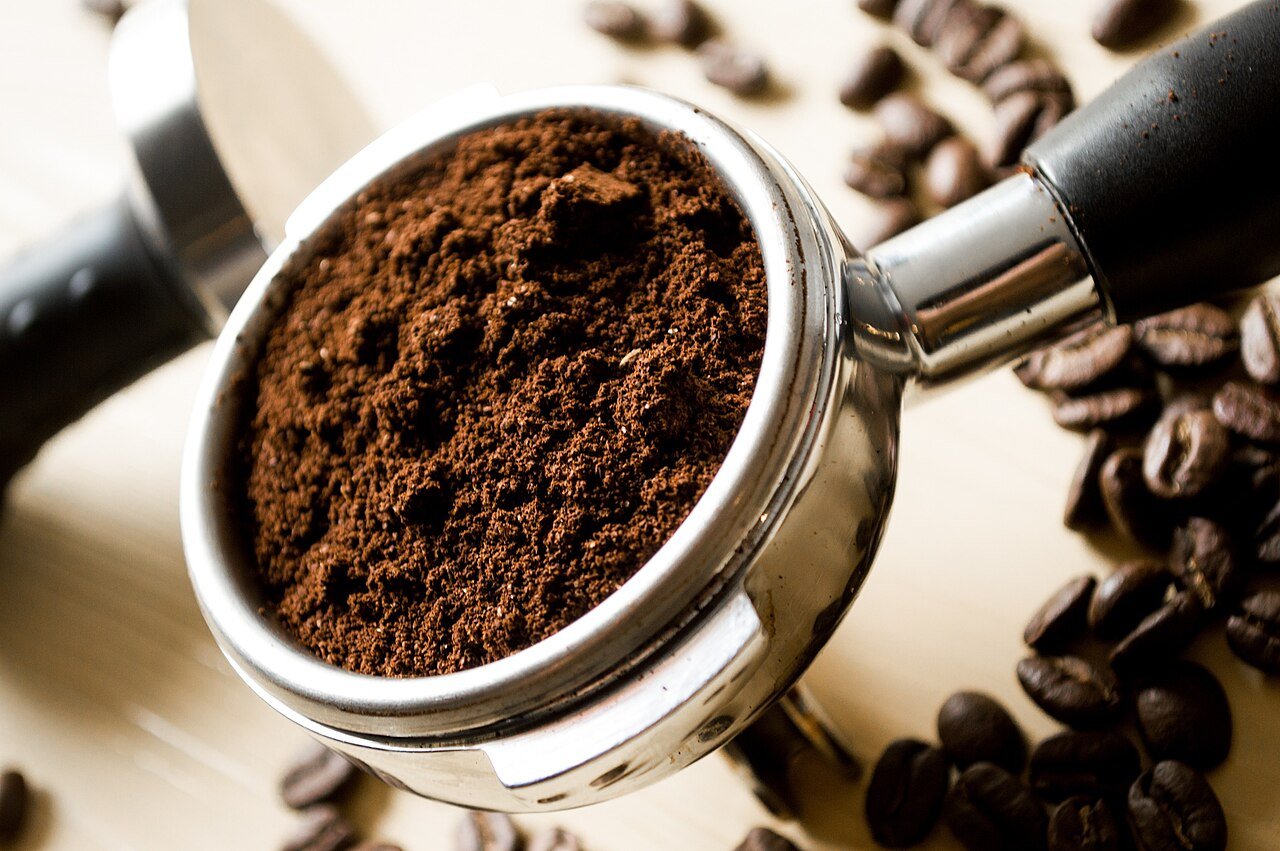
The best time to cup offer samples is soon after each harvest. Our guide to the coffee harvest season explains when that is for each origin.
Not sure who to buy from? Our guide to choosing a green coffee supplier covers specs, samples, contracts, Incoterms and red flags.
Using coffee cupping to make buying decisions
Coffee cupping is most valuable when it is built into how you buy. A simple process many buyers follow:
- Cup offer samples side by side. Put the coffees you are considering on one table, coded so you don’t know which is which. Include your current coffee as a reference if you are replacing it.
- Shortlist and ask questions. For coffees you like, check the specs: moisture, screen size, defects, crop year and processing.
- Approve a pre-shipment sample. Cup a sample drawn from the actual lot before it ships. Keep some of it sealed.
- Cup the arrival sample. When the coffee lands, cup it next to the approved pre-shipment sample. If it doesn’t match, you have evidence to raise with your supplier.
- Keep records. Save notes and scores with the lot number, so you can compare future shipments.
This routine protects you from the most common buying problem: a sample that tasted great and a delivery that doesn’t. If you buy from abroad, our guide to importing coffee beans explains how samples fit into contracts and quality claims.
Choosing coffee for espresso? Our guide to coffee beans for espresso covers the best origins, blend ratios and roasting.
Coffee cupping for blends and espresso
The cupping table tells you a coffee’s character, but espresso and milk drinks can change the picture. Many roasters use coffee cupping to shortlist components, then test blends as espresso. A common workflow:
- Cup each component on its own to understand it.
- Cup simple blends, such as 80/20 and 70/30 Arabica to Robusta, using the same cupping method.
- Pull espresso shots of the best two or three blends and taste them straight and with milk.
If you are working out ratios, our guide to Arabica vs Robusta covers how each species behaves in a blend.

The triangle test: can you really taste a difference?
Sometimes you need to know whether two coffees are actually different, for example a new lot versus the old one, or two roast profiles. A triangle test is a simple sensory method for this. Set out three cups: two of one coffee and one of the other, coded so tasters don’t know which is which. Each taster tries to pick the odd one out. If people pick it reliably over several rounds, the difference is real. If not, the coffees may be close enough to swap without customers noticing.
Triangle tests fit naturally into coffee cupping sessions and are a cheap, honest way to make decisions about replacing a coffee in a blend.
Coffee cupping for importers and distributors
If you sell green coffee to other roasters, coffee cupping is part of your product description. Your customers will want to know what each lot tastes like, and they will cup it themselves. Good practice is to cup every lot on arrival, write short, honest tasting notes, keep a reference sample of each lot, and share any defects you find before your customers find them. Clear notes save everyone time and build trust.
Handling and keeping samples
Green samples should be kept in sealed bags, cool and dry, just like the full lot. Label each with the lot number, date and source. Keep a portion of every approved pre-shipment sample until the coffee has arrived and been checked, and ideally until it has been roasted and sold. For roasted samples used in coffee cupping, aim to cup within the window recommended in the protocol and don’t judge a coffee on a sample that has sat open for days. Our guide to storing green coffee beans covers green storage in detail.
A simple coffee cupping form you can copy
If you are not ready to adopt the full SCA forms, this simple sheet captures what most buyers need. It is our own practical layout, not an official standard.
| Field | What to write |
|---|---|
| Sample code | A number or letter, not the coffee name |
| Roast date and colour | When and how dark the sample was roasted |
| Dry fragrance | Main smells of the dry grounds |
| Wet aroma / crust break | Main smells when the crust is broken |
| Flavour | Main tastes, broad first, specific if sure |
| Acidity | Low, medium or high, and its character |
| Sweetness | Low, medium or high |
| Body | Light, medium or heavy |
| Aftertaste | Short or long, pleasant or not |
| Defects | Any off-notes, and in which cups |
| Uniformity | Do all cups taste the same? |
| Overall and use | Would you buy it, and for what product? |
Using coffee cupping to check your roasts
Roasters cup their own production to catch problems early. A weekly coffee cupping of recent batches, with a reference roast on the table, quickly shows if a profile has drifted, a batch was under-developed or a green coffee is starting to fade. It is also the fairest way to compare two profiles for the same coffee: roast both, rest them the same time, and cup them blind side by side.
Signs in the cup that often point to roasting rather than green coffee:
- Grassy, peanut-like or sour: under-developed roast.
- Flat, bready, papery: a roast that stalled or ran too long before first crack.
- Ashy, smoky, bitter: roasted too dark.
Our guide to roasting green coffee beans explains how to fix each of these.

Running coffee cupping at a small roastery
You don’t need a full lab to cup well. A realistic weekly routine for a small business might look like this. It is a suggestion, not a standard:
- Once a week: cup your current production coffees with a reference sample, two to three cups each.
- Whenever a new lot arrives: cup it against the approved pre-shipment sample.
- When choosing new coffees: cup offer samples blind, five cups each if you can spare the coffee.
- Every few months: cup with someone more experienced, such as a supplier, importer or local roaster, to check your palate against theirs.
Keep the setup the same every time: same cups, same water, same grinder setting, same roast profile for samples. Consistency is what makes coffee cupping results comparable from week to week.
Coffee cupping on a small budget
If you are starting out, you can run a useful coffee cupping session with very little equipment. Use identical mugs or small bowls, a kitchen scale that reads to 0.1 g, a burr grinder, a kettle with a thermometer and two soup spoons. Keep the ratio close to the SCA figure, grind coarse, pour just-off-the-boil water, break the crust at four minutes, skim, and taste as it cools. It will not be a certified session, but it will tell you which of two or three coffees you prefer and whether any of them has an obvious fault.
As your volumes grow, add proper cupping bowls, dedicated spoons, a sample roaster and the free SCA forms. The method stays the same; only the precision improves. Many roasters run their whole buying programme on a modest setup like this for years, and coffee cupping becomes a habit rather than an event.
Training and calibration
Palates differ, so professional cuppers calibrate with each other, tasting the same coffees and comparing scores until they agree closely. The best-known qualification is the Q Grader certificate run by the Coffee Quality Institute, which also oversees Robusta (R Grader) training. You don’t need a certificate to cup well for your own business, but cupping regularly with experienced people is one of the quickest ways to improve.
Common coffee cupping mistakes
- Roasting samples differently. Different roasts make different coffees. Use one sample profile.
- Cupping too soon after roasting. Very fresh coffee can taste sharp and gassy. Follow the 8 to 24 hour window.
- Grinding too early. Ground coffee loses aroma fast; grind within 15 minutes of pouring.
- Using poor water. Chlorine or very hard water changes the taste of every cup.
- Tasting only when hot. Many qualities and defects only show as the coffee cools.
- Talking before writing. Discussing first biases everyone’s notes.
- Knowing which coffee is which. Price and origin expectations colour your judgement. Cup blind when you can.
- Cupping too many coffees at once. Palate fatigue is real. Six to eight coffees per session is plenty for most people.

What to look for when cupping our coffees
These notes describe typical character for each origin and are a starting point for your own coffee cupping, not a substitute for tasting the actual lot.
| Coffee | What to look for when cupping | Watch out for |
|---|---|---|
| African Arabica | Bright acidity, fruit, florals, clean finish | Ferment-y notes in naturals |
| Africa Arabica single origins | Clear origin character: citrus, berry, tea-like | Inconsistency between cups |
| Brazilian Robusta | Smooth chocolate and nuts, low acidity | Woody or flat notes in older lots |
| Indian Robusta | Clean bitterness, cocoa, spice, heavy body | Earthiness in naturals |
| Ugandan Robusta | Cocoa, dark chocolate, long finish | Rubbery or grainy notes |
| Vietnam Robusta | Bold body, sweet finish | Harshness if poorly sorted |
| Indonesia Robusta | Heavy body, cedar, dark chocolate | Excessive earthiness |
| African Robusta | Strong, earthy, nutty | Musty or damp notes |
Request samples for coffee cupping
We are happy to send samples of our green coffee so you can cup them on your own table before you buy. Tell us which coffees interest you, your intended use and your location through our contact page. You can browse our Arabica coffee beans and Robusta coffee beans, see all our products, read more about us, follow an order on our tracking page, or find more guides on our blog.
Looking for coffees with a clear origin story? Our guide to single origin coffee beans explains what single origin means, how traceability works and how to build a menu that sells.
For a full buyer’s guide to origins, varieties, grades and prices, see our guide to Arabica coffee beans.
Frequently asked questions about coffee cupping
What is coffee cupping in simple terms?
It is a standard way of tasting coffee where every sample is brewed the same simple way in a cup, then smelled and slurped from a spoon so that coffees can be compared fairly.
What is the standard coffee-to-water ratio for cupping?
The SCA figure commonly used is 8.25 g of coffee per 150 ml of water, roughly 1:18.
When do you break the crust?
Usually at 4 minutes after pouring.
What water temperature should I use?
Around 195 to 205°F, or about 90 to 96°C, using clean, filtered water.
Has the SCA cupping protocol changed?
Yes. In late 2024 the SCA adopted Coffee Value Assessment standards (SCA-102, 103 and 104), which supersede the 2004 Cupping Protocol and Form.
What score makes a coffee specialty?
Under the traditional 100-point system, 80 points or more is specialty for Arabica or fine for Robusta.
Can I cup Robusta the same way as Arabica?
The brewing method is similar, but Robusta is best judged against other Robustas, using the Fine Robusta protocols where possible.
Do I have to slurp?
It helps a lot. Slurping sprays the coffee across your mouth and carries aroma to your nose, so you taste much more.
How many cups per sample should I use?
Standard SCA cupping uses five cups per sample, which helps you spot defective beans that only affect one cup.
Key takeaways
- Coffee cupping is the trade’s standard way to taste and compare coffee fairly.
- The SCA’s Coffee Value Assessment replaced the 2004 protocol in late 2024, but 100-point scores are still widely used.
- Common SCA figures: 8.25 g per 150 ml, a coarse grind, clean water, a light sample roast 8 to 24 hours before, and the crust broken at 4 minutes.
- Taste as the coffee cools and across several cups to catch defects.
- Judge Robusta against Robusta; 80+ points is “fine” on the Robusta protocol.
- Build coffee cupping into buying: offer samples, pre-shipment approval, arrival checks and records.
Sources and References
- Specialty Coffee Association: SCA officially adopts CVA descriptive and affective assessments as new cupping standards
- Specialty Coffee Association: Coffee Value Assessment framework and standards
- Daily Coffee News: SCA officially adopts new cupping forms and standards (2024)
- Royal Coffee: How to set up and run a coffee cupping, a step-by-step guide
- Cafe Imports: Cupping 101
- Frontiers in Sustainable Food Systems (2024): Sensory profiles of Robusta coffee
- World Coffee Research: Sensory Lexicon
- Kansas State University: Coffee sensory dictionary developed at K-State
- Wikipedia: Coffee cupping
- Coffee Quality Institute

Pingback: Coffee Beans for Instant Coffee: 7 Proven Origins Buyers Trust - Continental Coffee Supply
Pingback: Coffee Beans for Cold Brew: 8 Proven Picks for Smooth Flavor - Continental Coffee Supply