
The coffee harvest season is the period each year when ripe coffee cherries are picked in a given growing region. There is no single worldwide harvest: Brazil’s main crop is picked in the middle of the calendar year, Ethiopia’s and India’s at the end of the year and into the next, Colombia picks in two seasons, and Uganda has a main crop and a smaller “fly” crop. Because something is always being harvested somewhere, coffee is available all year, but each origin has its own window of fresh, new-crop coffee. For anyone buying green coffee, knowing each coffee harvest season tells you when to sample, when to contract and when fresh lots will actually land.
This guide is written for roasters, importers and coffee brands. It explains how harvest timing works, how the industry’s crop and marketing years are defined, a harvest calendar for the main origins we sell, how long it takes for coffee to travel from tree to warehouse, and how to plan your buying around it. Figures come from the US Department of Agriculture’s latest coffee report and other sources linked in the text. Where we give estimates or practical advice of our own, we say so.
What is the coffee harvest season?
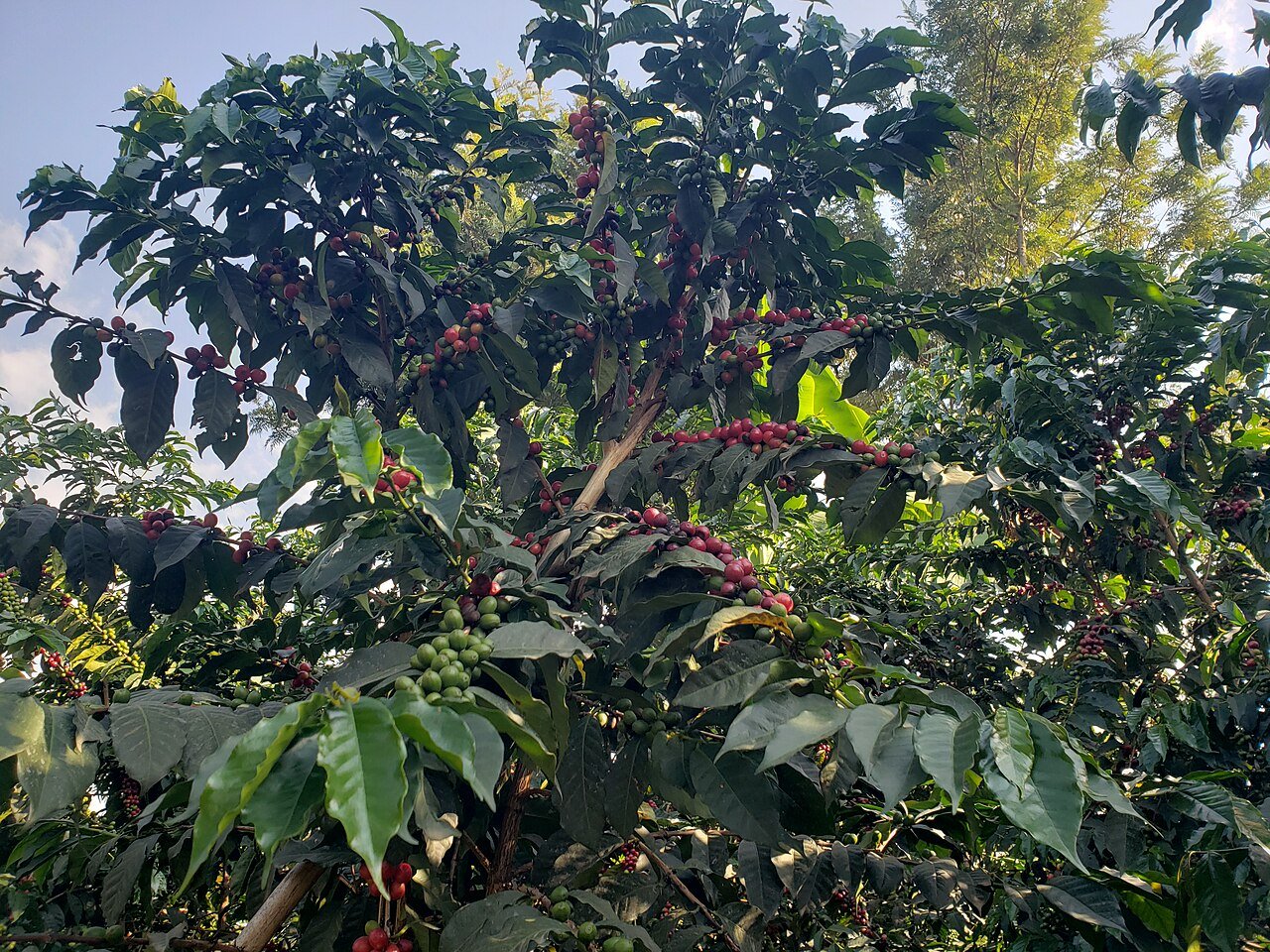
Coffee trees flower, the flowers turn into green cherries, and over several months the cherries ripen to red (or yellow, in some varieties). The coffee harvest season is the stretch of weeks or months when those ripe cherries are picked. Its timing depends mostly on rainfall: the rains trigger flowering, and the cherries ripen a set number of months later. That is why the coffee harvest season moves from country to country, and even from region to region inside one country.
In Brazil, for example, the USDA notes that timely rainfall during flowering in September and October set up near-record yields for the 2026/27 crop. Those flowers became the cherries picked the following year. In countries near the equator, rain can come in two seasons, so trees can flower twice and give two harvests, which is why places like Colombia and Uganda have a main crop and a second, smaller crop.

Why the coffee harvest season matters when you buy
Green coffee keeps for months, but it does age. The fresher the crop, the brighter and sweeter it usually tastes, especially for Arabica. The coffee harvest season affects buyers in several practical ways:
- Freshness. New-crop coffee arriving a few months after harvest is at its best. Lots from the previous harvest (“past crop”) may already have faded.
- Choice. The best lots are offered and sold soon after harvest. Buyers who sample early get first pick.
- Price. Large harvests in big producers, especially Brazil and Vietnam, tend to weigh on world prices, while poor harvests push them up.
- Planning. If you want a coffee on your menu all year, you need to know when the next crop arrives, so you don’t run out or roast stale stock.
Our guide to storing green coffee beans explains how to keep coffee fresh between harvests, and our guide to wholesale green coffee beans covers contracts and order sizes.
Crop years and marketing years
You will often see coffee crops written as two years, like “2026/27”. That is because a coffee harvest season and the selling of that crop usually stretch across two calendar years. The trade uses “crop years” or “marketing years” to group each harvest.
Different countries use different marketing years. According to the USDA Foreign Agricultural Service’s Coffee: World Markets and Trade report (July 2026), the marketing year for producing countries begins in October for countries such as Colombia, in April for countries such as Indonesia, and in July for countries such as Brazil, while non-producing countries use an October to September year. The same report lists which countries use which year:
| USDA marketing year | Examples of producing countries |
|---|---|
| April to March | Indonesia, Peru, Rwanda, Burundi, Papua New Guinea, Ecuador, Bolivia |
| July to June | Brazil, Tanzania, Philippines |
| October to September | Colombia, Ethiopia, India, Uganda, Vietnam, Kenya, Mexico, Honduras, Guatemala, Costa Rica |
A marketing year is not exactly the same as the coffee harvest season, but it is a useful guide, because each country’s year is set to start around its main harvest. Brazil’s 2026/27 year, for example, runs from July 2026 to June 2027, according to the USDA.
From tree to warehouse: how long it takes
The coffee harvest season is only the start. Before new-crop coffee reaches you, it has to be dried, milled, sorted, graded, bagged, trucked to port and shipped. Melbourne Coffee Merchants, a green coffee importer, explains in its harvest calendar that post-harvest processing, including milling, sorting, packing, consolidation and transport to port, may take two to three months, and that shipping times range between one and three months on the water, depending on the origin.
Put together, that means new-crop coffee typically reaches buyers somewhere around three to six months after picking begins. This is our rough estimate built from those figures; actual times depend on the origin, the mill, shipping schedules and your port. If you are bringing coffee in yourself, our guide to importing coffee beans explains each step.

Flowering: the early signal for the next harvest
If you want to know how the next coffee harvest season will go, watch the flowering. Flowering sets how many cherries a tree can carry, so problems at that stage show up months later as a smaller crop. StoneX described flowering as a critical stage for predicting the size of Colombia’s main harvest, after torrential rains disrupted it (StoneX). In Brazil, the USDA credits timely rain during the September and October flowering with near-record yields (USDA).
Crop analysts and traders watch flowering reports closely for exactly this reason. For a buyer, hearing that flowering went well or badly in a key origin is an early hint about supply and prices for the coming coffee harvest season.
Southern and northern hemisphere harvests
A rough rule helps when you look at a harvest calendar. Southern hemisphere producers such as Brazil tend to harvest around the middle of the calendar year, during their dry season. Many northern hemisphere and near-equator origins, such as Ethiopia, India, Vietnam and Central America, harvest towards the end of the year and into the next. Countries close to the equator, like Colombia and Uganda, can have two coffee harvest seasons because they get two rainy seasons. There are plenty of exceptions, but this pattern explains why buyers in consumer countries see waves of new-crop coffee arriving at different times of year.
How timing within the harvest affects quality
Quality can change across a single coffee harvest season. As a general pattern, and not a fixed rule, the first pickings of the season can include more unevenly ripe cherries, the middle of the season often brings the best ripeness, and the final pickings can include overripe or weather-damaged fruit. Producers who pick selectively and sort carefully keep quality steady all season. When you compare offers, it is fair to ask whether a lot is from early, peak or late in the harvest, and to cup samples rather than relying on the label alone.
The main crop and the fly crop
In countries with two rainy seasons, the coffee harvest season comes twice a year. The larger harvest is called the main crop. The smaller one goes by different names: the fly crop in East Africa, the mitaca in Colombia. Fly crop coffee can be very good, but volumes are smaller, so the choice of lots is narrower.

Why one harvest can last for months
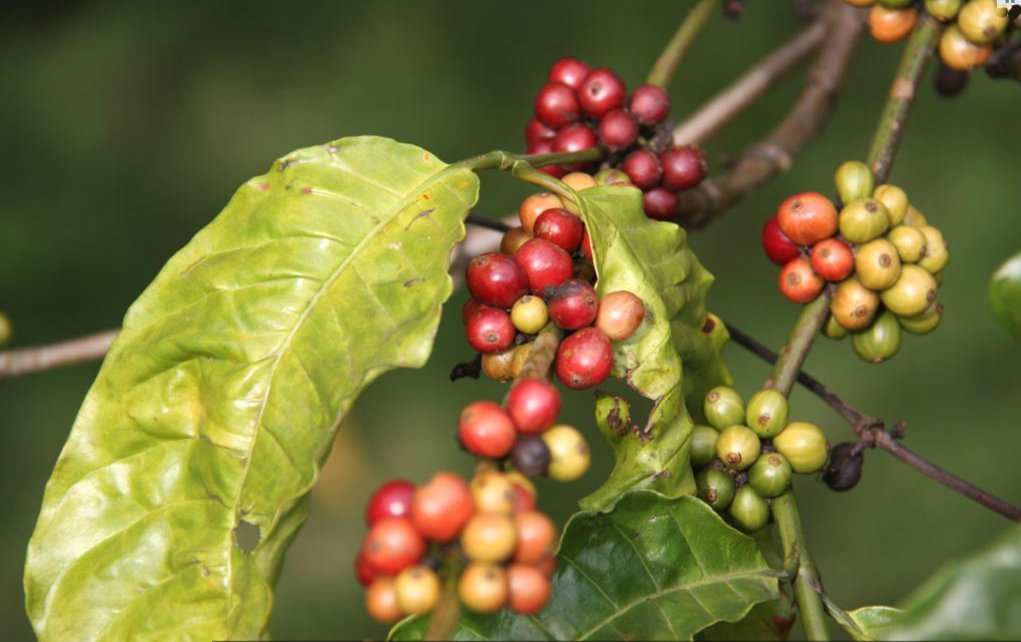
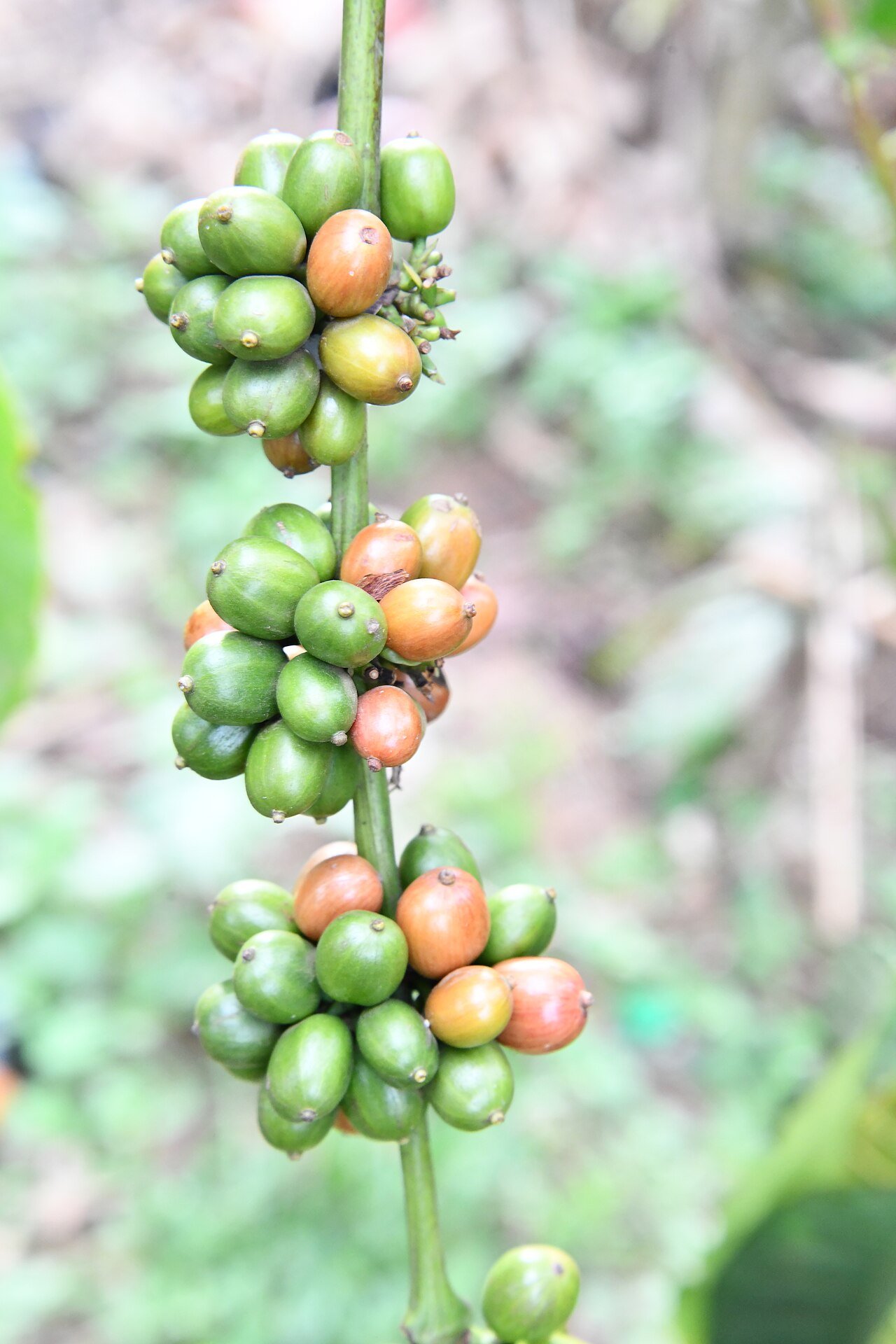
Cherries on the same branch do not all ripen at once, as the photo above shows. Careful farms pick by hand several times over the coffee harvest season, taking only ripe cherries on each pass. In flatter regions with mechanical harvesting, such as much of Brazil, picking is faster but still spread over weeks. This is one reason harvest windows are given as ranges, and why the first lots of a new crop often reach the market well before the last.
Coffee harvest season by country
Here is a summary of the coffee harvest season in the main producing countries, with the USDA marketing year and the latest USDA production forecast for 2026/27 from its July 2026 report. Harvest windows are typical ranges from the sources cited in each section below; weather can shift them by weeks in any given year.
| Origin | Typical coffee harvest season | USDA marketing year | 2026/27 USDA production forecast |
|---|---|---|---|
| Brazil | Mid-year; Arabica picking in key regions such as Cerrado Mineiro usually begins in late May; Bahia June to October | July to June | 71.9 million bags |
| Vietnam | Late in the calendar year, with picking under way by November | October to September | 32.5 million bags |
| Colombia | Main crop September to December; mitaca April to June | October to September | 13.4 million bags |
| Ethiopia | October to February | October to September | 12.1 million bags |
| Indonesia | Varies by island; ask for the crop year | April to March | 11.4 million bags |
| Uganda | Main crop and fly crop; timing differs by region | October to September | 7.16 million bags |
| India | Arabica November to January; Robusta December to February | October to September | 6.14 million bags |
| Honduras | Late in the calendar year into the next (October to September marketing year) | October to September | 6.03 million bags |
The USDA forecasts world coffee production in 2026/27 at a record 189.7 million 60 kg bags, driven by record output in Brazil, Ethiopia, Uganda and Vietnam, which more than offsets lower crops in India and Indonesia, according to the same report.
Brazil
Brazil sets the tone for the whole market. The USDA says Brazil accounts for nearly 40% of world production, and forecasts a record 71.9 million bags for 2026/27, with Arabica rebounding to 47.5 million bags and Robusta at 24.4 million (USDA, July 2026). Over 70% of Brazil’s Arabica is grown in Minas Gerais, and about 70% of its Robusta (Conilon) in Espírito Santo.
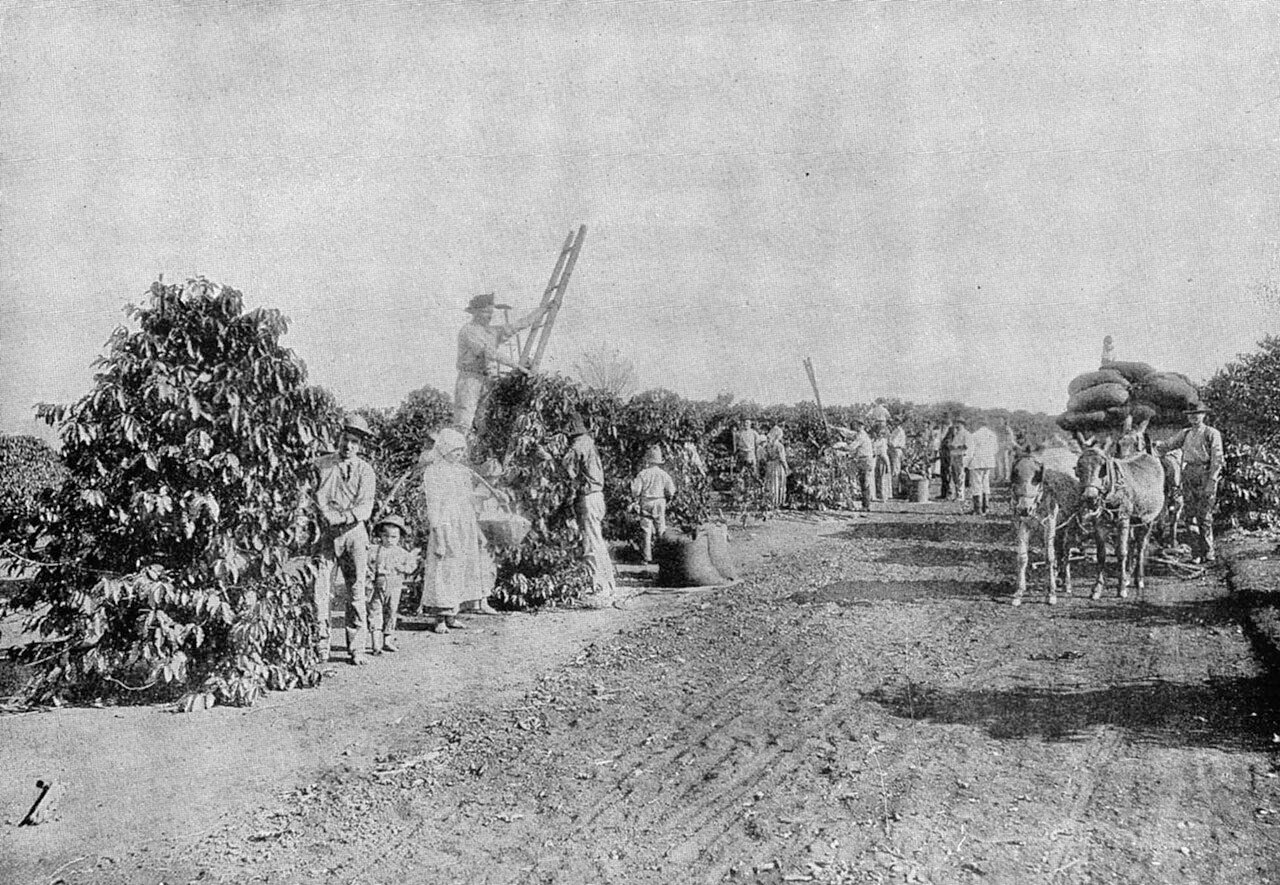
Brazil’s coffee harvest season falls in the middle of the year. In its May 2026 harvest update, Brazil’s Cepea research centre reported that in Cerrado Mineiro, a key Arabica region, activities were expected to begin in late May, which is typical, while Robusta harvesting was progressing gradually (Cepea). Further north, Melbourne Coffee Merchants gives Bahia’s harvest as June to October (MCM harvest calendar).
Brazil also has a two-year rhythm. The USDA explains that Arabica trees alternate between high-yielding “on-years” and lower-yielding “off-years”, and that under normal conditions the on-year crop can rise by 5 to 10 million bags and fall by a similar amount the next year. Weather in Minas Gerais is therefore watched closely by the whole trade. Our Brazilian Robusta comes from this mid-year coffee harvest season.
Vietnam
Vietnam is the world’s second-largest producer and grows mostly Robusta. The USDA forecasts 32.5 million bags for 2026/27, a record, on expanding area and higher yields (USDA). Vietnam’s marketing year runs October to September, and its coffee harvest season comes late in the calendar year. StoneX’s CoffeeNetwork reported that in the 2025/26 crop, heavy rains slowed picking and sun-drying in the Central Highlands, and that by late November only 14% of Robusta had been harvested, against 25% historically (StoneX). That is a good example of how weather can push a coffee harvest season back by weeks. Our Vietnam Robusta follows this calendar.
Colombia
Colombia is the classic two-harvest country. StoneX reports that Colombian growers typically harvest the main crop from September to December, while the mitaca, or mid-crop, is collected from April to June (StoneX). Regions differ: the south of the country leans towards the first half of the year, so Colombian coffee is available for much of the year. The USDA forecasts 13.4 million bags for 2026/27.

Ethiopia and East Africa
Ethiopia’s coffee harvest season usually runs from October to February, with the peak varying by region, according to Melbourne Coffee Merchants, which aims to ship its Ethiopian coffees from March onwards. The USDA forecasts a record 12.1 million bags for Ethiopia in 2026/27, noting that over half the cultivated area has been replaced with higher-yielding varieties over the last four years (USDA). Other East African origins have their own calendars, and several, like Kenya, have both a main and a fly crop. Our African Arabica and single-origin Africa Arabica lots come from these harvests.
Uganda
Uganda has two coffee harvest seasons a year, and they differ by region. Green coffee trader Sucafina reported in November 2025 that Uganda’s Robusta fly crop harvest was getting under way, and that the main harvest, which carries the most weight in national output, was expected from April through August 2026 (Sucafina). Other regions of Uganda harvest at different times, so it is worth asking which region and crop a lot comes from. The USDA forecasts record Ugandan production of 7.16 million bags for 2026/27. See our Ugandan Robusta.

India
India’s coffee harvest season comes at the end of the year. Quoting the USDA’s India coffee report, Daily Coffee News reports that the Arabica harvest takes place from November to January and the Robusta harvest from December to February, and that Robusta makes up over 70% of India’s crop (Daily Coffee News). The USDA forecasts Indian production at 6.14 million bags for 2026/27, lower than the previous year. Our Indian Robusta follows this December to February window.
Indonesia
Indonesia is spread over thousands of islands, so there is no single coffee harvest season. The USDA uses an April to March marketing year for Indonesia and forecasts 11.4 million bags for 2026/27, down 1.0 million, because excessive rainfall disrupted flowering and cherry formation in the lowland areas of Southern Sumatra and Java, where about 75% of Indonesia’s Robusta is grown (USDA). Because timing varies so much by island, always ask your supplier for the crop year of an Indonesian lot. Our Indonesia Robusta page has more on the origin.
Central America
Central America and Mexico use an October to September marketing year in the USDA’s data, and their coffee harvest season generally falls around the turn of the year. The USDA forecasts the region’s output at 17.7 million bags for 2026/27, with Honduras rebounding to 6.0 million bags (USDA).
How coffee is picked
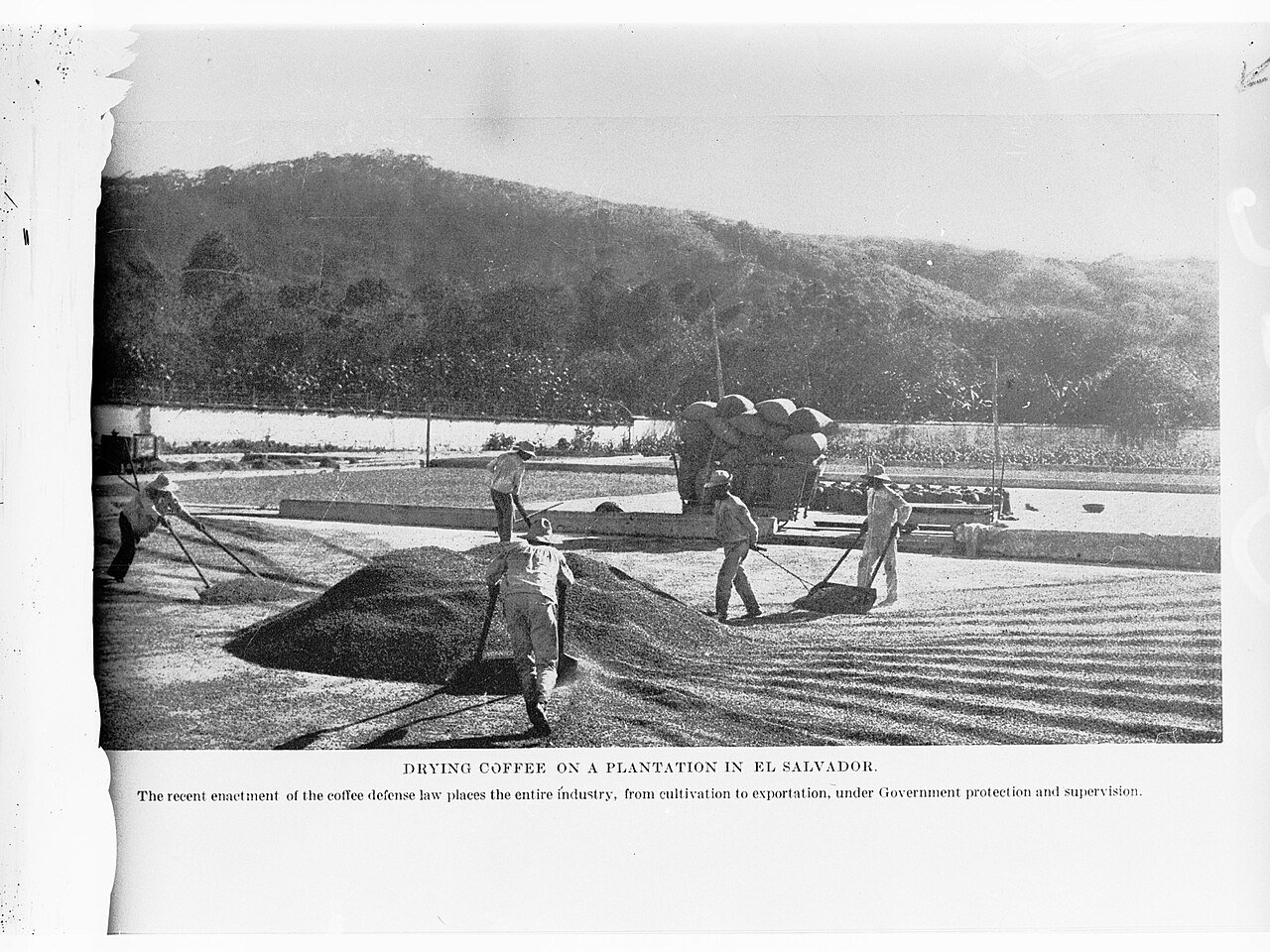
How the cherries are picked affects quality as much as when. There are three broad methods:
- Selective hand picking. Pickers go through the trees several times during the coffee harvest season, taking only ripe cherries each time. It is slow and costs more, but it gives the most even, ripe lots. Most specialty Arabica is picked this way.
- Strip picking. All the cherries on a branch are stripped off at once, ripe or not, usually near the end of ripening. It is faster and cheaper, but the lot contains a mix of ripe, unripe and overripe cherries, which has to be sorted later.
- Mechanical harvesting. Machines shake or comb the cherries from the trees. It is common on flatter land, such as much of Brazil, where the USDA notes that geography supports mechanised pruning and harvesting.
For buyers, the picking method is one more question worth asking. Selectively picked coffee usually costs more, but it often cups cleaner and has fewer defects. Our coffee bean grading guide explains how defects are counted.
What buyers do during the harvest
The weeks of the coffee harvest season are busy for buyers too. Typical tasks include:
- Keeping in touch with suppliers about crop size, quality and any weather problems.
- Asking for the first new-crop samples as soon as lots are milled and ready.
- Cupping offer samples side by side and shortlisting.
- Approving pre-shipment samples from the exact lots you will receive.
- Booking shipping space early, because many buyers want new crop at the same time.
None of this has to be complicated, but doing it on time makes a real difference to what you get.
Arabica and Robusta harvests
Where both species grow in one country, their harvests do not always line up. In Brazil, for example, Cepea’s May 2026 update describes Robusta harvesting already progressing while the Arabica harvest was still slow to get going in most regions (Cepea). In India, the Robusta harvest runs about a month behind Arabica, according to the USDA figures reported by Daily Coffee News. If you blend the two species, it helps to know that their freshest arrivals may come at slightly different times. Our Arabica vs Robusta guide explains the wider differences between them.
How the coffee harvest season affects price
Coffee prices react to harvests, and especially to Brazil’s. The USDA notes that weather developments in Minas Gerais remain the primary indicator for world market conditions, because Brazil’s biennial swings account for most of the year-to-year change in global Arabica output (USDA). In its July 2026 report, the USDA also notes that coffee prices dropped 25% over the previous seven months as more supply became available, as measured by the International Coffee Organization’s composite price index.
In practice, this means a big, healthy coffee harvest season in a major origin tends to soften prices, while frost, drought or heavy rain at the wrong moment can push them up quickly. The USDA describes how drought, high temperatures, frost and excessive rain have all cut Brazilian Arabica yields in recent years. Nobody can predict the weather, but following the harvest calendar tells you when the market is most likely to move. Our guide to wholesale green coffee beans explains how futures prices and differentials make up the price you pay.
For current market levels and how quotes are built, see our guide to green coffee prices.
Planning your buying around the coffee harvest season
Here is a simple way to think about the year. This calendar is our own practical suggestion built from the harvest windows above, not an industry standard, and real timing will vary with weather and logistics.
| Time of year | What is happening | What buyers often do |
|---|---|---|
| January to March | Ethiopia, India and Vietnam harvests winding down; Colombia main crop being shipped | Cup Ethiopian, Indian and Vietnamese new-crop samples; contract for spring and summer arrival |
| April to June | Colombia mitaca; Brazil harvest starting; Uganda main crop in some regions | Watch Brazil weather and crop reports; sample early Brazilian lots |
| July to September | Brazil harvest in full swing; East African coffees arriving in consumer markets | Contract Brazilian coffee for late-year arrival; plan year-end stock |
| October to December | Ethiopia, Vietnam and Colombia main harvests begin; India starts in November | Plan next year’s volumes; secure first new-crop offers from these origins |
A few habits help:
- Sample early. New-crop samples usually appear a little while after the coffee harvest season starts. The best lots go first.
- Contract ahead, ship in stages. Agree your yearly volume, then take delivery in several shipments so stock stays fresh.
- Keep a buffer. Harvests and ships run late. A few weeks of extra stock stops you running out.
- Know the crop year. Always ask which harvest a lot comes from.
Cup every new-crop sample against what you use now before committing. Our guide to coffee cupping explains how.
New crop vs past crop
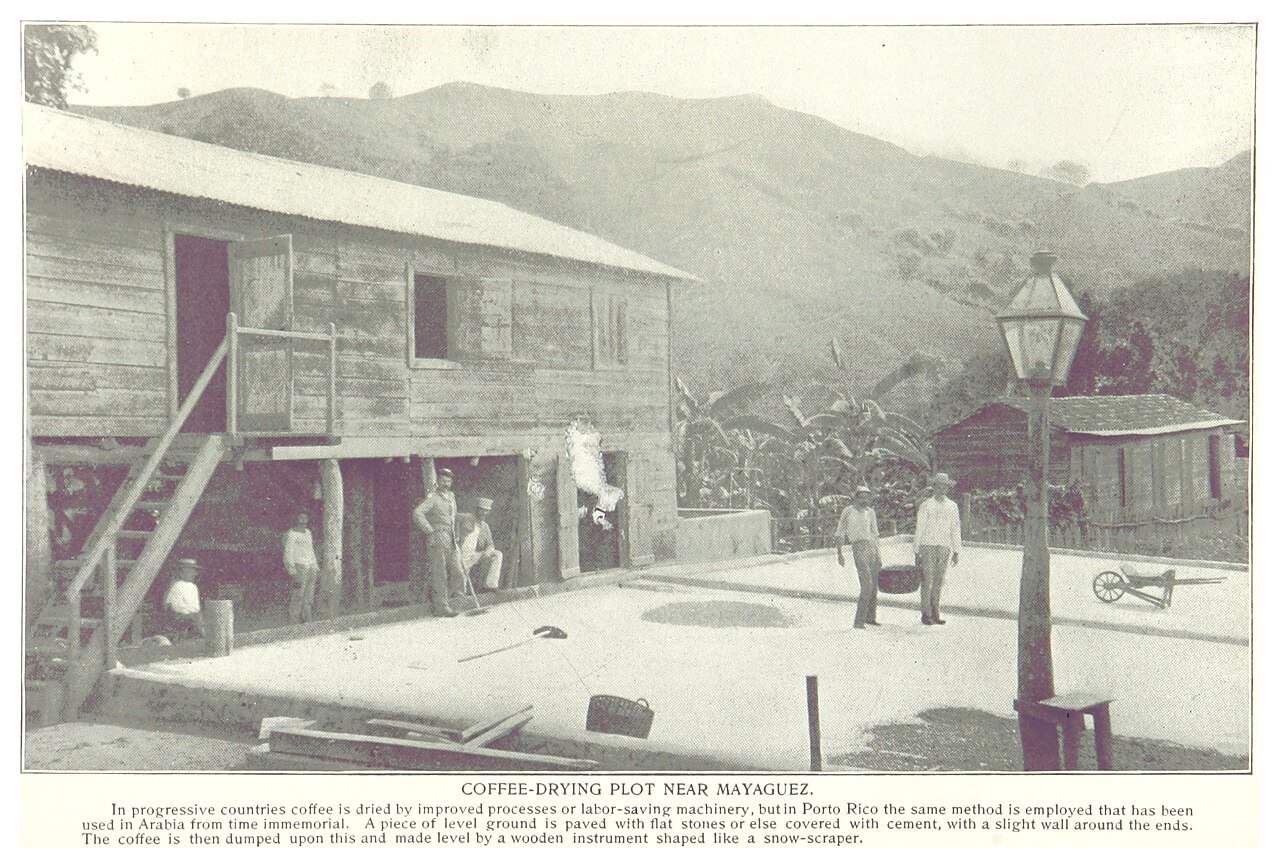
“New crop” means coffee from the most recent coffee harvest season. “Past crop” means coffee from the harvest before that, still on sale. Past-crop coffee is not necessarily bad, especially if it was stored well in hermetic bags, but it has usually lost some brightness and sweetness. Signs of age include beans that look paler or yellowish, a papery or woody taste, and a flatter cup.
Past crop can make sense for dark-roast espresso blends or instant coffee, where small losses in freshness matter less, and it is sometimes priced lower. For light-roast single origins, new crop is worth waiting for. How a lot was processed also affects how well it ages; see our guide to coffee processing methods.
Questions to ask your supplier about the harvest
- Which coffee harvest season and crop year is this lot from?
- Was it from the main crop or the fly crop (or mitaca)?
- Was it picked early, at the peak or late in the harvest?
- How was it picked: selectively, stripped or by machine?
- When was it milled, and when can it ship?
- Has weather affected this year’s crop size or quality?
- When do you expect the next crop to be available?
Good suppliers can answer these quickly. The answers help you compare offers fairly and plan your next order around the right coffee harvest season.
Choosing coffee for espresso? Our guide to coffee beans for espresso covers the best origins, blend ratios and roasting.
Building a year-round menu from different harvests
Because each origin has its own coffee harvest season, roasters can rotate coffees through the year so that something fresh is always on the shelf. A common pattern is to feature East African coffees when they arrive, move to Central and South American coffees as those crops land, and lean on Brazilian and Asian coffees for blends that need to stay consistent all year. Blend bases are usually chosen from origins with large, steady supply so they can be bought again and again. Our guide to roasting green coffee beans covers how to adjust profiles when you switch to a new crop.
Weather, climate and the coffee harvest season
Harvest windows are moving targets. The examples in this guide show how much weather matters: rain slowed Vietnam’s 2025/26 harvest and sun-drying (StoneX), heavy rain disrupted flowering in Indonesia’s lowland Robusta areas (USDA), and torrential rains disrupted flowering in Colombia (StoneX). Over the longer term, changing climate patterns can shift flowering and ripening. For buyers, the practical answer is to keep in touch with suppliers during each coffee harvest season and to read crop reports rather than relying on last year’s calendar.
Reading crop reports
The USDA Foreign Agricultural Service publishes its Coffee: World Markets and Trade report twice a year, in June and December, with production, trade and stock figures for each country. The July 2026 edition states that the next release will be on December 16, 2026 (USDA). Country-level detail comes from USDA attaché reports, and national bodies such as Brazil’s research institutes publish regular harvest updates, like Cepea’s reports on harvest progress. Reading these around each major coffee harvest season gives you a much clearer picture of supply than price charts alone.

An example year of supply
To make this concrete, here is an illustrative plan for a small roaster using three coffees: an East African Arabica for filter, a Brazilian Robusta for an espresso blend, and an Indian Robusta for a stronger blend. It is an example of how the coffee harvest season can shape a buying plan, not advice for every business.
- Early in the year: sample the new Indian crop as the December to February harvest finishes; contract enough for the year and ask for it to ship in two lots.
- Spring: sample new-crop East African coffees as they become available after the October to February harvest; contract for a mid-year arrival.
- Mid-year: follow Brazil’s harvest reports; once quality and crop size are clear, contract Brazilian Robusta for arrival later in the year.
- Autumn: review how much of each coffee is left, and plan next year’s volumes before the new harvests begin.
The result is that each coffee arrives reasonably fresh and nothing sits in the warehouse for too long. You can apply the same thinking to any mix of origins.
Storage between harvests
Since each origin has one main coffee harvest season a year, most coffee you roast will be weeks or months old. Good storage is what keeps it tasting fresh until the next crop arrives. Keep bags cool, dry and off the floor, use the oldest coffee first, and consider hermetic liners for coffee you plan to hold for many months. Our guide to storing green coffee beans covers this in detail.
Looking for coffees with a clear origin story? Our guide to single origin coffee beans explains what single origin means, how traceability works and how to build a menu that sells.
Not sure who to buy from? Our guide to choosing a green coffee supplier covers specs, samples, contracts, Incoterms and red flags.
For a full buyer’s guide to origins, varieties, grades and prices, see our guide to Arabica coffee beans.
Common mistakes around the coffee harvest season
- Buying past crop without knowing it. Always ask for the crop year.
- Waiting too long to sample. The best lots from each coffee harvest season are often sold quickly.
- Buying a whole year at once with nowhere cool to store it. Contract the volume, but ship in stages.
- Assuming last year’s timing. Weather shifts harvests; check current reports.
- Ignoring Brazil. Even if you never buy Brazilian coffee, its harvest affects world prices.
- Running stock to zero. Late ships and slow harvests happen; keep a buffer.
Our coffees and their harvests
Here is how the coffee harvest season applies to each coffee we sell. These are general patterns; we confirm the crop year of every lot with each quote.
| Our coffee | Coffee harvest season at origin | Planning note |
|---|---|---|
| African Arabica | Mostly late in the year into early the next (for example Ethiopia, October to February) | Freshest arrivals usually mid-year in most markets |
| Africa Arabica single origins | Varies by country; some origins have a fly crop | Ask for the crop year of each lot |
| Brazilian Robusta | Mid-year harvest | New crop generally available in the second half of the year |
| Vietnam Robusta | Late in the calendar year (October to September marketing year) | New crop usually flows in the first months of the following year |
| Indian Robusta | December to February | Shipments follow from early in the year |
| Ugandan Robusta | Main and fly crops, varying by region | Coffee available at more than one point in the year |
| Indonesia Robusta | Varies by island (April to March marketing year) | Always confirm the crop year |
| African Robusta | Varies by country | Ask which country and crop a lot comes from |
Ask us about new-crop availability
If you want to plan around the next coffee harvest season, tell us which coffees you use, how much you roast and where you are through our contact page. We will tell you what is available now, when new crop is expected and send samples when they are ready. You can browse our Arabica coffee beans and Robusta coffee beans, see all our products, read more about us, follow an order on our tracking page, or find more guides on our blog, including coffee bean grading.
Frequently asked questions about the coffee harvest season
When is the coffee harvest season?
It depends on the country. Brazil harvests mainly in the middle of the year, Ethiopia from about October to February, India from November to February, Colombia September to December plus April to June, and Vietnam late in the calendar year.
Is coffee harvested all year round?
Not in any one place, but somewhere in the world a coffee harvest season is always under way, which is why green coffee is available all year.
What is a fly crop?
A smaller second harvest in countries with two rainy seasons, such as Uganda and Kenya. In Colombia it is called the mitaca.
What does 2026/27 mean for coffee?
It is a crop or marketing year that spans two calendar years. For Brazil, the USDA’s 2026/27 year runs from July 2026 to June 2027.
How long after harvest does coffee arrive?
Processing can take two to three months and shipping one to three months, so new-crop coffee typically arrives roughly three to six months after picking begins. Treat this as an estimate.
Why do harvest dates change from year to year?
Mainly weather. Rain timing affects flowering, and heavy rain or drought can speed up or delay ripening and drying.
Is new-crop coffee always better?
Usually fresher and brighter, but well-stored past-crop coffee can still work well in dark roasts and blends.
Which country produces the most coffee?
Brazil, with a USDA forecast of 71.9 million bags for 2026/27, followed by Vietnam at 32.5 million.
How do I know which harvest a coffee is from?
Ask the supplier for the crop year and check the spec sheet. A good supplier will always tell you.
Does the harvest affect how coffee tastes?
Yes. Ripeness at picking, the weather during the coffee harvest season and how quickly the coffee is dried all shape the cup. That is why the same farm can taste a little different from one year to the next.
Key takeaways
- The coffee harvest season differs by country and even by region; there is no single worldwide harvest.
- Crop and marketing years span two calendar years; the USDA uses April, July or October starts depending on the country.
- New-crop coffee usually reaches buyers roughly three to six months after picking starts.
- Brazil, with nearly 40% of world output, drives prices; its biennial cycle and weather matter most.
- Plan purchases around each origin’s harvest, sample early, contract ahead and ship in stages.
- Always confirm the crop year of every lot you buy.
Sources and References
- USDA Foreign Agricultural Service: Coffee: World Markets and Trade (July 2026)
- Cepea: Coffee harvest remains slow (May 2026)
- Melbourne Coffee Merchants: Harvest calendar
- StoneX CoffeeNetwork: Colombia’s 2026 mid-crop shows sharp regional divide
- StoneX CoffeeNetwork: Vietnam’s Robusta coffee crop shows resilience amid weather challenges
- Sucafina: Uganda 2025/26 Robusta fly crop
- Daily Coffee News: India coffee report (USDA FAS)

Pingback: Vietnamese Coffee Beans: Proven 2026 Guide to Buying Robusta - Continental Coffee Supply
Pingback: Coffee Beans for Cold Brew: 8 Proven Picks for Smooth Flavor - Continental Coffee Supply