
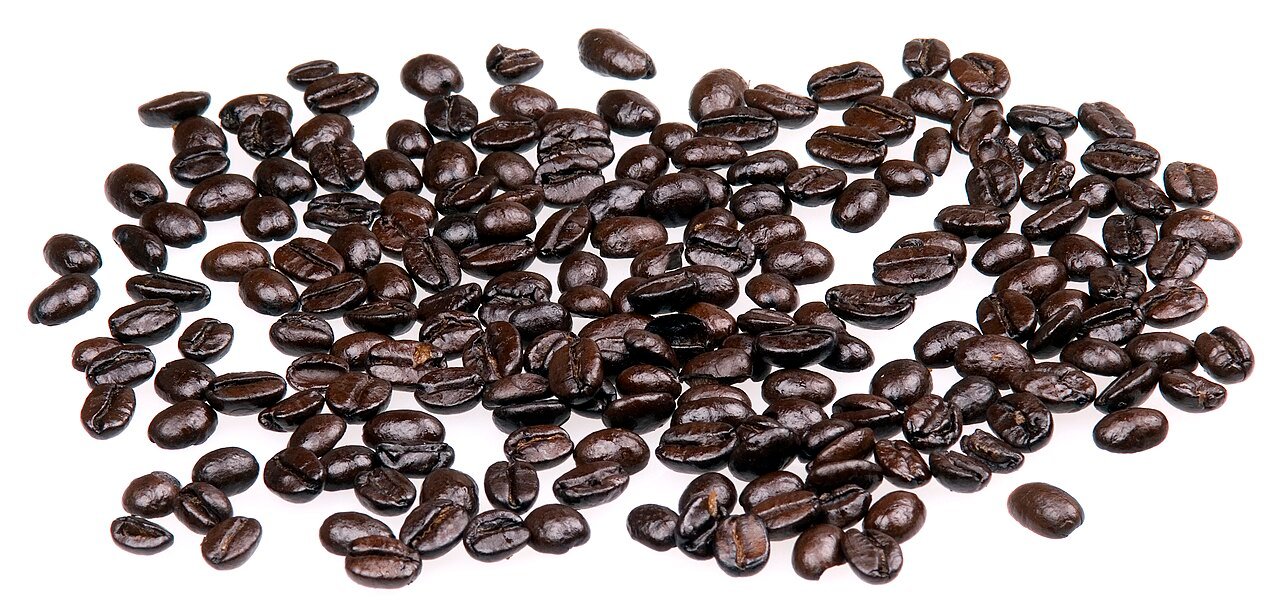
Rwandan coffee beans are mostly washed Red Bourbon Arabica grown by smallholder farmers in the hills of Rwanda, often at 1,500 to 2,000 metres. They are known for clean, sweet cups with red fruit, citrus and floral notes. We sell Rwandan coffee beans as green, traceable single-origin lots through our Africa Arabica coffee beans range, shipped to roasters, importers and coffee businesses worldwide.
This guide covers what you need before you buy: how Rwandan coffee tastes, where it grows, how it is processed, when the new crop arrives, what the 2026 market looks like, the potato taste issue every buyer asks about, and how to order samples and bags from us.
Table of Contents
Table of Contents
What are Rwandan coffee beans?
Rwandan coffee beans are coffee grown in Rwanda, a small, hilly, landlocked country in Central and East Africa. Almost all of it is Arabica. As of 2025, about 97% of production was Arabica, mainly Bourbon, and 3% Robusta.
Rwanda at a glance:
- Species: almost all Arabica, mainly Red Bourbon
- Altitude: mostly around 1,500 to 2,000 metres
- Farmers: about 400,000 smallholder farm families, according to the national export board
- Area: about 42,000 hectares
- Main process: fully washed, about 80% of coffee
- Harvest: roughly late February or March to July
- 2025 exports: 23,860 tonnes, worth US$148.6 million, a record
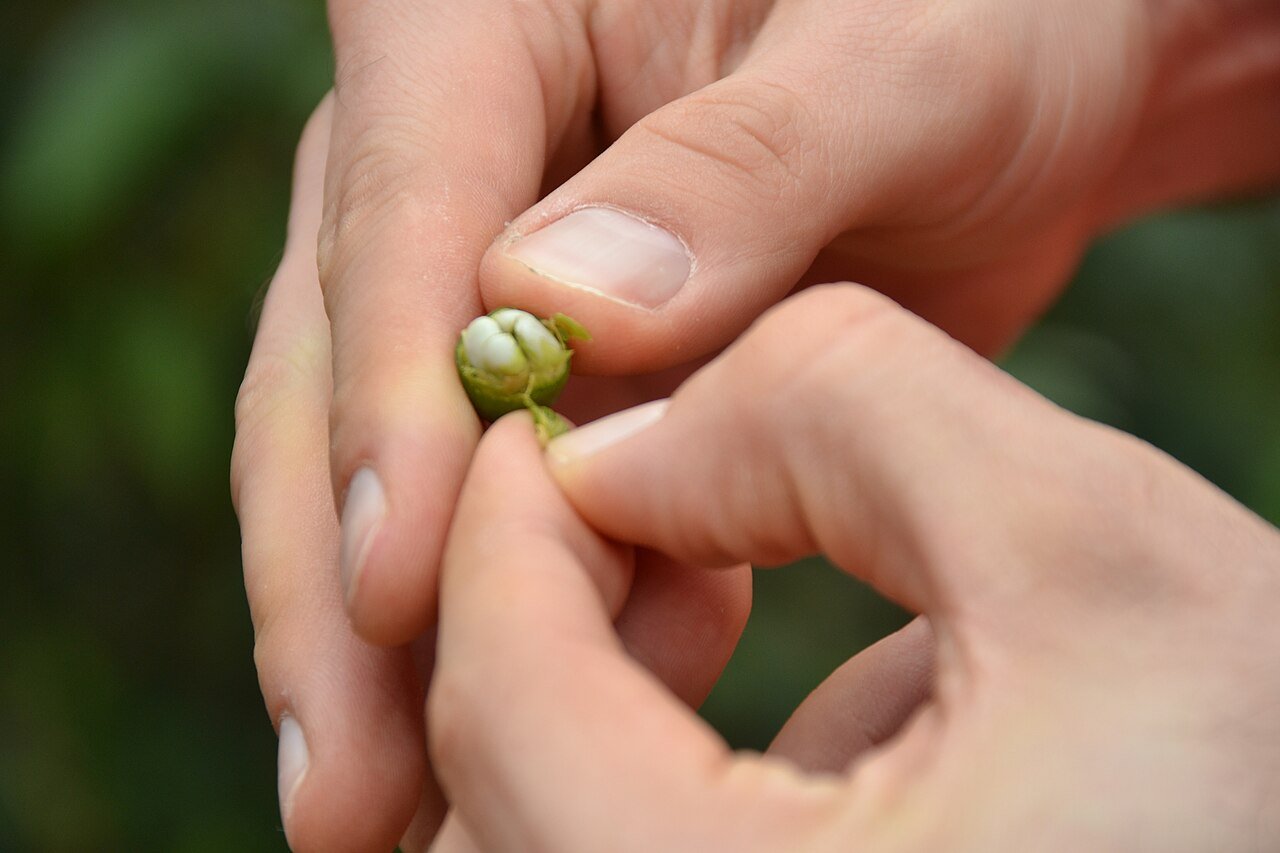
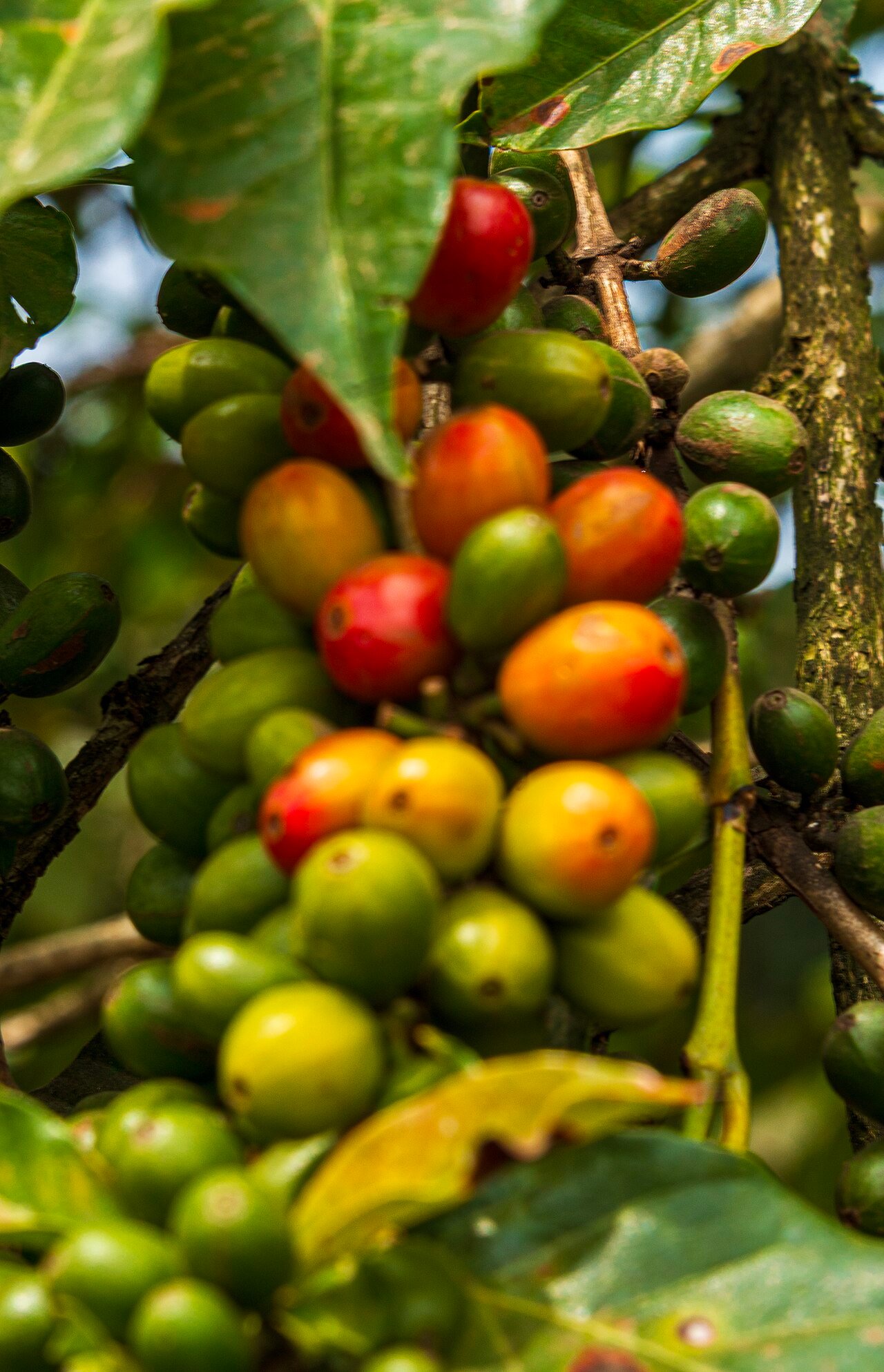
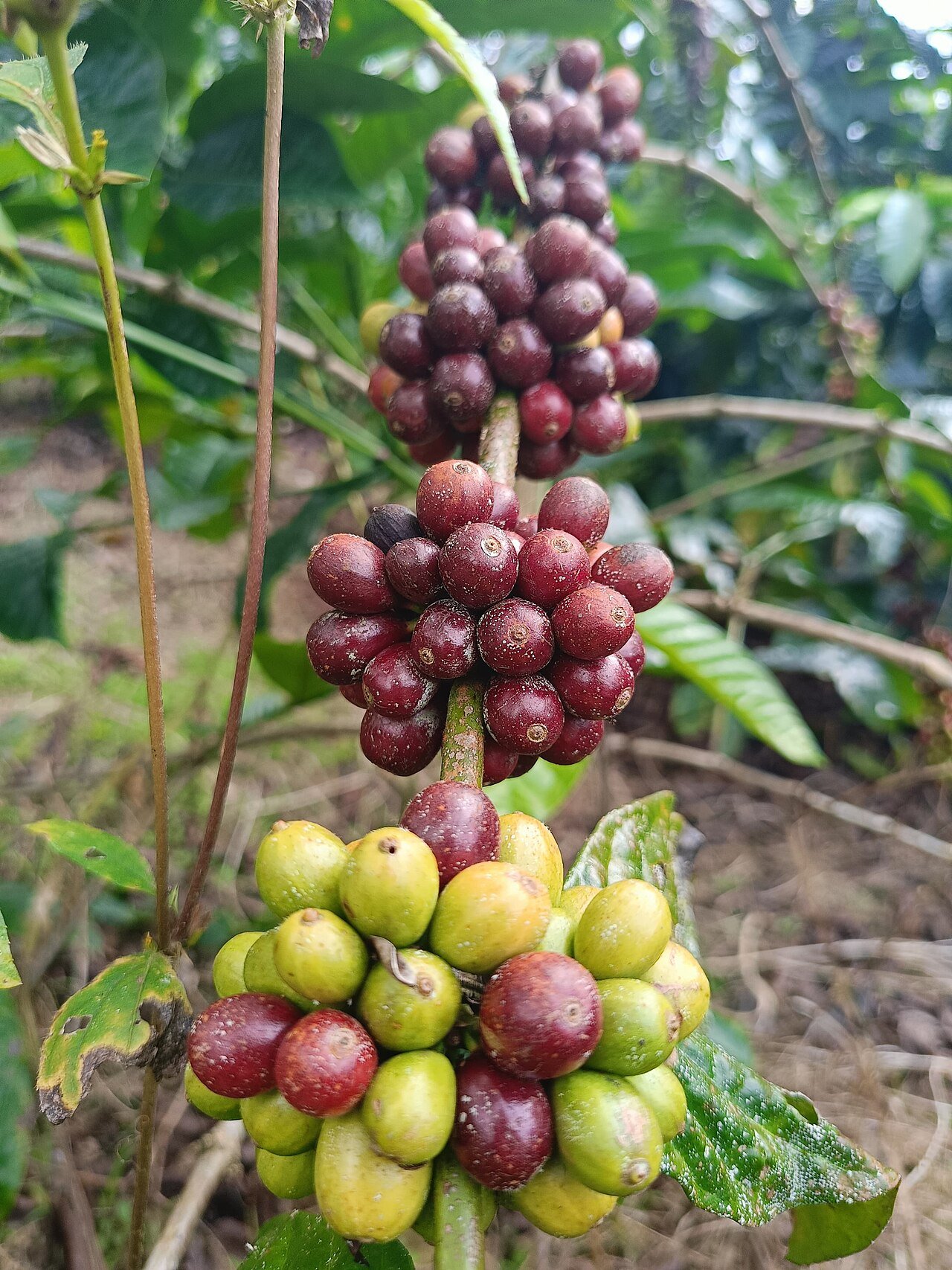
Coffee in Rwanda. Photo: François Terrier, CC BY 2.0, via Wikimedia Commons.
Rwanda is a small producer. TYPICA puts it at about 0.2% of world coffee. But its quality is well known, and Rwandan coffee beans appear on specialty menus around the world.
A short history of Rwandan coffee
Rwanda’s national agricultural export board (NAEB) dates coffee in Rwanda to German missionaries in the 1890s. The first tree was planted in 1904 in Gashonga, in today’s Rusizi District, near Lake Kivu. Production spread to Nyamasheke and then Huye in the 1930s. Coffee was the country’s only major cash crop until tea arrived in 1952. In the 1970s and 1980s it brought in 60% to 80% of export earnings.
For most of the twentieth century, Rwanda sold large volumes of lower-grade coffee. After 1994, the country rebuilt its coffee sector around quality. Donor programmes helped: USAID put US$10 million into washing stations and farmer training between 2001 and 2006. Rwanda went from one coffee washing station in 1994 to 309, according to NAEB.
In 2008, Rwanda hosted Africa’s first Cup of Excellence competition. That put Rwandan coffee beans in front of specialty buyers worldwide, and they have stayed there.
Why buyers choose Rwandan coffee beans
- Clean, sweet, fruity cups. Washed Red Bourbon from Rwanda is one of the easiest African coffees to love: bright but not sharp, sweet and juicy.
- Traceable lots. Most coffee goes through a named washing station, so you can trace a lot to a station and often to its farmer group.
- A strong quality story. Cup of Excellence, a rebuilt washing-station sector and a national quality competition give you plenty to tell customers.
- Good value against Kenya. Rwanda often costs less than top Kenyan lots of similar quality.
- Fits many menus. Rwandan coffee beans work as filter, as single-origin espresso and as the bright part of a blend.
If you are building a single-origin range, our guide to single origin coffee beans explains how to plan one.
How Rwandan coffee beans taste
TYPICA credits Red Bourbon at high altitude for “the floral fruit-forward profiles Rwanda has become known for globally”. Trade descriptions of washed Rwandan coffee typically mention:
- Fruit: red apple, red berries, cherry, plum, orange and lemon.
- Sweetness: brown sugar, caramel, honey.
- Florals: hibiscus, black tea and jasmine on good lots.
- Body: medium and silky.
- Acidity: bright and juicy, usually rounder than Kenya.
Naturals and honeys from Rwanda are rarer but growing. Expect more jammy fruit, wine-like notes and heavier body. The few Robusta lots are earthy, heavy and chocolatey, mainly for blends.
As with any origin, the cup varies by station, crop year and how well the coffee was handled. Cup samples before you buy. Our guide to coffee cupping shows how to score them.
Where Rwandan coffee beans are grown
Coffee grows in most of Rwanda. Buyers will see these regions most often on offers:
Western Province: Lake Kivu
Districts such as Rusizi, Nyamasheke, Karongi and Rutsiro run along the shore of Lake Kivu. This is where Rwandan coffee started, and many of its best-known washing stations sit here. Harvest starts earliest here, from late February, with cherries ripening first along the lake shore. Kivu lots are often the most floral and complex.
Southern Province: Huye, Nyamagabe and Nyaruguru
The Huye area has been a coffee centre since the 1930s and is home to well-known cooperatives. Southern lots are often sweet, with red fruit and good balance.
Northern Province: Gakenke, Musanze and Rulindo
Higher, cooler hills near the volcanoes. According to NAEB, some northern areas keep harvesting until August. Northern lots can be bright and tea-like.
Eastern Province
Lower and drier, with less coffee. In 2025 the east suffered from drought before recent rains helped it recover, according to TYPICA’s harvest report.
Red Bourbon and other varieties
Bourbon is the backbone of Rwandan coffee. NAEB describes production as dominated by the Bourbon type of Arabica, and TYPICA names Red Bourbon as the main variety. Bourbon is an old Arabica line valued for sweetness and complexity. It is lower-yielding and more prone to disease than many modern varieties, which is part of why good Bourbon commands a premium.
Some farms also grow Jackson and Mibirizi, older Bourbon-type selections long planted in Rwanda, and newer improved varieties distributed through national planting programmes. Most export lots are simply labelled “Bourbon” or “Red Bourbon”.
The variety on its own does not guarantee a great cup. Picking, sorting, fermentation and drying matter just as much. That is why the washing station is so important in Rwanda.
Washing stations: the heart of Rwandan coffee
Most Rwandan coffee farmers work very small plots. They pick ripe cherries and deliver them to a nearby coffee washing station (CWS), where the coffee is pulped, fermented, washed and dried. NAEB counts 309 washing stations and about 70 exporters, most of them Rwandan.
For a buyer, the station is the most useful thing to know about a lot. A good station sorts cherries carefully, ferments and washes cleanly, and dries the parchment slowly on raised beds. Good stations produce good coffee year after year, so when you find one you like, ask for it again.
There is one recent change to know about. Rwanda used to have a zoning system that tied farmers to their nearest station. Sucafina, a large coffee trader, reports that after the zoning policy was repealed in early 2024, cherries were traded more freely and travelled further. That raised the risk of unwanted fermentation, and the 2024 crop was noticeably lower in quality. Exporters have since changed how they buy, so quality is expected to recover. The lesson: cup every lot, and do not assume this year’s coffee from a station tastes like last year’s.
How Rwandan coffee beans are processed
- Fully washed. The standard for quality coffee, about 80% of Rwandan coffee. It gives clean, bright cups.
- Natural, honey and anaerobic. Together about 5% of exports, according to TYPICA. Rwanda’s humid climate makes these slower: naturals can take up to 60 days to dry on raised beds.
- Home-processed (semi-washed). Some farmers still process at home before selling parchment. These lots are usually lower and less consistent in quality, and mostly go into commercial blends.
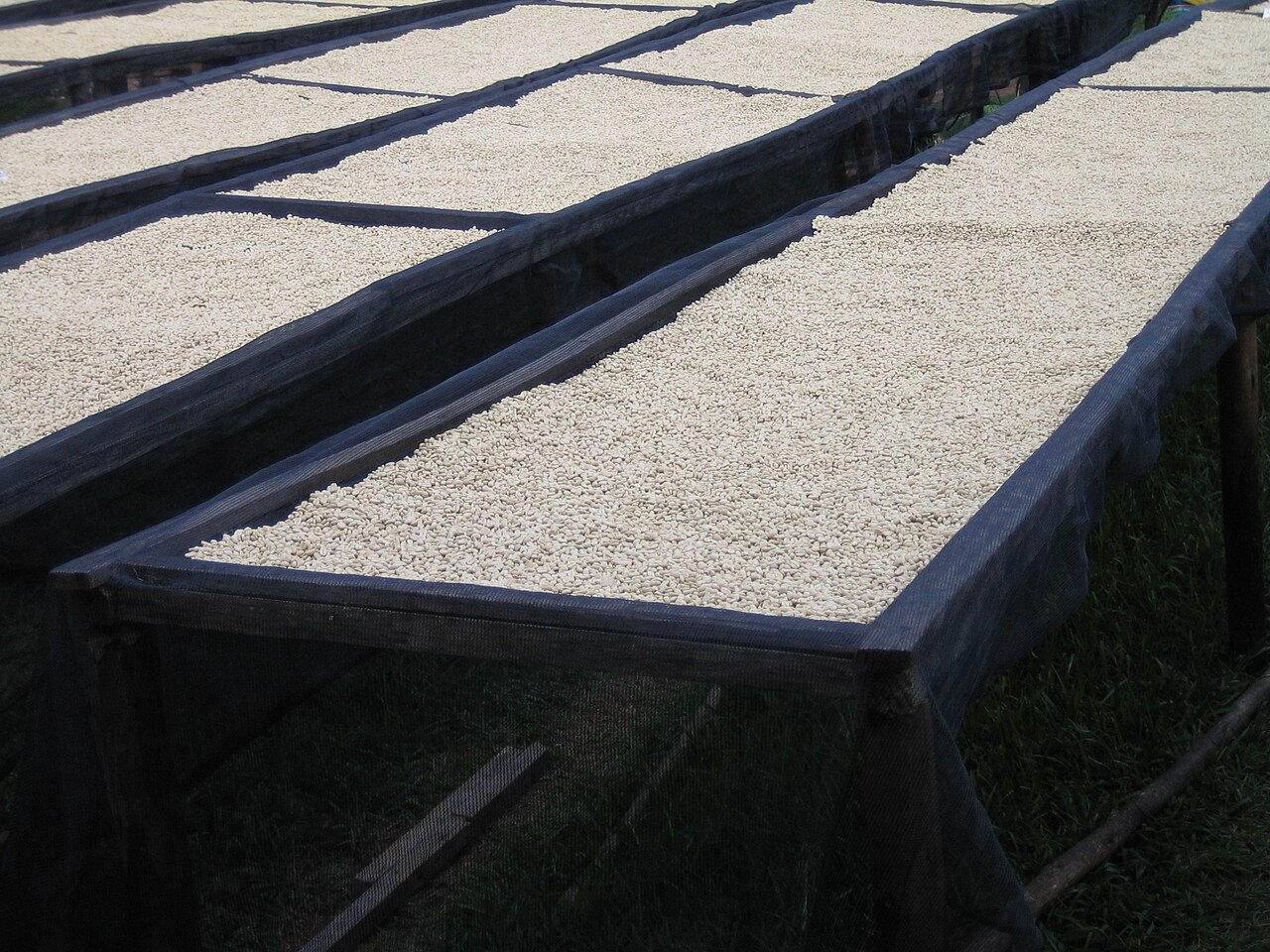
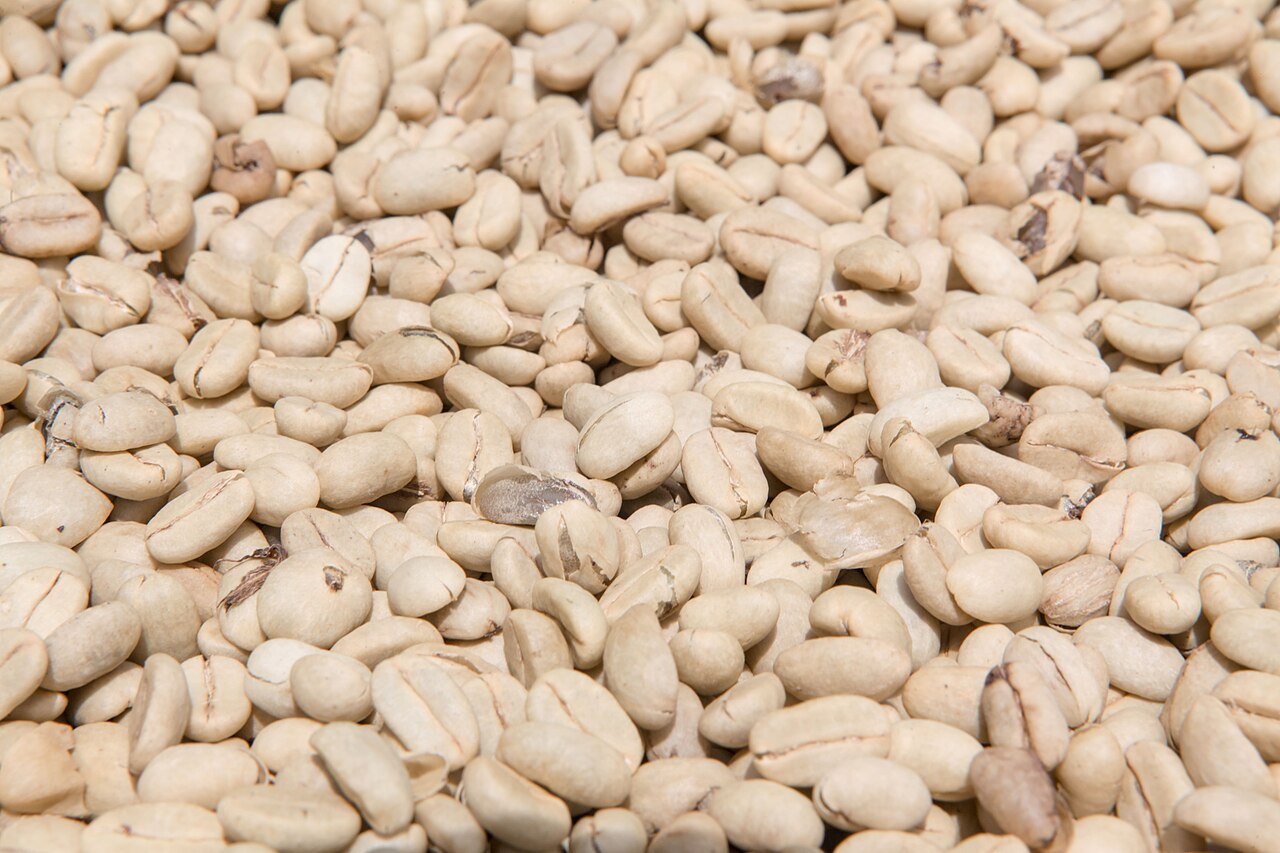
Coffee drying on raised beds in Maraba, Huye District. Photo: Amakuru, CC BY-SA 3.0, via Wikimedia Commons.
For more on how processing changes the cup, see our guide to coffee processing methods.
The potato taste defect: what buyers should know
Every buyer who looks into Rwandan coffee beans soon hears about “potato taste”. It is worth understanding properly, because it is real but manageable.
What it is
Potato taste defect (PTD) makes an affected bean smell and taste like raw, peeled potato. Perfect Daily Grind reports that it comes from a compound called 2-isopropyl-3-methoxypyrazine. The human nose picks it up at very low levels. It is linked to the antestia bug, which feeds on coffee cherries, and occurs mainly in the African Great Lakes region, including Rwanda and Burundi.
How common it is
Usually it affects a single bean, not a whole bag. Perfect Daily Grind cites research finding roughly one occurrence per 1.55 kg of coffee from the region in earlier years. More recent work cited by TYPICA puts incidence under 1% in well-sourced lots. TYPICA also notes that the SCA’s Coffee Value Assessment lists potato as one of three formal sensory defects.
How to manage it
- Buy from good stations. Careful cherry sorting and floating out damaged cherries cut the risk.
- Cup more cups per sample. Use more cups per lot so a single affected bean shows up.
- Grind in smaller batches. In a café, a potato bean ruins one dose, not a whole hopper. Perfect Daily Grind also advises purging the grinder when you find one.
- Tell your customers. Many specialty roasters print a short note on Rwandan and Burundian bags. Customers who know about it are rarely put off.
Specialty roasters around the world keep buying Rwandan coffee despite PTD, because the best cups are worth the extra care.
Harvest and shipping calendar for Rwandan coffee beans
According to NAEB, harvest starts in late February in the Western Province and early March elsewhere, with some northern areas picking until August. TYPICA describes the main harvest as roughly March to July.
After harvest, parchment rests, then is milled, graded and shipped. Rwanda is landlocked, so containers travel by road to an East African seaport before going by sea. In practice, new-crop Rwandan coffee beans tend to ship from mid-year and reach consuming markets in the second half of the year. Ask for the shipment period on every offer.
Rwanda also shows a biennial pattern: TYPICA reports that trees produced less cherry in 2026 after a strong 2025. In a smaller year, good lots sell out faster. Our guide to the coffee harvest season shows how to plan purchases across origins.
The Rwandan coffee market in 2026
- Record earnings: exports reached US$148.6 million in 2025, up 65% on 2024.
- Higher volume: 23,860 tonnes of green coffee, up 39% from 17,142 tonnes.
- Higher prices: the average export price was US$6.20 per kilo, up 19%.
- Farmer prices up: NAEB raised the minimum price for quality cherry to Rwf 750 per kilo for 2026, up 25%. TYPICA reports cherry prices roughly double a year earlier, with strong buying from Chinese buyers.
- Buyers: Belgium, the United States and China were among the top importers in 2025, according to TYPICA.
- Targets: the government aims for 32,000 tonnes and US$192 million of exports by 2029.
What this means for you: Rwandan coffee is not cheap in 2026, and competition for the best lots is strong. Book early and keep good stations on repeat. For how coffee prices work, read our guide to green coffee prices.
What affects the price of Rwandan coffee beans
- Process. Fully washed lots cost more than home-processed coffee. Naturals and anaerobics often carry a further premium because they are scarce and slow to make.
- Cup score. Specialty lots are priced on quality, not just on the futures market.
- Station and region. Well-known Lake Kivu stations and competition winners cost more.
- Crop size. In a smaller biennial year, premiums rise.
- Cherry prices. Higher farm-gate prices in 2026 push up export prices.
- Freight. Overland transport to the coast adds cost compared with coastal origins.
Compare landed cost per kilo at your port, not just the origin price.
EUDR and traceability
If you sell into the European Union, the EU Deforestation Regulation applies to larger operators and traders from 30 December 2026, and to very small businesses from 30 June 2027. You will need geolocation and due-diligence data for the farms behind each lot.
Rwanda’s washing-station system makes this easier than in many origins, because coffee is collected at known stations from known farmer groups. Sucafina, for example, reports that 94% of its Rwandan supply chain has been geotagged and mapped. Still, ask any supplier of Rwandan coffee beans, including us, exactly what traceability data comes with each lot before you buy.
Roasting Rwandan coffee beans
- Light to medium for filter. Keeps the red fruit and florals.
- Medium for espresso. Adds sweetness and body while keeping some fruit.
- Do not rush the start. Dense high-grown Bourbon takes heat well, but a gentle start helps even development.
- Rest light roasts for a few days before brewing.
- Check roasted beans by smell when grinding samples, to catch any potato beans early.
Our full guide to roasting green coffee beans goes step by step.
Best uses for Rwandan coffee beans
Single-origin filter
Washed Rwandan Bourbon shines as pour-over and batch brew. It is one of the most crowd-pleasing African coffees on a filter menu.
Fruity espresso
A medium-roasted Rwandan lot makes a sweet, juicy single-origin espresso that works well with milk. In blends, 20% to 40% adds fruit to a chocolatey base. See coffee beans for espresso.
Cold brew
Rwandan coffee makes a sweet, fruity cold brew. See coffee beans for cold brew.
Who grows Rwandan coffee beans
Rwandan coffee is a smallholder crop. NAEB counts about 400,000 farm families on roughly 42,000 hectares of coffee. Divide one by the other and the average is around a tenth of a hectare per family. That is our rough arithmetic, and real plots vary, but it shows how small most farms are. Coffee usually shares the land with bananas, beans and other food crops.
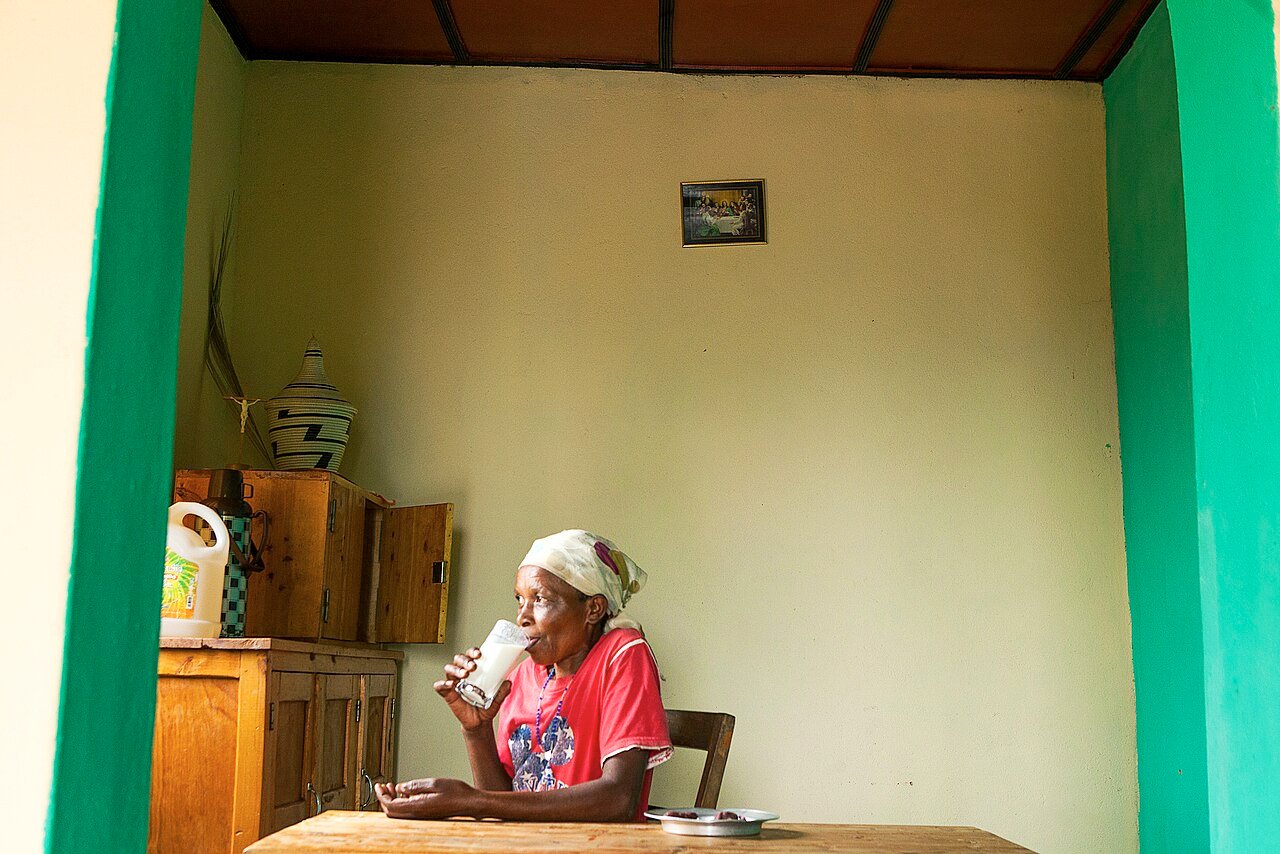
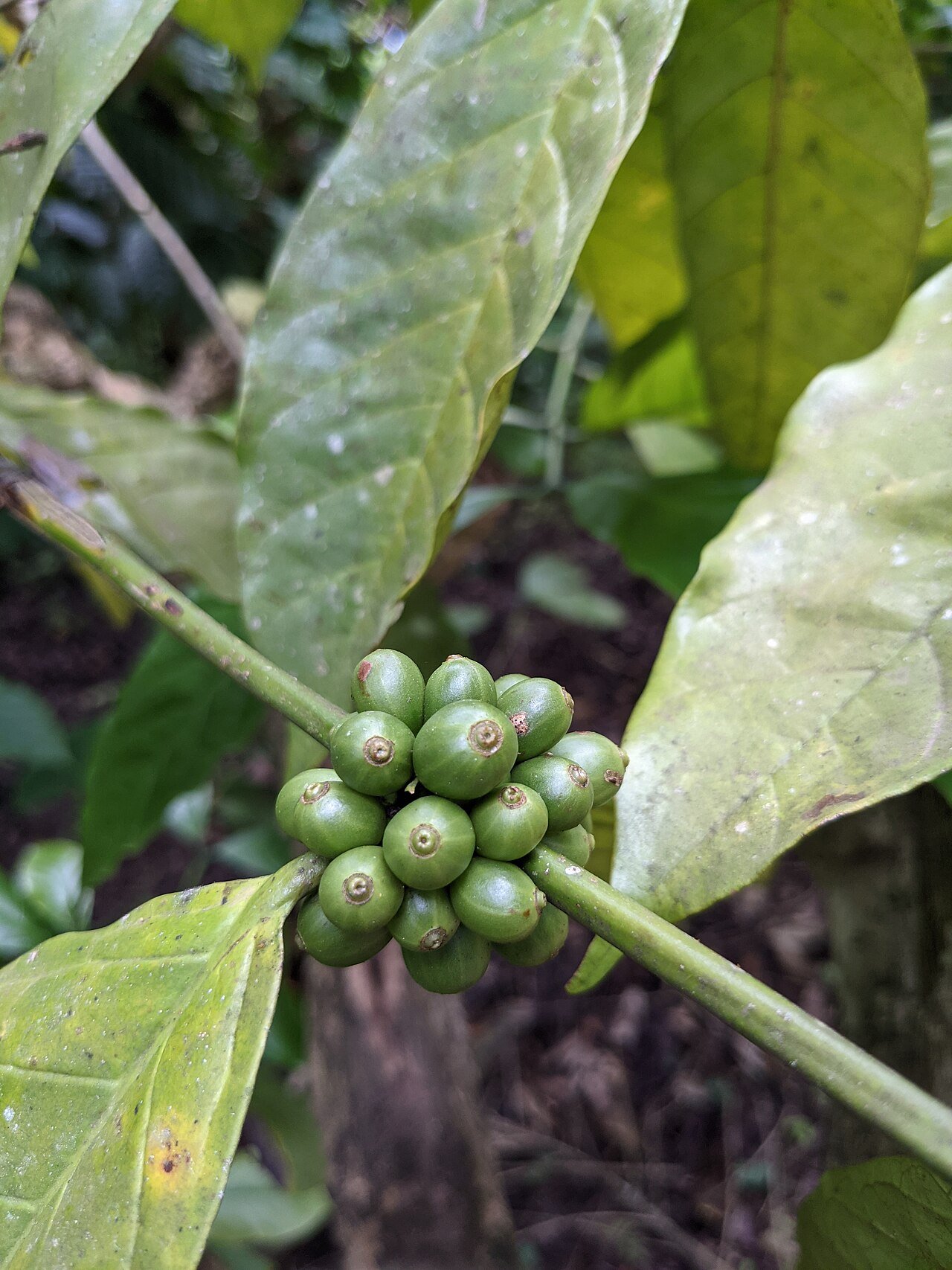
Coffee farming in Rwanda. Photo: USAID in Africa, public domain, via Wikimedia Commons.
This affects what you buy in three ways.
Lots are built from many farms
One export lot can hold cherries from hundreds of farmers delivering to the same washing station. The station’s sorting and processing are what make the lot consistent, so judge the station as much as the region.
Cooperatives and private stations both matter
Some stations belong to farmer cooperatives; others are run by private companies or exporters. Both can produce excellent coffee. Ask who runs the station and how farmers are paid.
Higher prices reach farmers
NAEB reports that farmers earned an average of Rwf 900 per kilo of cherry in 2025, above the minimum of Rwf 600. When you pay for quality, more of that money can flow back to the hills. That is a story worth telling your customers.
Specialty vs commercial Rwandan coffee
Not all Rwandan coffee beans are specialty grade. It helps to know the difference before you compare prices.
| Feature | Specialty lots | Commercial lots |
|---|---|---|
| Processing | Fully washed at a named station, or careful naturals and honeys | Often home-processed or mixed |
| Traceability | Station, district, often farmer group | Region or country only |
| Cup | Clean, sweet, fruity, floral | Plainer, less consistent |
| Best for | Single origin, premium blends | Everyday blends |
| Price | Higher | Lower |
NAEB said in its coffee history article that 62% of Rwandan coffee was exported fully washed; TYPICA now puts the figure at about 80%. Either way, the share of washed, higher-quality coffee has grown a lot. Most buyers who choose Rwandan coffee beans want the washed specialty side, and that is where we focus.
Competitions and quality programmes
Rwanda uses competitions to push quality up. After hosting Africa’s first Cup of Excellence in 2008, it has held further Cup of Excellence events and its own national Best of Rwanda competition, which NAEB credits as one reason for the record 2025 export earnings. Winning lots sell at auction for high prices and draw buyers to the stations that produced them.
You do not need to buy a competition winner to get great Rwandan coffee. But stations that place well year after year are a good shortlist when you start sourcing.
Our Rwandan and African coffees
We sell Rwandan coffee beans through our African range: Rwandan Arabica as traceable single-origin lots, plus East African Arabica and African Robusta for blends.
Rwandan single-origin Arabica

Rwanda is one of the six countries in our traceable Africa Arabica range. Tell us the region, process and volume you need, and we will send offers and samples of the Rwandan lots we can supply that season, with the washing station named.
Africa Arabica coffee beans, short spec:
- Species: Coffea arabica (green beans)
- Origins: Ethiopia, Kenya, Uganda, Tanzania, Rwanda, Burundi
- Sold as: single-origin, traceable lots
- Altitude: 1,300 to 2,200 m
- Process: washed, natural or honey
- Screen: 15 to 18, plus PB
- Moisture: max 12.5%
- Cup: floral, fruity, bright, clean
- Packing: 60 kg jute bags
East African Arabica for blends

If you want bright East African fruit in a blend and do not need a named country, our East African Arabica is the practical choice.
African Arabica coffee beans, short spec:
- Species: Coffea arabica (green beans)
- Origin: East African highlands
- Altitude: 1,400 to 2,200 m
- Process: washed or natural
- Screen: 15 to 18 (AA / AB)
- Moisture: max 12.5%
- Cup: bright, fruity, floral, clean
- Packing: 60 kg jute bags
African Robusta for blends and instant coffee

Rwanda grows very little Robusta, so for body and crema in a blend, pair your Rwandan coffee beans with our African Robusta, sourced across East, West and Central Africa.
African Robusta coffee beans, short spec:
- Species: Coffea canephora (green beans)
- Origin: East, West and Central Africa
- Process: natural or washed
- Screen: 16/18 or 18/20
- Moisture: max 12%
- Defects: under 5%
- Caffeine: 2.2% to 2.7%
- Packing: 60 kg jute bags
Browse all our Arabica coffee beans and Robusta coffee beans, or see the full product list.
Rwandan coffee beans vs other African origins
| Origin | Typical washed cup | Known for | Price position |
|---|---|---|---|
| Rwanda | Red fruit, citrus, floral, silky | Red Bourbon, washing stations | Moderate to high |
| Burundi | Similar to Rwanda, often juicier | Bourbon, washing stations | Moderate to high |
| Kenya | Blackcurrant, very bright | AA, SL28/SL34 | Usually high |
| Ethiopia | Floral, citrus, tea-like | Yirgacheffe, Guji | Wide range |
| Tanzania | Bright citrus, medium body | Peaberry, Kilimanjaro | Moderate |
| Uganda | Sweet, chocolate, balanced | Bugisu, Robusta | Usually lower |
All of these come through our Africa Arabica range, so you can cup Rwanda next to its neighbours before deciding. Read more in our guides to Kenyan coffee beans, Tanzanian coffee beans, Ethiopian green coffee beans and Ugandan coffee beans.
Rwanda or Kenya?
Kenya is usually more intense, with sharper acidity and blackcurrant. Rwanda is softer, sweeter and rounder, with red fruit and florals. Kenya suits customers who love bold, bright coffee; Rwanda suits a wider audience. Many roasters stock both.
Rwanda or Burundi?
These neighbours grow similar Bourbon, at similar altitudes, through similar washing stations, and both deal with potato taste. Cups are often hard to tell apart. Buy whichever cups better and fits your price that season.
Blending Rwandan coffee beans with our other coffees

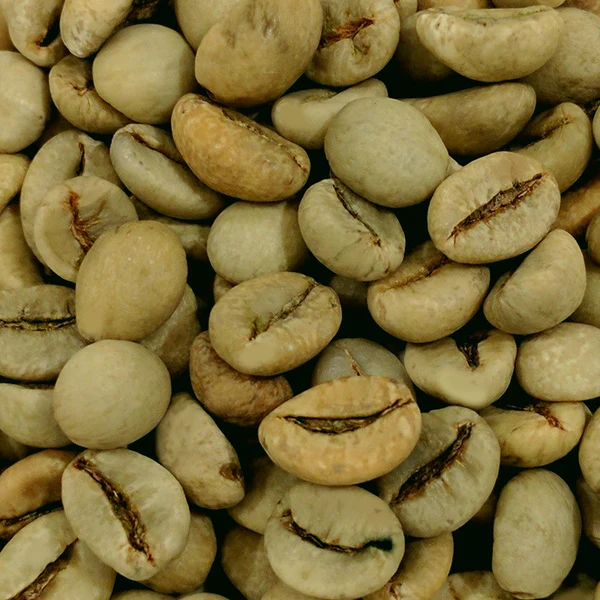


- Brazilian Robusta (Conilon): smooth, chocolate, nutty; screen 16/18 or 18/20.
- Indian Robusta: very clean, shade-grown; screen 17/18 or 18/20.
- Ugandan Robusta: cocoa, earthy, mild spice; screen 15 to 18.
- Vietnam Robusta: sweet, rich, mild acidity; screen 16/18.
- Indonesia Robusta: heavy body, chocolate, cedar; screen 16/18 or 18/20.
Starting blends to try:
- Fruity espresso: 60% Brazilian Arabica or Conilon, 25% Rwandan washed Bourbon, 15% Indian Robusta.
- Great Lakes filter blend: 50% Rwandan, 50% Burundian or Tanzanian washed Arabica.
- All-African espresso: 50% Rwandan Arabica, 30% Ugandan Robusta, 20% Ethiopian natural.
Which Rwandan lot fits your business?
Specialty roasters and cafés
A named Lake Kivu or Huye washing-station lot, fully washed, for a headline single origin. Try a natural or honey for something different.
Wholesale roasters
A good fully washed regional lot gives classic Rwandan sweetness at a sensible price, for offices, restaurants and a regular menu single origin.
Blend programmes
Use a smaller share of Rwandan coffee beans, or our East African Arabica, for fruit, with Robusta for body.
What a Rwandan share does to your blend cost
A worked example with round numbers. Suppose your base coffee costs US$6.00 per kilo green and a washed Rwandan lot costs US$9.00. Our calculation:
| Blend | Green cost per kilo | Change vs base |
|---|---|---|
| 100% base | US$6.00 | baseline |
| 85% base / 15% Rwanda | US$6.45 | about 8% more |
| 75% base / 25% Rwanda | US$6.75 | about 13% more |
| 60% base / 40% Rwanda | US$7.20 | 20% more |
These prices are illustrations, not quotes. A 15% to 25% share of Rwandan coffee beans adds noticeable fruit for a modest cost, and lets you put “with Rwandan Bourbon” on the bag.
How much to buy
Rwandan coffee ships in 60 kg bags, usually with hermetic liners for specialty lots. Small roasters often buy a few bags of one station’s lot; larger buyers take containers. To size an order, take the kilos of roasted Rwandan coffee you use a month, divide by about 0.83 for roast loss, and multiply by the months you want to cover. A roaster using 50 kg of roasted Rwandan coffee a month needs about 60 kg of green a month, or around 360 kg for six months, roughly six bags. Our guide to wholesale green coffee beans covers volume buying.
Shipping and storing Rwandan coffee beans
Rwanda has no coast, so export containers travel by road to an East African port and then by sea. Allow for that extra leg when you plan. Expect a commercial invoice, bill of lading, phytosanitary certificate, certificate of origin and quality documents. Our guide to importing coffee beans explains documents, duties and Incoterms.
Rwanda’s delicate florals fade fastest in warm, damp storage. Use hermetic liners, keep bags cool, dry and off the floor, and roast within about a year of arrival. Our guide to storing green coffee beans goes into detail.
Selling Rwandan coffee to your customers
Name the washing station
“Rwanda” is good. “Rwanda, Nyamasheke, [station name], Red Bourbon, washed” is better. Customers like knowing where their coffee comes from, and station names make repeat buying easy.
Tell the comeback story honestly
Rwanda’s rebuild of its coffee sector around washing stations and quality is a real and positive story. Keep it factual and respectful, and focus on the coffee and the farmers.
Explain potato taste in one line
A short note such as “Coffees from this region can rarely contain a bean with a raw-potato smell. It’s harmless; if you find one, let us know.” builds trust and saves complaints.
Run an African flight
Rwanda, Kenya and Ethiopia side by side show customers how different African coffees can be, and sell three bags instead of one.
A simple tasting plan for Rwandan samples
- Ask for three samples that differ on one thing: two stations, or washed vs natural from the same station.
- Check the green: moisture, colour, defects and smell.
- Roast each the same way, light to medium.
- Cup with extra cups per sample to catch any potato beans.
- Brew as you will sell it, then approve a pre-shipment sample from the actual lot.
Questions to ask any supplier of Rwandan coffee
- Which washing station, and which district?
- Fully washed, natural, honey or home-processed?
- Which crop year, and when was it milled?
- What are the moisture, defects and cup notes?
- How does the station control potato taste?
- Is it packed in hermetic liners?
- What traceability data comes with it for EUDR?
- Can I have a pre-shipment sample from the actual lot?
A good supplier answers all of these without fuss. We do, for every lot of Rwandan coffee beans we offer.
A quick glossary of Rwandan coffee terms
- CWS: coffee washing station, where farmers deliver cherry for processing.
- NAEB: the National Agricultural Export Development Board, which oversees coffee exports.
- Red Bourbon: the main Arabica variety grown in Rwanda.
- Fully washed: coffee pulped, fermented, washed and dried at a station.
- PTD: potato taste defect, a rare raw-potato smell in a single bean.
- Antestia: the insect linked to potato taste.
- Raised beds: mesh tables where parchment or cherry dries in the air.
- Biennial crop: bigger and smaller harvests in alternate years.
Common mistakes when buying Rwandan coffee beans
- Avoiding Rwanda because of potato taste. It is manageable. Buy from good stations and cup properly.
- Assuming last year’s station tastes the same. Quality moved a lot after 2024. Cup every season.
- Roasting too dark. You lose the fruit and florals you paid for.
- Buying late. The best lots sell early, especially in a smaller biennial year.
- Forgetting the overland leg. Allow time for road transport to the coast.
- Grinding big batches. Grind smaller doses so one potato bean does not spoil a whole hopper.
How to order Rwandan coffee beans from us
- Tell us what you need: region, process, volume and destination port.
- Get offers and samples, with the washing station named.
- Agree the contract: lot, crop, moisture, packing, price and terms in writing.
- Approve a pre-shipment sample.
- We ship, and the documents follow.
When you are ready, contact our sales team for current Rwandan offers. You can also read our guides to choosing a green coffee supplier and unroasted coffee beans, or learn more about Continental Coffee Supply.
Frequently asked questions
What are Rwandan coffee beans?
Coffee grown in Rwanda, almost all Arabica and mainly Red Bourbon, usually fully washed at local washing stations.
What do Rwandan coffee beans taste like?
Washed lots are typically sweet and clean, with red fruit, citrus, florals and a silky medium body.
Is Rwandan coffee Arabica or Robusta?
About 97% Arabica, mainly Bourbon, and 3% Robusta.
What is potato taste in Rwandan coffee?
A rare defect that makes a single bean smell like raw potato. It is linked to the antestia bug and managed through careful sorting and cupping.
When is Rwandan coffee harvested?
From late February in the west and early March elsewhere, through to about July, with some northern areas picking until August.
Why is Rwandan coffee more expensive in 2026?
Higher world prices, a 25% rise in the minimum cherry price and strong demand, including from China, have pushed prices up.
How much coffee does Rwanda export?
23,860 tonnes in 2025, worth a record US$148.6 million.
Is Rwandan coffee traceable?
Usually, yes. Most coffee goes through named washing stations, which makes traceability easier.
How should I roast Rwandan coffee beans?
Light to medium for filter and medium for espresso, to keep the fruit and sweetness.
Do you ship Rwandan coffee beans worldwide?
Yes, to ports around the world.
Can I get samples first?
Yes. We recommend cupping samples before ordering in volume.
Key takeaways
- Rwandan coffee beans are mostly washed Red Bourbon Arabica from smallholder farms.
- Expect sweet, clean cups with red fruit, citrus and florals.
- The washing station matters more than anything else. Find good ones and buy again.
- Potato taste is real but rare and manageable.
- 2025 exports hit a record US$148.6 million, and 2026 prices are firm.
- EU buyers need traceability data under EUDR from 30 December 2026.
Sources and References
- NAEB: About Rwanda coffee
- NAEB: Rwanda coffee export revenues hit record $150m in 2025
- NAEB: The journey of Rwanda’s coffee
- TYPICA: Rwanda harvest update 2025/26
- Sucafina: Burundi and Rwanda harvest update 2025/26
- Perfect Daily Grind: What is potato taste defect?
- Texas A&M AgriLife: Rwanda to host Africa’s first Cup of Excellence
- Wikipedia: Coffee production in Rwanda
- GCR: EUDR delayed until the end of 2026
Leave a Comment
Your email address will not be published. Required fields are marked *