Vietnamese coffee beans are almost all Robusta, grown mainly in the Central Highlands, and Vietnam is the world’s biggest Robusta supplier. Buyers choose them for strong body, high caffeine, a sweet-chocolate cup with low acidity, large and steady volumes, and prices well below Arabica. Most are sold as natural (dry) processed green coffee in Screen 16 or 18 grades, with clean “wet polished” lots for roasters. We sell premium Vietnamese coffee beans green and export-ready, by the bag, the ton or the container, and ship worldwide.
If you roast espresso blends, make instant coffee or cold brew, or trade Robusta, Vietnam is probably already in your supply chain somewhere. This guide is about buying it well: what the grades really mean, which preparation to ask for, when the harvest lands, what the market is doing in 2026, what you can expect to pay, how to roast it, and how to order from us. Figures are linked to their sources so you can check them.
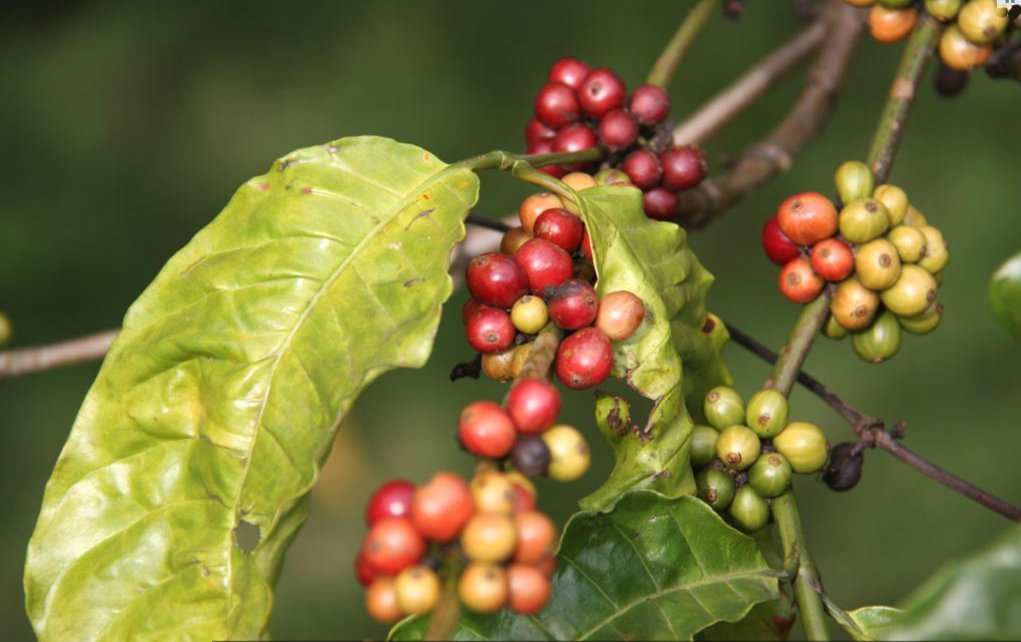
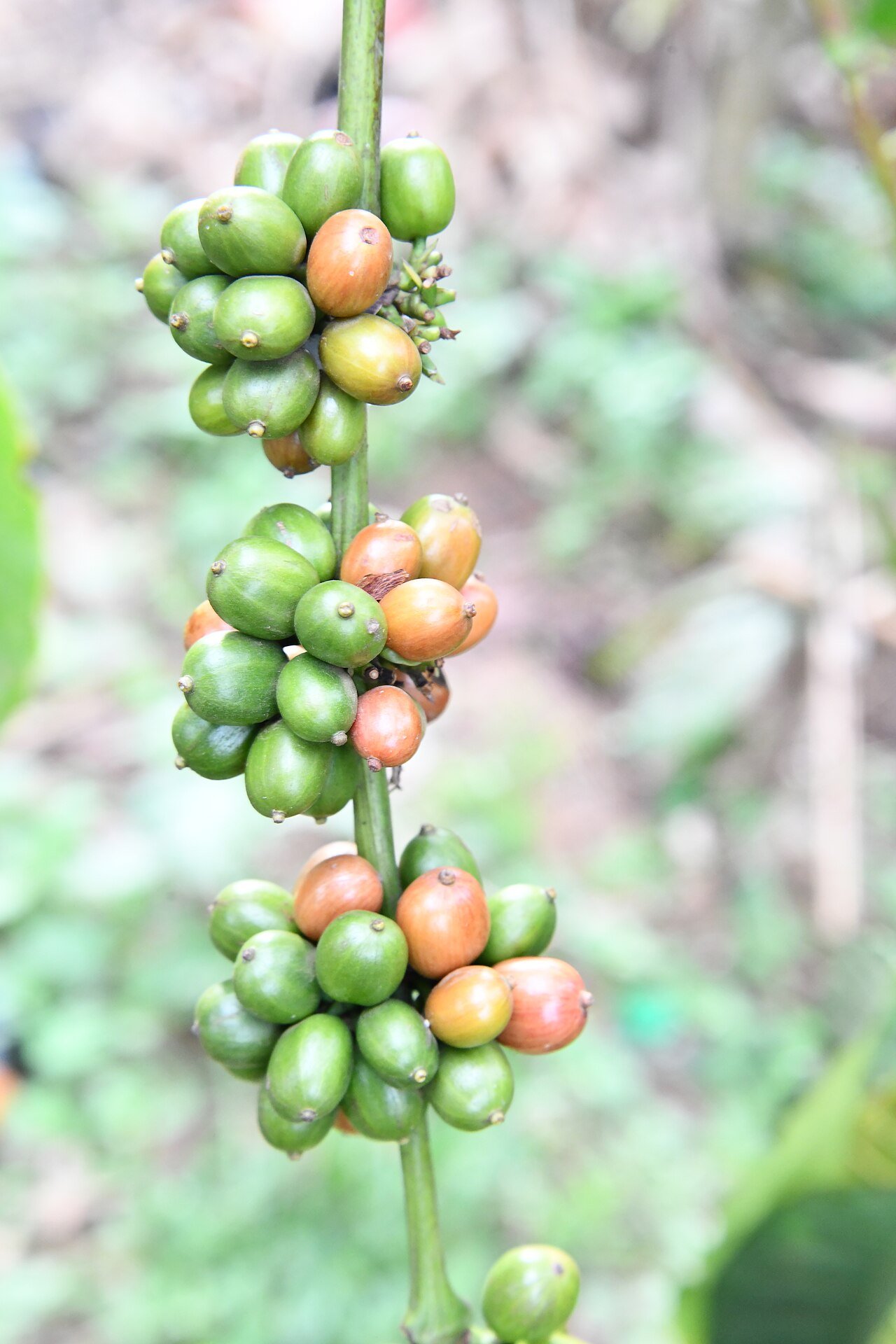
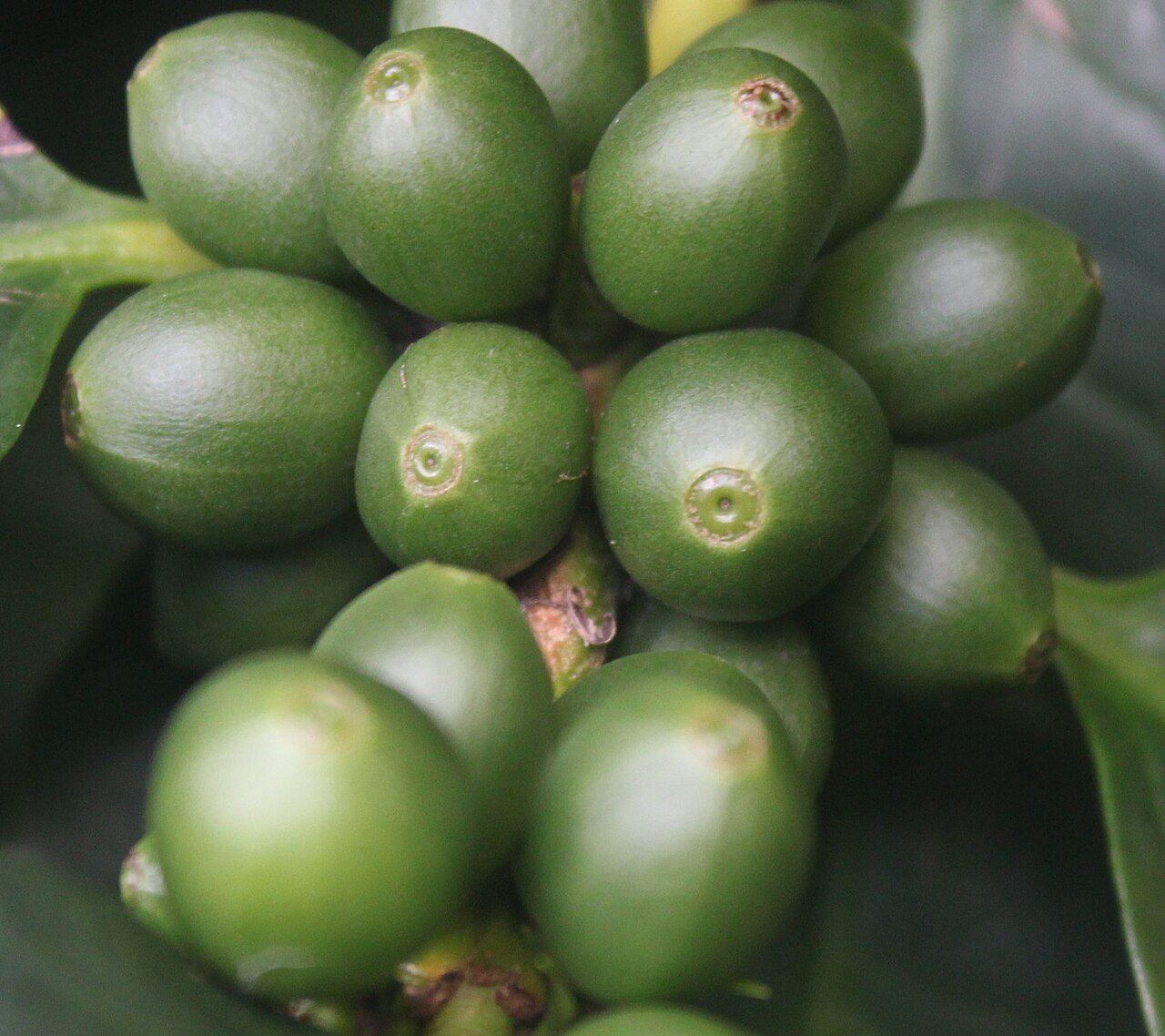
Ripening coffee cherries on a farm near Buon Ma Thuot. Photo: Daniel Schearf (VOA), public domain, via Wikimedia Commons.
Table of Contents
Table of Contents
What are Vietnamese coffee beans?
Vietnamese coffee beans are coffee grown in Vietnam and exported mostly as green (unroasted) beans. Vietnam is the world’s second-largest coffee producer after Brazil, and almost everything it grows is Robusta (Coffea canephora). The USDA Foreign Agricultural Service forecasts Vietnam’s 2026/27 crop at 32.5 million 60 kg bags, of which 31.4 million are Robusta and 1.1 million Arabica.
Put another way, roughly 97% of Vietnamese coffee is Robusta. When people in the trade talk about “Vietnam”, they nearly always mean Robusta, and that is what this guide focuses on, with a short section on Vietnamese Arabica.
If you want the background on the two species first, our guides to Arabica vs Robusta and the best Robusta coffee beans are good starting points.
Why buyers choose Vietnamese coffee beans
- Volume. No other country grows as much Robusta. If you need dozens of containers a year of the same profile, Vietnam can supply it.
- Price. Vietnamese Robusta usually trades well below Arabica, which makes it the backbone of affordable espresso blends, instant coffee and ready-to-drink products.
- Strength. Robusta carries roughly twice the caffeine of Arabica, plus heavy body and thick crema.
- Consistency. Vietnam has a national grading standard and a big, organised export industry, so a “Screen 18 wet polished” lot from one season is reasonably close to the next.
- Improving quality. USDA notes that Vietnam is shifting from a volume-focused exporter toward higher-quality and more traceable coffee. Clean, carefully sorted lots and “fine Robusta” are much easier to find than they were ten years ago.
Where Vietnamese coffee beans are grown
The Central Highlands (Robusta)
Most Vietnamese Robusta comes from the Central Highlands, a plateau of red basalt soil at roughly 500 to 800 m. The traditional coffee provinces are Dak Lak (with the coffee capital Buon Ma Thuot), Lam Dong, Gia Lai and Dak Nong. Vietnam merged many of its provinces in 2025, so you may see both old and new names on offers and documents. Robusta harvested area is forecast at 644,000 hectares in 2026/27, with total coffee area of about 730,000 hectares.
The Highlands have a clear wet season and a long dry season, which suits Robusta and makes sun drying practical during harvest.
Northern and highland Arabica
Vietnam’s small Arabica crop grows in the north, in provinces such as Son La and Dien Bien, in Quang Tri in the centre, and around Da Lat in Lam Dong (the Cau Dat area is the best-known name). Exports are small. Between January and mid-November 2025, Vietnam exported just under 63,000 tonnes of Arabica, against more than 1 million tonnes of Robusta.
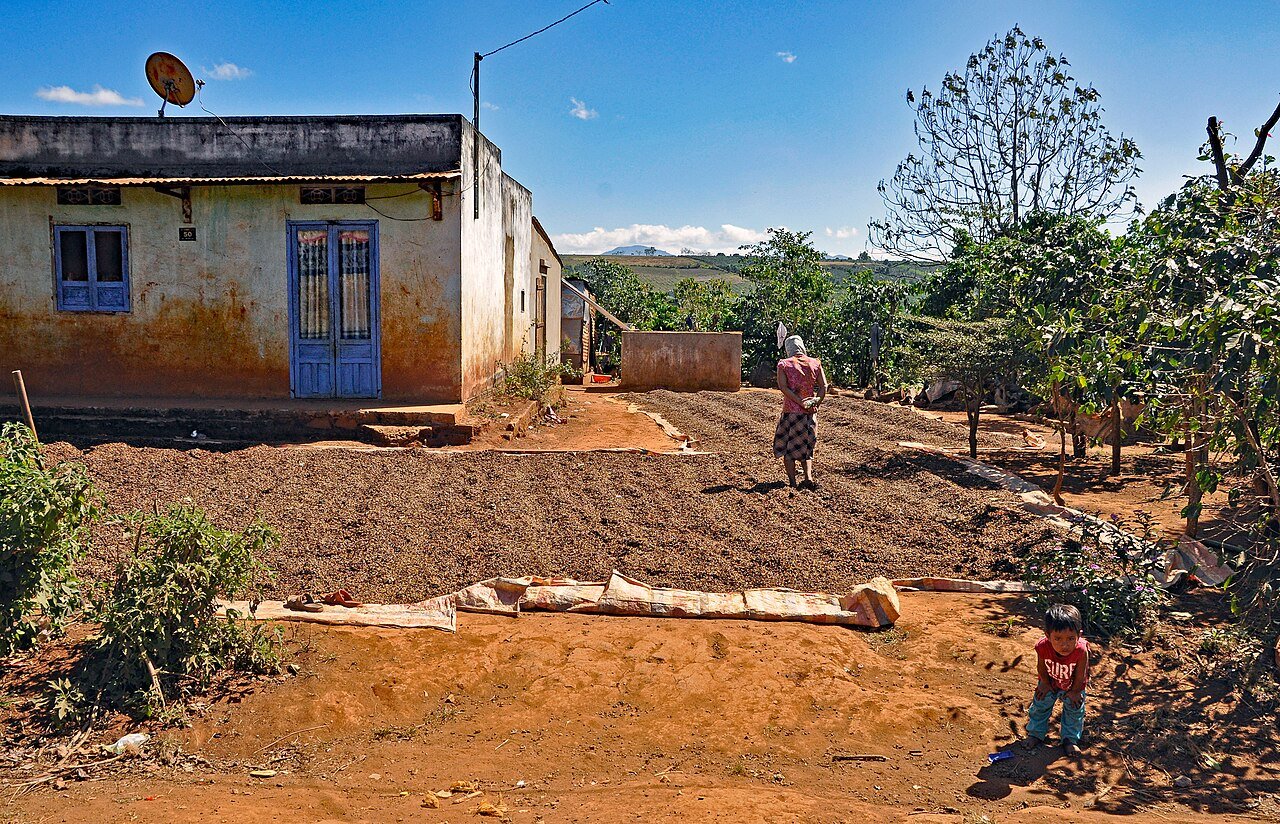
Coffee drying in the sun near Da Lat. Photo: P. Hughes, CC BY 4.0, via Wikimedia Commons.
Processing and preparation of Vietnamese coffee beans
How the coffee was processed and prepared makes a bigger difference to Vietnamese Robusta than most buyers expect. Our guide to coffee processing methods covers the basics. For Vietnam, these are the terms you will see:
- Natural (dry, unwashed). The standard. Whole cherries are dried, usually in the sun on patios or tarpaulins, then hulled. Heavy body, chocolate and earthy notes. Most exports are natural.
- Wet polished. Natural coffee that has been cleaned and polished with water after hulling to remove the silver skin and dust. It looks cleaner and more even, and roasters often find it cups a little cleaner too. It costs more than standard (“unpolished”) grades.
- Semi-washed and honey. Increasingly common at better farms. Softer, sweeter cups with fewer earthy notes.
- Fully washed. Less common for Robusta in Vietnam but available. The cleanest, brightest style.
- Fine Robusta. Carefully picked ripe cherry, controlled drying and tight sorting, often scored like specialty coffee. Small volumes, premium prices, and a growing niche.
For most roasters, a clean natural or wet-polished Screen 16 or 18 lot is the sweet spot between price and cup quality.
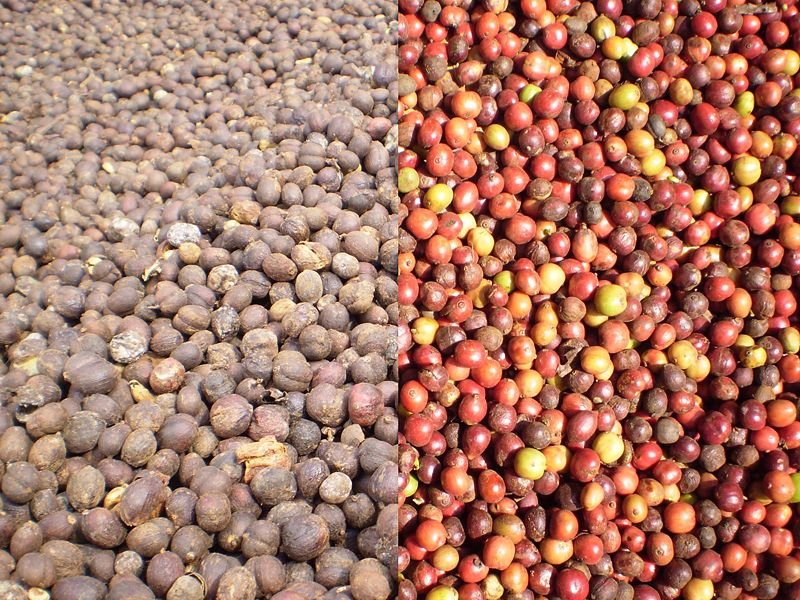
Robusta cherries after picking (right) and after drying (left). Photo: DXLINH, CC BY-SA 3.0, via Wikimedia Commons.
How Vietnamese coffee beans are graded
Vietnam grades export coffee under a national standard, TCVN 4193. As summarised by a Vietnamese exporter, it sets Robusta grades from R1 (the top grades) through R2 to R3, each with limits on defects, black beans and foreign matter, and a maximum moisture of 12.5%. Screen sizes are measured with round-hole sieves: Screen 18 is a 7.10 mm hole, Screen 16 is 6.30 mm and Screen 13 is 5.00 mm.
In everyday trade, though, most offers for Vietnamese coffee beans are written in a simpler form, by grade and screen, for example “Robusta Grade 1, Screen 18, wet polished” or “Grade 2, Screen 13, 5% black and broken”. Here is how buyers usually read them:
| Typical offer | What it means | Typical use |
|---|---|---|
| Grade 1, Screen 18, wet polished | Largest beans, very low defects, cleaned | Espresso blends, single-origin Robusta |
| Grade 1, Screen 18 | Largest beans, low defects, standard preparation | Espresso blends, roasters |
| Grade 1, Screen 16 | Medium-large beans, low defects | Roasters, cold brew, quality blends |
| Grade 2, Screen 13 | Smaller beans, more black and broken allowed | Instant coffee, value blends |
| Grade 3 / FAQ | Commercial coffee with high defect allowances | Industrial and soluble use |
Defect limits on export contracts are usually written as percentages, such as “black and broken max 2%, foreign matter max 0.5%, moisture max 12.5%”. Always check the exact figures on the contract rather than relying on the grade name. Our guide to coffee bean grading explains defects and screens in more detail.
How to read an offer for Vietnamese coffee beans
Before you compare prices, make sure you are comparing the same coffee. Check:
- Species: Robusta or Arabica.
- Grade and screen: for example Grade 1, Screen 18.
- Preparation: standard, wet polished, semi-washed, washed.
- Defects: black, broken and foreign matter percentages.
- Moisture: usually a maximum of 12.5%.
- Density: often quoted in grams per litre for good lots.
- Crop year: new crop or old crop.
- Packing: 60 kg jute bags, or bulk in container liners.
- Terms: FOB Ho Chi Minh City, CIF your port, or ex-warehouse.
- Pricing basis: fixed price, or a differential over the London Robusta futures market.
If you are new to import terms and documents, read our guide to importing coffee beans, and our checklist for choosing a green coffee supplier.
Harvest calendar for Vietnamese coffee beans
Vietnam has one main harvest a year. In a typical season, the Robusta harvest starts in October and runs until about mid-January. Arabica in the north usually finishes around mid-December, with southern Arabica around Lam Dong running into January.
New-crop Vietnamese Robusta starts to reach export warehouses from late in the year and ships in volume through the first half of the following year. Heavy rain in October and November can delay picking and drying, which is worth watching if you need early shipments. Our guide to the coffee harvest season shows how Vietnam fits with other origins, so you can plan fresh coffee all year.
The Vietnamese coffee market in 2026
- Production: 32.5 million bags forecast for 2026/27, up 2.5%, the third straight year of growth.
- Exports: forecast at 28.95 million bags, of which 25.4 million green and 3.55 million soluble and roasted.
- Record earnings: in the 2024/25 crop year, Vietnam exported more than 1.5 million tonnes worth over US$8.4 billion, the highest coffee export turnover it has ever recorded in a single crop year, according to the Vietnam Coffee-Cocoa Association.
- Where it goes: Europe took about 47% of that volume. Germany (13%), Italy (8.3%) and Spain (7.3%) were the top three markets.
- Home demand: domestic consumption is forecast at 5 million bags, per USDA.
- More processing at home: Vietnam is shipping more roasted and instant coffee, which slowly takes some green Robusta out of the export pool.
For buyers, the message is mixed but mostly positive: supply is growing, quality is improving, and prices have eased from their peak. At the same time, Vietnam’s own instant and roasted coffee industry is competing for the best green lots, so good suppliers matter.
How Vietnam became a coffee giant
It helps to know a little history, because it explains why Vietnamese coffee beans are mostly Robusta and why supply is so large.
Coffee was first introduced to Vietnam in 1857 by French missionaries, and the first plantations were set up in 1888. For most of the next century, Vietnam was a small producer. That changed after the 1986 Đổi Mới reforms, which allowed private enterprise again and led to what the same source calls a surge of growth in the industry. Farmers in the Central Highlands planted Robusta on a huge scale, because it grows well at the region’s moderate altitude, yields heavily and resists disease better than Arabica.
The result is the industry you see today: Robusta makes up about 97% of Vietnam’s output, the country ships more than a million tonnes a year, and its Robusta is a reference point for the whole market. When traders talk about the Robusta price, they are often thinking about what is happening in Dak Lak and Lam Dong.
Vietnam drinks its own coffee too
Vietnam is not only an exporter. There are over 500,000 coffee shops operating across Vietnam, from street stalls to modern chains, according to the USDA-based report. Domestic consumption is forecast at around 5 million bags a year.
The best-known local drink is cà phê sữa đá: strong, dark-roasted coffee dripped through a small metal phin filter and served over ice with sweetened condensed milk. It is a good illustration of what Vietnamese Robusta does well. It stands up to milk and sugar, it tastes of chocolate rather than fruit, and it delivers a big caffeine hit.
For buyers abroad, this matters in two ways. First, Vietnamese-style coffee is now on café menus all over the world, which creates demand for authentic Vietnamese coffee beans. Second, strong local demand and a growing local roasting and instant coffee industry mean some of the best green lots never leave the country. Green beans are still about 90% of export volume, but that share is falling as Vietnam ships more processed coffee.
Vietnamese Arabica: worth a look?
Vietnam’s Arabica is a small crop, about 1.1 million bags in the 2026/27 forecast, but it is improving. The main areas are the northern mountains (Son La and Dien Bien), Quang Tri in the centre, and the highlands around Da Lat, where the Cau Dat area has the best-known name.
Much of Vietnam’s Arabica has historically been Catimor, a hardy, rust-resistant type, sold as commercial coffee. More recently, some farms and washing stations have started producing cleaner, better-processed lots that cup well as specialty coffee. They are still a niche and volumes are small.
Our honest view: if you need Arabica for a blend, East African or Latin American coffee is usually easier to source in volume. If you want a Vietnamese Arabica single origin for its story, ask us and we will see what is available that season. For the Arabica side of most blends, our African Arabica coffee beans are a reliable choice.
Shipping Vietnamese coffee beans
Most Vietnamese coffee is trucked from the Central Highlands to the ports around Ho Chi Minh City and exported from there. Vietnam has good container connections to Europe, Asia, North America and the Middle East, which is part of why it is such a reliable supplier.
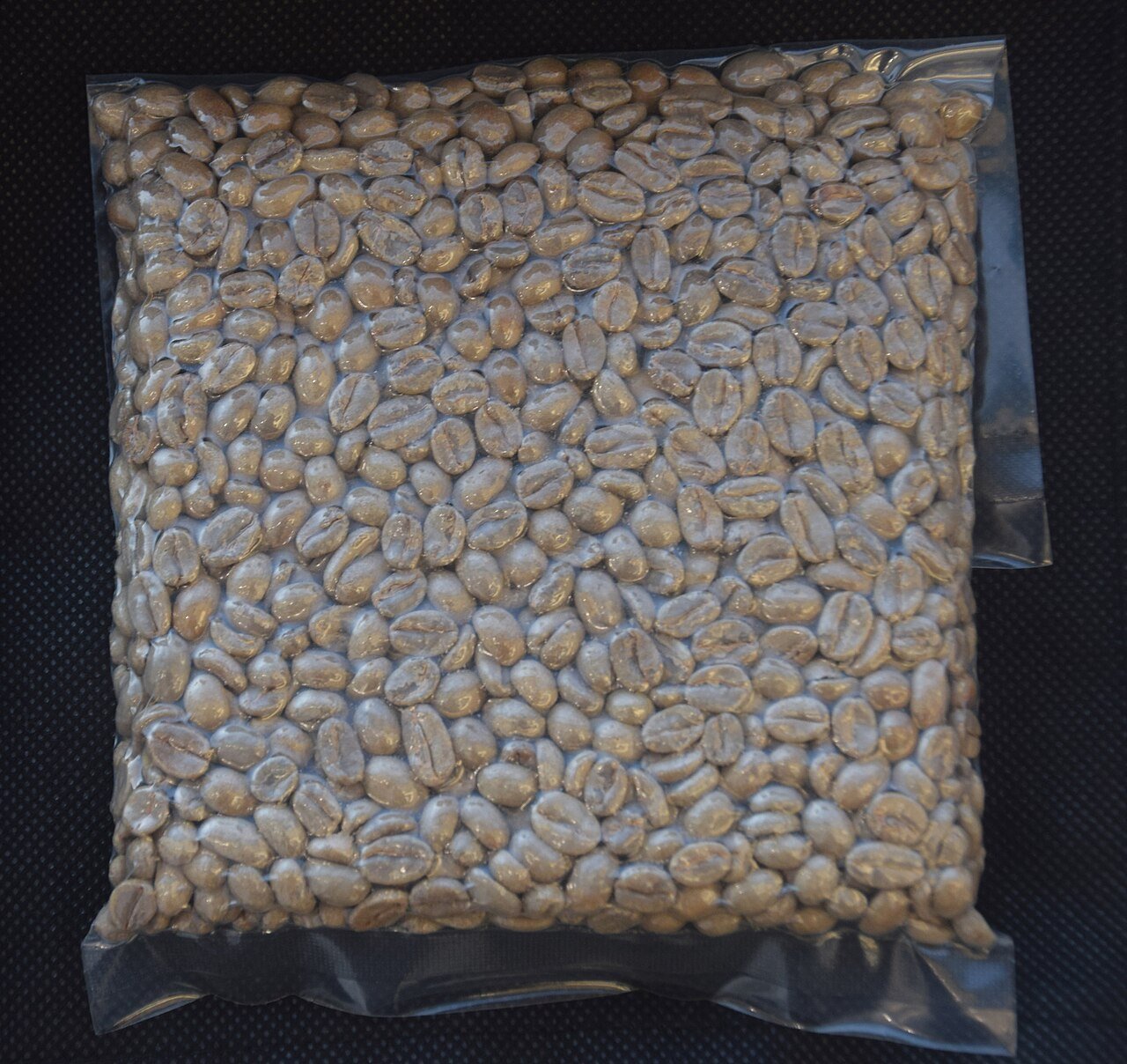
- Packing: 60 kg jute bags are standard; bulk shipments in food-grade container liners are common for large buyers.
- Container loads: a 20-foot container usually takes around 19.2 tonnes in bags, a little more in bulk.
- Moisture control: containers can travel through hot, humid climates, so loading dry coffee and using absorbent paper or desiccants helps prevent condensation damage.
- Documents: commercial invoice, bill of lading, phytosanitary certificate, certificate of origin and, where needed, quality and weight certificates.
Our guide to importing coffee beans walks through documents, duties and customs in more detail.
A quick glossary of Vietnamese coffee terms
- Grade 1 / Grade 2 / Grade 3: trade grades based on defect allowances, linked to the national TCVN 4193 standard (R1, R2, R3).
- Screen 18 / 16 / 13: bean size grades, measured with 7.10 mm, 6.30 mm and 5.00 mm sieve holes.
- Wet polished: natural coffee cleaned and polished with water after hulling.
- Unwashed / natural: coffee dried whole in the cherry.
- Fine Robusta: carefully picked and processed Robusta scored on a specialty-style scale.
- FAQ: fair average quality, ungraded commercial coffee.
- BB / B&B: black and broken beans, usually quoted as a combined percentage.
- FOB HCMC: price for coffee loaded on the ship at Ho Chi Minh City, before sea freight.
- Differential: the premium or discount to the London Robusta futures price.
- Phin: the small metal drip filter used for traditional Vietnamese coffee.
Knowing these terms makes it much easier to compare offers for Vietnamese coffee beans side by side.
What Vietnamese coffee beans cost
Vietnamese Robusta is priced off the London Robusta futures market. The price on your invoice is that futures price plus or minus a differential for grade, screen, preparation and timing, plus freight and costs to your door.
To give a sense of the range, here are average export prices from official and USDA reporting:
| Period | Average export price | Source |
|---|---|---|
| 2024/25 crop year | US$5,610 per tonne | Vicofa |
| First half of 2025/26 | US$5,127 per tonne | USDA FAS |
| March 2026 | US$4,553 per tonne, 22% lower than a year earlier | USDA FAS |
These are averages across all grades and include Arabica and processed coffee, so treat them as a guide to the market’s direction, not as a price for a specific lot. Screen 18 wet-polished coffee sells above Grade 2 Screen 13, and fine Robusta sells well above both. Our guide to green coffee prices explains how futures and differentials work, and how to time purchases.
EUDR status: Vietnam is classed as low risk
If you sell coffee into the European Union, the EU Deforestation Regulation applies to larger operators and traders from 30 December 2026, and to very small businesses from 30 June 2027.
Vietnam is in a better position than many origins here. In May 2025 the European Commission placed Vietnam in the low-risk category under the regulation, which means simplified control procedures for exports. Low risk does not mean no paperwork: you still need geolocation and due-diligence information for the coffee you place on the EU market. Ask any supplier of Vietnamese coffee beans, including us, what traceability data comes with each lot.
Best uses for Vietnamese coffee beans
Espresso blends
The classic use. Adding 10% to 40% Vietnamese Robusta to an Arabica blend gives more body, thicker crema and more caffeine, and lowers the cost. Clean Screen 18 lots are the usual choice. Our guide to coffee beans for espresso has blend ratios.
Instant coffee
Vietnamese Robusta is the backbone of the global soluble industry. Its high soluble yield and low price make it the obvious base for spray-dried powders and 3-in-1 sachets. See coffee beans for instant coffee.
Cold brew and iced coffee
Strong, sweet and low in acidity, Vietnamese Robusta makes excellent cold brew and is the traditional choice for Vietnamese iced coffee with condensed milk. See coffee beans for cold brew.
Traditional Vietnamese phin coffee
If you sell to Vietnamese cafés, restaurants or a Vietnamese-coffee brand abroad, buying Vietnamese coffee beans directly gives you the authentic base. Phin coffee is usually made from a darker roast, often with a strong, chocolatey Robusta.
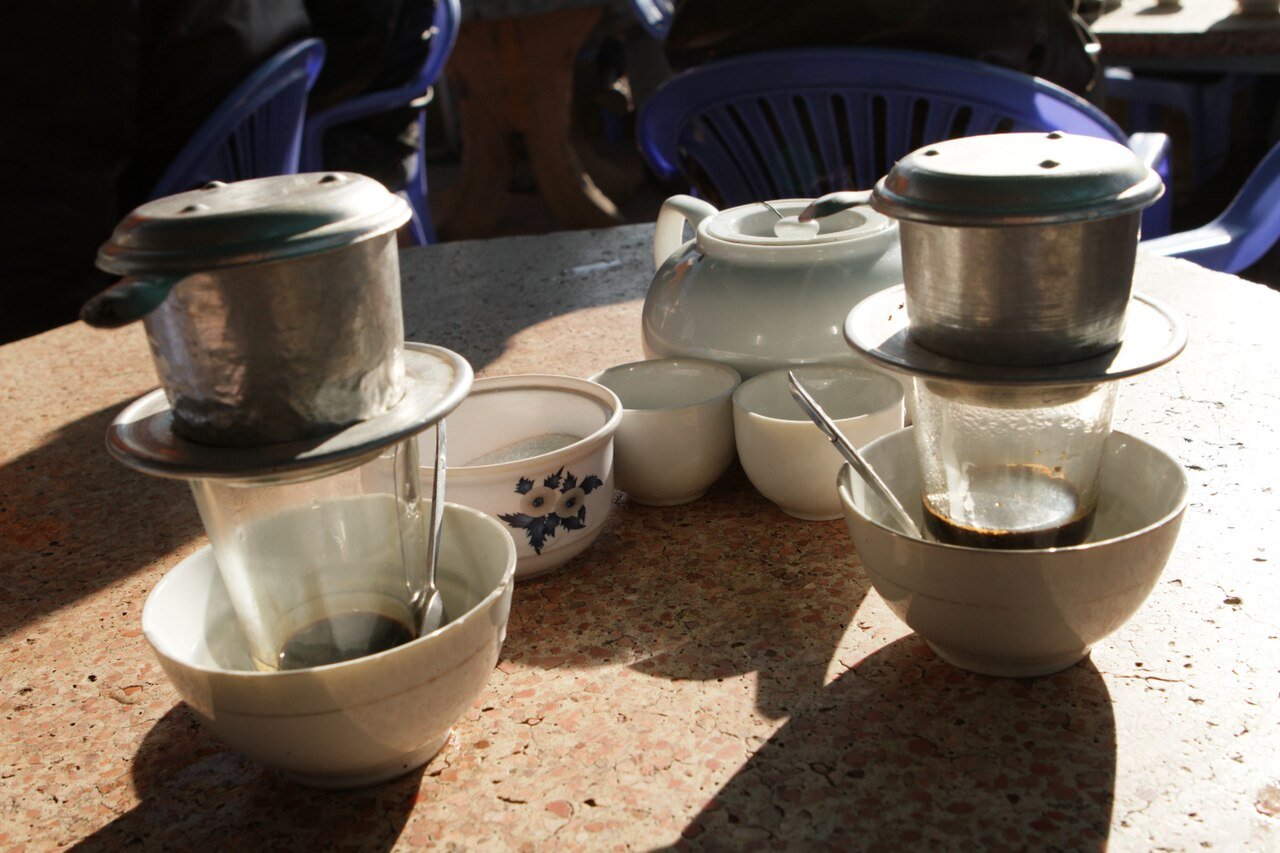
Coffee dripping through a phin filter in Da Lat. Photo: Frank Fox, CC BY-SA 4.0, via Wikimedia Commons.
Single-origin and fine Robusta
Carefully processed fine Robusta from the Highlands can stand on its own as a single origin, with dark chocolate, nut and brown sugar notes. It is still a niche, but a growing one, and a good way to stand out on a café menu. See our guide to single origin coffee beans.
Roasting Vietnamese coffee beans
General guidance that roasters commonly follow, not a fixed profile:
- Medium to medium-dark is where most Vietnamese Robusta tastes best for espresso. Light roasts often taste grainy or peanutty.
- Allow enough development. Robusta usually needs a little longer after first crack to round off its bitterness.
- Roast separately, blend after. Robusta and Arabica behave differently in the roaster. Many roasters roast them apart and blend afterwards.
- Keep the screen consistent. Mixing Screen 13 and Screen 18 gives an uneven roast.
- Dark roasts for phin and condensed-milk coffee. Traditional Vietnamese-style coffee is often roasted quite dark.
Our full guide to roasting green coffee beans covers roast stages and development, and coffee cupping explains how to judge the results.
Our Vietnamese coffee beans

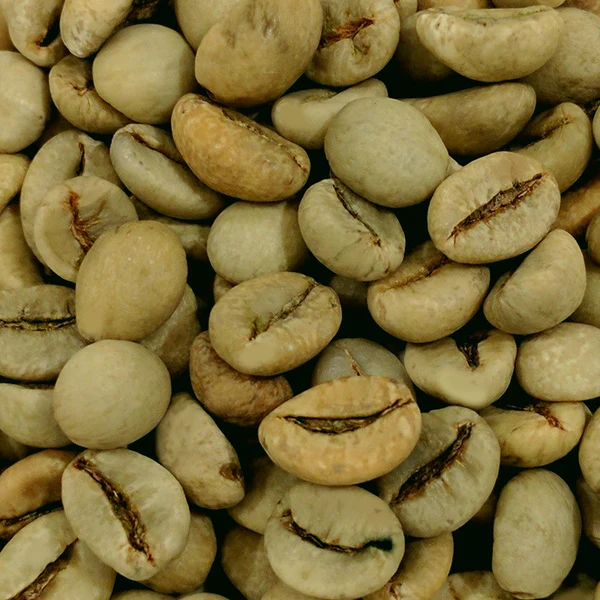
We sell premium Vietnamese coffee beans by the ton: clean, sorted Screen 16/18 Robusta from the Central Highlands, dry processed and packed for export. It is a sweet, rich Robusta with mild acidity and tight defect limits, suitable for espresso blends, instant coffee, cold brew and traditional Vietnamese coffee.
Premium Vietnam Robusta coffee beans, short spec:
- Species: Coffea canephora (green beans)
- Origin: Vietnam, Central Highlands
- Process: unwashed / dry / natural
- Screen: 16/18
- Moisture: max 12.5%
- Black / broken / foreign: 0.1% / 0.5% / 0.1%
- Density: 700 to 720 g/l
- Cup: sweet, rich aroma, mild acidity
- Packing: 60 kg jute bags
Those defect limits (0.1% black, 0.5% broken, 0.1% foreign matter) are much tighter than typical Grade 2 offers, which is what you want for roasting. Ask us for samples and a current quote.
Vietnamese coffee beans vs other Robusta origins
Many roasters keep two or three Robusta origins on hand. Here is how Vietnam compares with the others we sell, based on our product specs.
| Origin | Cup | Screen | Why buyers pick it |
|---|---|---|---|
| Vietnam | Sweet, rich aroma, mild acidity | 16/18 | Volume, value, consistency |
| Brazil (Conilon) | Smooth, chocolate, nutty, low acid | 16/18 or 18/20 | Soft, easy blending base |
| India | Smooth, chocolate, nutty, low acid | 17/18 or 18/20 | Very clean, shade-grown |
| Uganda | Cocoa, earthy, mild spice, low acid | 15 to 18 | Clean African Robusta, two harvests |
| Indonesia | Heavy, chocolate, cedar, low acid | 16/18 or 18/20 | Big body for milk drinks |
| Africa | Strong, 2.2% to 2.7% caffeine | 16/18 or 18/20 | High-caffeine blends |



A common approach: build on Vietnamese coffee beans for volume and price, then add a smaller share of Indian Robusta or Brazilian Conilon to smooth the cup. Our guide to Ugandan coffee beans covers the main African alternative in depth.
And for the Arabica side of your blend
If your blend needs Arabica on top of the Vietnamese base, our African Arabica coffee beans (bright, fruity, floral; screen 15 to 18, moisture max 12.5%) and single-origin Africa Arabica coffee beans (including Ethiopia and Kenya) are good partners. See also our guides to Arabica coffee beans and Ethiopian green coffee beans.


Starting blends with Vietnamese coffee beans
First trials for your cupping table, not finished recipes:
- Classic Italian-style espresso: 70% Arabica (Brazilian or East African), 30% Vietnamese Robusta Screen 18.
- Strong café blend: 50% Arabica, 30% Vietnamese Robusta, 20% Indian Robusta.
- Value espresso or office coffee: 60% Vietnamese Robusta, 40% Brazilian Conilon.
- Vietnamese-style iced coffee: 100% Vietnamese Robusta, roasted dark, brewed strong.
- Instant coffee base: 70% Vietnamese Robusta, 30% Brazilian Conilon.
Fine Robusta from Vietnam: what buyers should know
“Fine Robusta” is the Robusta world’s answer to specialty Arabica. It means coffee picked ripe rather than stripped from the branch, dried with care on raised beds or clean patios, sorted tightly and cupped on a specialty-style scale. A growing number of farms in the Central Highlands now produce it, often as washed or honey lots.
What you get in the cup is a different animal from commodity Robusta: dark chocolate, roasted nuts, brown sugar, sometimes a little dried fruit, with much less of the rubbery, woody edge. Some roasters sell it as a single-origin espresso or a strong filter coffee, and it can take a larger share of a blend without spoiling the cup.
A few things to keep in mind before buying:
- Volumes are small. Fine Robusta is usually sold in small lots, often by the bag rather than by the container.
- Prices are higher. Expect a clear premium over Grade 1 Screen 18.
- Cup before you commit. The label is not standardised everywhere, so judge the coffee, not the name.
- Roast it with care. Medium roasts often show fine Robusta best.
If you are curious, ask us for samples alongside our standard Screen 16/18 lot so you can compare them side by side.
A year-round buying plan for Vietnamese coffee
- October to December: watch the new harvest, weather in the Highlands and early-crop prices. Request new-crop samples.
- January to March: new-crop Vietnamese coffee beans ship in volume. A good time to contract the bulk of your year’s Robusta.
- April to September: top up as needed, and use a second Robusta origin such as Brazilian Conilon or Ugandan Robusta to keep stock fresh while Vietnam is between crops.
Splitting purchases across the year also spreads your exposure to price swings, which have been large in recent seasons.
Questions to ask any supplier of Vietnamese coffee
- What grade, screen and preparation is this lot?
- What are the black, broken and foreign matter percentages, and the moisture?
- Which crop year, and when was it processed?
- Is the price fixed, or a differential over London futures?
- What traceability data comes with it for EUDR?
- Can I have a pre-shipment sample from the actual lot?
- What are the shipping port, delivery terms and expected arrival date?
A good supplier answers all of these without fuss. We do, for every lot of Vietnamese coffee beans we offer.
Which grade of Vietnamese coffee fits your business?
Specialty and craft roasters
Look at fine Robusta, washed or honey lots, or at least Grade 1 Screen 18 wet polished. Cup carefully and roast with care, and you can sell a Vietnamese single origin that surprises people.
Wholesale and café roasters
Grade 1 Screen 16 or 18 is the workhorse. Clean enough to blend at 20% to 40% without spoiling the cup, and priced well below Arabica.
Instant coffee plants
Grade 2 Screen 13 is common for extraction, where bean size matters less than cleanliness, moisture and soluble yield. Check defect and moisture figures carefully, because faults survive extraction.
Cold brew, RTD and private-label brands
Pick one grade and preparation and stick to it, so every batch tastes the same. Screen 16 natural or wet polished is easy to repeat each season.
Importers and traders
A spread of grades lets you serve roasters, blenders and soluble plants from one origin. Vietnam’s scale makes it easy to buy the same profile repeatedly.
What Vietnamese Robusta does to your blend cost
A worked example using round numbers. Suppose your Arabica costs US$7.00 per kilo green and Vietnamese Robusta US$4.50 per kilo. Our calculation:
| Blend | Green cost per kilo | Saving vs 100% Arabica |
|---|---|---|
| 100% Arabica | US$7.00 | baseline |
| 80% Arabica / 20% Vietnamese Robusta | US$6.50 | about 7% |
| 70% Arabica / 30% Vietnamese Robusta | US$6.25 | about 11% |
| 50% Arabica / 50% Vietnamese Robusta | US$5.75 | about 18% |
These prices are illustrations, not quotes. Plug in your own Arabica cost and our current Robusta quote to see the real figures. Many roasters find a 20% to 30% Robusta share saves real money and gives customers the body and crema they like.
How much to buy
Vietnamese coffee beans ship in 60 kg jute bags or in bulk container liners. A 20-foot container is commonly loaded with around 320 bags, about 19.2 tonnes. Small roasters often start with a few bags or a shared container. Large roasters, instant plants and traders usually buy by the full container, which brings the price per kilo down. Our guide to wholesale green coffee beans explains volume buying.
A quick way to size your order: work out how many kilos of roasted Robusta you use a month, divide by about 0.83 to allow for roast loss, and multiply by the number of months you want to cover. A roaster using 500 kg of roasted Robusta a month needs roughly 600 kg of green a month, or about 3.6 tonnes for six months. That is around 60 bags, a sensible part-container order. A soluble plant or large roaster using 15 tonnes of green a month will want close to a container a month, and is usually better off agreeing a contract with staggered shipments rather than buying lot by lot. Either way, keep at least one approved backup origin so a late Vietnamese harvest does not stop your line.
Storing Vietnamese coffee beans
Robusta is fairly forgiving, but it still fades and turns musty if stored warm and damp. Keep bags on pallets, off walls, in a cool, dry, ventilated warehouse, and check moisture on arrival against the contract. Rotate stock so the oldest bags are used first. Our guide to storing green coffee beans covers this in detail.
A simple tasting plan for Vietnamese samples
- Ask for three samples that differ on one thing, such as Screen 16 vs Screen 18, or standard vs wet polished.
- Check the green: moisture, defect count on 300 g, bean size and smell.
- Roast the same way, medium to medium-dark.
- Cup blind and also pull espresso in your real blend ratio.
- Approve a pre-shipment sample from the actual lot.
Common mistakes when buying Vietnamese coffee beans
- Comparing prices across different grades. A cheap Grade 2 Screen 13 is not the same coffee as Grade 1 Screen 18 wet polished.
- Ignoring defect percentages. Black and broken beans add bitterness and uneven roasting.
- Not checking moisture. Anything above 12.5% risks mould and means you pay for water.
- Roasting too light. Under-developed Robusta tastes grainy.
- Relying on one origin only. Weather in the Highlands can delay harvest. A second Robusta origin protects you.
- Forgetting EUDR paperwork. Low risk still needs traceability data.
How to order Vietnamese coffee beans from us
- Tell us what you need: grade, screen, preparation, volume and destination port.
- Get an offer and samples.
- Agree the contract: grade, defects, moisture, packing, price and terms in writing.
- Approve a pre-shipment sample.
- We load and ship, and the documents follow.
When you are ready, contact our sales team for a quote, browse our Robusta coffee beans, Arabica coffee beans or full product list, or read more about Continental Coffee Supply.
Frequently asked questions
Are Vietnamese coffee beans Robusta or Arabica?
Mostly Robusta. USDA forecasts 31.4 million bags of Robusta and 1.1 million bags of Arabica in 2026/27, so about 97% is Robusta.
What do Vietnamese coffee beans taste like?
Good Vietnamese Robusta is strong and full-bodied, with chocolate, nut and earthy notes and low acidity. Fine Robusta lots can be sweet and surprisingly clean.
What does Screen 18 mean?
The beans stay on a sieve with 7.10 mm holes. Screen 18 is the largest common grade; Screen 16 is 6.30 mm and Screen 13 is 5.00 mm.
What is wet polished Robusta?
Natural Robusta that has been cleaned and polished with water after hulling, removing dust and silver skin. It looks cleaner and usually cups a little cleaner.
When are Vietnamese coffee beans harvested?
The main Robusta harvest runs from about October to mid-January.
How much do Vietnamese coffee beans cost?
Prices follow the London Robusta futures plus a differential. The average export price was US$4,553 per tonne in March 2026, per USDA. We quote each order.
Are Vietnamese coffee beans good for espresso?
Yes. They add body, crema and caffeine to espresso blends, usually at 10% to 40%.
Is Vietnamese coffee EUDR compliant?
Vietnam is classed as low risk under the EU Deforestation Regulation, which means simplified checks, but buyers still need traceability data for each shipment.
Which port does Vietnamese coffee ship from?
Most Vietnamese coffee is exported through Ho Chi Minh City.
Do you ship Vietnamese coffee beans worldwide?
Yes, by the bag, ton or container, to ports around the world.
Can I get samples first?
Yes. We recommend roasting and cupping samples before ordering in volume.
Key takeaways
- Vietnamese coffee beans are about 97% Robusta, mainly from the Central Highlands.
- Buy by grade, screen and preparation: Grade 1 Screen 16 or 18, wet polished, for roasting.
- The Robusta harvest runs October to mid-January; new crop ships through the first half of the year.
- Vietnam earned a record US$8.4 billion from coffee exports in the 2024/25 crop year.
- Vietnam is classed as low risk under EUDR, but traceability data is still needed.
- Vietnamese Robusta is the go-to base for espresso blends, instant coffee and cold brew.
Sources and References
- Daily Coffee News: Vietnam coffee report, USDA Foreign Agricultural Service (2026)
- VietNamNet: Vietnam’s coffee exports hit record US$8.4 billion (Vicofa, 2025)
- Global Coffee Report: Vietnam coffee exports in 2025
- Helena Coffee: Vietnam national coffee export standard TCVN 4193
- Qahwa World: Vietnam coffee harvest timing
- Vietnam Ministry of Agriculture and Environment: Vietnam classified as low risk under EUDR
- GCR: EUDR delayed until the end of 2026
- Wikipedia: Coffee production in Vietnam
- Daily Coffee News: Vietnam coffee report (USDA FAS, 2025)


Leave a Comment
Your email address will not be published. Required fields are marked *