
Look at any green coffee price list and you will see a jumble of letters and numbers: AA, Screen 18, G1, SHB, Supremo, Type 2, 16/18. To a new buyer it looks like code. In a way it is. Coffee bean grading is how the trade describes the size, cleanliness and quality of a coffee in a few short words, so buyers on the other side of the world know what they are getting before a single bag ships.
Once you understand coffee bean grading, buying gets much easier. You can compare offers properly, spot when a price is too good to be true, and pick the right grade for what you actually make, instead of paying for quality you don’t need. We buy and sell graded green coffee every day, so this guide explains the system the way we would explain it to a new customer across the table.

What coffee bean grading is
Coffee bean grading is the process of sorting and describing green coffee by a set of physical and taste qualities. The main ones are:
- Bean size, measured with screens
- Defects, such as black, sour, broken or insect-damaged beans and foreign matter
- Density, often linked to the altitude where the coffee grew
- Moisture content
- Colour and uniformity
- Cup quality, judged by tasting
There is no single world system. Each producing country has its own rules and names, and on top of that the specialty coffee world uses its own grading based on defect counts and cupping scores. That is why coffee bean grading can feel confusing at first. The good news is that it all comes back to the same few ideas.
Why coffee bean grading matters to buyers
Grade affects three things you care about: price, roasting and taste.
Price. Bigger, cleaner, denser coffee costs more. A Screen 18 lot with almost no defects can sell for far more than a Screen 14 lot of the same origin.
Roasting. Even-sized beans roast evenly. A lot with a wide mix of sizes, or lots of broken beans, will roast unevenly, with small pieces scorching while big beans stay underdone.
Taste. Defects carry off flavours. A few black or sour beans in a batch can make it taste ferment-y, medicinal or dirty. Good coffee bean grading removes most of them before the coffee is shipped.
For some uses, a lower grade is perfectly sensible. Instant coffee makers don’t need big, perfect beans. A specialty roaster selling a light-roasted single origin does. Knowing the grades lets you match the coffee to the job.
Screen size in coffee bean grading
Coffee is sorted by shaking it over metal screens with round holes. The hole size is measured in 64ths of an inch. A bean that won’t fall through a Screen 18 has passed holes 18/64 of an inch, roughly 7.1 mm wide. Most coffee bean grading starts here.
| Screen size | Hole size (approx.) | Common names |
|---|---|---|
| 20 | 7.9 mm | very large, “elephant” or maragogype sizes |
| 19 | 7.5 mm | extra large |
| 18 | 7.1 mm | large, e.g. Kenya AA, Colombia Supremo |
| 17 | 6.7 mm | large |
| 16 | 6.4 mm | medium-large, e.g. Kenya AB (15 to 16) |
| 15 | 6.0 mm | medium |
| 14 | 5.6 mm | medium-small, e.g. lower Excelso |
| 13 | 5.2 mm | small |
| 12 and below | 4.8 mm and less | small, often used for instant or low grades |
When a lot is described as 16/18, it means most beans fall between Screen 16 and Screen 18. A tighter range means a more even roast. Peaberries, which are small round single beans, are sorted with oblong-hole screens and often sold separately as PB.
Bigger isn’t always better in the cup, by the way. Some fantastic coffees have smallish beans. But size is easy to measure, it helps with even roasting, and buyers have always paid more for it, so it remains central to coffee bean grading.
Defects in coffee bean grading
Graders take a sample, often 300 g or 350 g of green coffee, and pick out every defect. Defects fall into two groups.
Primary (category 1) defects are the serious ones. They include full black beans, full sour beans, dried cherries or pods, fungus-damaged beans, foreign matter like stones and sticks, and severe insect damage. Even one or two can spoil a cup.
Secondary (category 2) defects are less severe: partly black or sour beans, broken or chipped beans, shells, immature beans, floaters, withered beans, slight insect damage and bits of husk. Several of these are counted as equal to one “full defect”.
The total number of full defects in the sample is one of the most important numbers in coffee bean grading. It is what separates specialty coffee from commercial coffee, and it is how many countries set their export grades.
Density and altitude in coffee bean grading
Coffee grown higher up, in cooler air, ripens more slowly. The beans end up harder and denser, with more sugar and acidity locked inside. That is why some countries use altitude as part of coffee bean grading, and why dense coffee usually earns a higher price.
Mills often sort coffee by density using air tables or gravity tables, which separate heavy, healthy beans from light, under-developed ones. Some buyers ask for a density figure in grams per litre. It is a useful extra check, especially when two lots look similar on paper. Dense beans also behave differently in the roaster, usually needing more heat early on.
Moisture, colour and smell in coffee bean grading
Moisture is part of every serious spec sheet. Most green coffee should be between about 10% and 12.5%. Higher than that and the coffee may go mouldy or fade quickly. Lower and it can taste flat and roast too fast. In good coffee bean grading, moisture is measured on the actual lot, not guessed.
Colour and evenness matter too. Washed Arabica is often blue-green, natural coffee more yellow-green, Robusta more brownish. A mix of colours in one lot can mean mixed ages, uneven drying or poor sorting. Smell is the last quick check: clean and hay-like is good, while musty, sour or chemical smells are warning signs. How the coffee is kept after grading matters as well, which is why we wrote a guide to storing green coffee beans.
Who does the grading?
Coffee is checked at several points on its journey. Farmers and cooperatives do a first sort, removing obviously bad cherries. Mills hull, clean and sort the coffee by size, density and colour, often with machines that can spot and blow out dark beans. Exporters grade the finished lots against their country’s rules and the buyer’s contract. Importers and roasters check again on arrival.
Many countries also have a national coffee body that sets export standards and sometimes inspects shipments. On a global level, the International Coffee Organization has long worked on minimum export quality standards. All of this means coffee bean grading is not one test, but a chain of checks.
Why grade and price move together
Higher grades cost more for simple reasons. Sorting out defects takes time and machines, and every bean removed is weight the farmer can’t sell at the top price. Big beans and dense, high-grown coffee are also in shorter supply. So when you pay more for a top grade, you are paying for all that extra work and the lower yield.
For buyers, that means coffee bean grading is also a way to manage cost. If a coffee is going into a dark espresso blend, a good commercial grade may give you nearly the same result in the cup for less money. Save the top grades for the products where customers will really taste the difference.
Specialty grading and cupping scores
The Specialty Coffee Association sets the best-known standard for specialty coffee bean grading. In simple terms, to be called specialty grade, a 350 g sample of green coffee must have no primary defects and no more than five full defects in total. Then it has to be roasted and cupped, and score 80 points or more out of 100.
Cupping is a structured tasting. Trained tasters score fragrance and aroma, flavour, aftertaste, acidity, body, balance, sweetness, cleanness and uniformity. Licensed graders, often called Q graders, are trained to score consistently so a score from one lab can be trusted by a buyer in another country.
Below specialty sits what the trade loosely calls premium and exchange or commercial grades, which allow more defects and don’t need such high cup scores. Most of the world’s coffee is sold at commercial grades, and that is fine for most uses.
Coffee bean grading by country
This is where coffee bean grading gets colourful. Each country has its own system, built up over many years. You don’t need to memorise them all, but it helps to know the common ones.
Kenya and Tanzania: by size
Kenya grades mainly by screen size. AA is the largest, roughly Screen 17 to 18 and above. AB is a mix of Screen 15 and 16. PB is peaberry. C, T and other grades are smaller or lighter beans. Tanzania uses a similar system. When people talk about “Kenya AA”, they mean the big-bean top grade, which is usually also very clean.
Ethiopia: by defects and cup
Ethiopia grades from Grade 1 to Grade 5 (and lower) based on defects and cup quality, with Grade 1 the cleanest. Washed and natural coffees are graded separately, so you might see “Yirgacheffe G1 washed” or “Guji G2 natural”. In Ethiopia, coffee bean grading is strongly tied to region names, which buyers use as shorthand for flavour.
Colombia: Supremo and Excelso
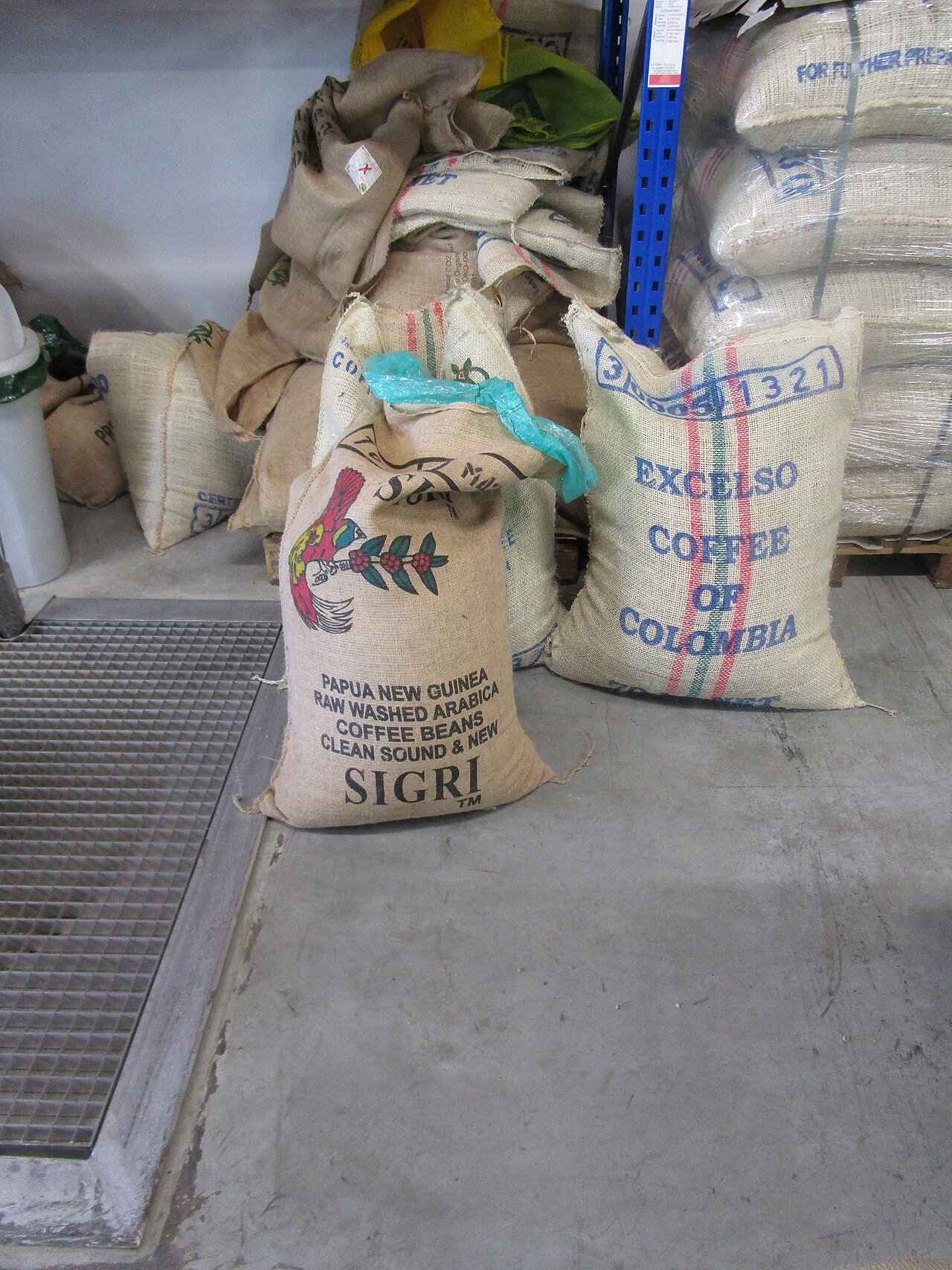
Colombia uses size-based names. Supremo is Screen 17 and above. Excelso is roughly Screen 14 to 16. You will also see “Excelso EP”, where EP means European Preparation, which is extra hand-sorting to remove defects. These names describe size and preparation, not necessarily flavour, so two Supremos from different farms can taste very different.
Central America: by altitude
Countries like Guatemala, Honduras and Costa Rica grade largely by altitude, because higher coffee is usually denser and tastier. SHB means Strictly Hard Bean and SHG means Strictly High Grown, the top grades for coffee from high farms. HB (Hard Bean) and other grades come from lower altitudes. Exact heights vary by country.
Brazil: by type and cup
Brazil uses a “Type” scale based on defects, from Type 2 (cleanest) up to Type 8, combined with screen size and a cup description like “strictly soft”, “soft” or “hard”. So a Brazilian offer might read “NY 2/3, Screen 17/18, fine cup”. Brazilian coffee bean grading is precise and very well established, because Brazil ships so much coffee.
Indonesia: by defect points
Indonesia grades from Grade 1 (fewest defects) down to Grade 6, using a points system for defects in a 300 g sample. Screen size is listed separately. Our Indonesia Robusta page explains how those grades are used for different products.
Vietnam: Grade 1 and Grade 2
Vietnamese Robusta is usually sold as Grade 1 or Grade 2, with a screen size, such as “Grade 1, Screen 18” or “Grade 2, Screen 13”. Specs often list maximum percentages of black beans, broken beans, foreign matter and moisture. Our Vietnam Robusta, for example, is sold at Screen 16/18 with a maximum of 0.1% black, 0.5% broken and 0.1% foreign matter.
Uganda: by screen
Ugandan Robusta is graded mostly by size: Screen 18, Screen 15 and Screen 12, plus lower grades made from black, husk and pods. Screen 18 is the top grade and the one most roasters choose for espresso. See our Ugandan Robusta for details.
India: by size and process
India grades Arabica and Robusta separately and by process. Washed Arabica is “Plantation”, natural Arabica is “Arabica Cherry”, washed Robusta is “Robusta Parchment” and natural Robusta is “Robusta Cherry”. Each comes in sizes such as AA, A, AB, PB and C. So “Robusta Cherry AB” is a natural Robusta of medium-large size. Our Indian Robusta page covers this too.
Processing also shapes defect levels. Read our guide to coffee processing methods to see how washed and natural coffees differ.
Coffee bean grading for Robusta
For a long time, Robusta was graded almost only on size and defects, and cup quality hardly came into it. That is changing. There is now a recognised fine Robusta category with its own cupping standards and trained Robusta graders. A fine Robusta must be very clean and score well on the cupping table. These coffees are still a small share of the market, but they show that coffee bean grading for Robusta is moving closer to how Arabica has been judged for years. If you want a quick comparison of the two species, read our Arabica vs Robusta guide.

Grades can shift from one harvest to the next. Our guide to the coffee harvest season explains when each origin’s new crop arrives.
Choosing coffee for espresso? Our guide to coffee beans for espresso covers the best origins, blend ratios and roasting.
For current market levels and how quotes are built, see our guide to green coffee prices.
Peaberry and other special grades
Normally a coffee cherry holds two flat-sided beans facing each other. Sometimes only one seed develops, and it grows small, round and egg-shaped. That is a peaberry. Peaberries are sorted out with special oblong screens and sold as PB. Some buyers love them because they roast evenly and can taste a little sweeter and more concentrated. They usually make up only a few percent of a harvest, so they often cost more.
You will also see grades like “triage” or “BHP” (black, husk and pods) for the leftovers after sorting. These go mostly to local markets or low-cost instant coffee. Knowing these names helps you understand the full range of coffee bean grading, from the very top lots down to what is left at the end.
Grades for instant coffee and food service
Not every buyer needs top-grade beans. Instant coffee plants grind and extract the coffee, so bean size and looks barely matter. What counts is a clean taste, good yield and a steady price. Smaller screens and commercial defect levels are normal here, and paying for Screen 18 would be wasted money.
Food-service blends sit in the middle. The coffee is usually roasted fairly dark and served with milk, so a solid commercial grade often does the job. When you understand coffee bean grading, you can talk to your supplier about the real needs of your product and avoid both over-spending and under-buying.
Physical grading only tells half the story. Our guide to coffee cupping covers the other half: how the coffee tastes.
How to read a green coffee spec sheet
Let’s put it together. Here is a typical spec line and what each part means:
“Uganda Robusta, natural, Screen 18, moisture 12% max, defects under 5%, crop 2025/26, 60 kg jute bags.”
- Uganda Robusta: origin and species.
- Natural: dry processed in the cherry.
- Screen 18: large beans, the top size grade.
- Moisture 12% max: safe for shipping and storage.
- Defects under 5%: a clean commercial grade.
- Crop 2025/26: the harvest year, so you know how fresh it is.
- 60 kg jute bags: standard export packing.
If a spec sheet leaves out moisture, defects or crop year, ask. Good coffee bean grading is only useful if the supplier shares it.
Not sure who to buy from? Our guide to choosing a green coffee supplier covers specs, samples, contracts, Incoterms and red flags.
Using coffee bean grading to buy smarter
Here is how to put all of this to work:
- Match the grade to the product. Light-roast single origins need top grades. Dark espresso blends can use good commercial grades. Instant coffee can use smaller sizes.
- Compare like with like. A “cheap” Screen 14 isn’t comparable to a Screen 18. Line offers up by grade before you look at price.
- Ask for the defect count. Size alone doesn’t tell you how clean a coffee is.
- Always cup a sample. Grading tells you a lot, but tasting tells you the rest.
- Keep it consistent. If a blend works, buy the same grade next time, and put the spec in writing.
Our guide to buying wholesale green coffee beans goes into samples, prices and contracts in more detail.
Grade has a direct effect in the roaster. Even, well-sorted beans make roasting green coffee beans far more predictable, because every bean heats at the same rate.
Checking a sample yourself
You don’t need a lab to do basic coffee bean grading on a sample. Weigh out 300 g or 350 g of green coffee. Spread it on a white tray under good light. Pick out anything that looks wrong: black or sour beans, broken pieces, beans with holes, shells, stones, sticks, bits of husk. Count them. Then run the rest through a set of sample screens, if you have them, to check size. It takes half an hour and tells you a lot about whether a lot matches its spec.
Common misunderstandings
“AA means the best coffee.” It means big beans, and usually clean ones. Taste still depends on the farm, the processing and the roast.
“Grade 1 is always specialty.” Not always. Country grades and specialty grades are different systems.
“Smaller beans taste worse.” Not necessarily. Some superb coffees have small beans, and peaberries are small by nature.
“Grading is the same everywhere.” It isn’t. That is why it pays to learn the main systems, or to work with a supplier who explains them clearly.

Graded coffee from us
Every lot we sell is graded and checked for moisture, screen size and defects before it ships, and we include the specs with every quote. Browse our Arabica coffee beans, including African Arabica and Africa Arabica, our Robusta coffee beans, such as Brazilian and African Robusta, or our full product list.
Looking for coffees with a clear origin story? Our guide to single origin coffee beans explains what single origin means, how traceability works and how to build a menu that sells.
For a full buyer’s guide to origins, varieties, grades and prices, see our guide to Arabica coffee beans.
Frequently asked questions
What is the highest grade of coffee bean?
It depends on the system. In specialty coffee bean grading, it is a coffee with no primary defects, very few secondary ones and a high cupping score. In country systems, names like AA, Supremo, SHB, Grade 1 or Type 2 mark the top grades.
What does Screen 18 mean?
The beans did not fall through a screen with holes 18/64 of an inch (about 7.1 mm) wide. They are large beans.
What is a full defect?
One serious defect, like a black bean, counts as one full defect. Several minor defects, like broken beans, are added together to make one full defect.
Is specialty coffee always graded by the SCA?
Most specialty coffee is judged using SCA-style methods, but the actual grading is done by exporters, importers, labs and graders around the world.
Final word
Coffee bean grading turns a bag of beans into a description you can trust and compare. Learn the basics: screen size, defects, moisture, density and cup, plus the main country names, and you will read offers with much more confidence. If you would like help choosing the right grade for your product, or a quote, get in touch through our contact page. You can also read more about us.

Pingback: Coffee Beans for Cold Brew: 8 Proven Picks for Smooth Flavor - Continental Coffee Supply
Pingback: Coffee Beans for Instant Coffee: 7 Proven Origins Buyers Trust - Continental Coffee Supply